

November 30, 2015 | Read Time: 4 minutes
In the aftermath of tragic events perpetrated by people who are mentally ill, such as mass shootings, 88 percent of charities focused on mental-health issues did not alter their fundraising efforts, according to a new study.
And 72 percent of such nonprofits, the survey reported, saw no change in the amount of money they raised after such events.
This failure to plea more aggressively for support at a time when their cause is on the minds of the public represents a missed opportunity, says Benjamin Waxman, executive director of the Mental Health and Addiction Network, known as MHANe.
“I do think it’s a mistake,” he says. Many groups in the survey cited a fear of exploiting a tragedy in their decisions not to push their cause in public. But not doing so, Mr. Waxman suggests, creates a vacuum that allows problems rather than solutions to drive news coverage.
In the wake of tragedy, “there’s a delicacy that is absolutely necessary. There’s an empathy that is absolutely necessary,” Mr. Waxman acknowledges. But more charities, he says, could craft messages along these lines: “Here’s what we do. There’s not enough funding for it. And this is an example of what can happen. And I’m really glad you’re paying attention. Now that we have your ear, this is what we think needs to be done.”
Fighting Donor Fatigue
The survey, conducted last year and following on the heels of a similar study the group did in 2013, includes responses from 177 organizations focused on mental health, addiction, or intellectual disabilities. Fifty-seven percent of the groups had annual budgets of more than $1 million.
Just over half of the organizations surveyed by the MHANe said they fell short of their 2013 fundraising targets. That situation is particularly alarming because the need for services is so widespread: One in five Americans experiences some kind of mental health issue, according to the National Institute of Mental Health.
The biggest obstacle to raising money for the cause, according to survey respondents, is “donor fatigue.” The same finite group of supporters are tapped over and over, Mr. Waxman notes. Some charities, such as disaster-relief groups like the American Red Cross, can easily appeal to a wide swath of donors, he says, but “the challenge to raising funds in this field is there’s a smaller pool of people who ‘get it.’ ”
The stigma of mental illness and addiction, by contrast, was less commonly cited by respondents to the current survey as a challenge in fundraising. In MHANe’s 2013 survey, it ranked as the fifth-biggest problem; in the current report, it’s dropped to seventh place. But this could be merely the flip side of overreliance on the same crop of supporters, Mr. Waxman suggests: “Their donor pool, as small as it is, is full of people who ‘get it.’ ”
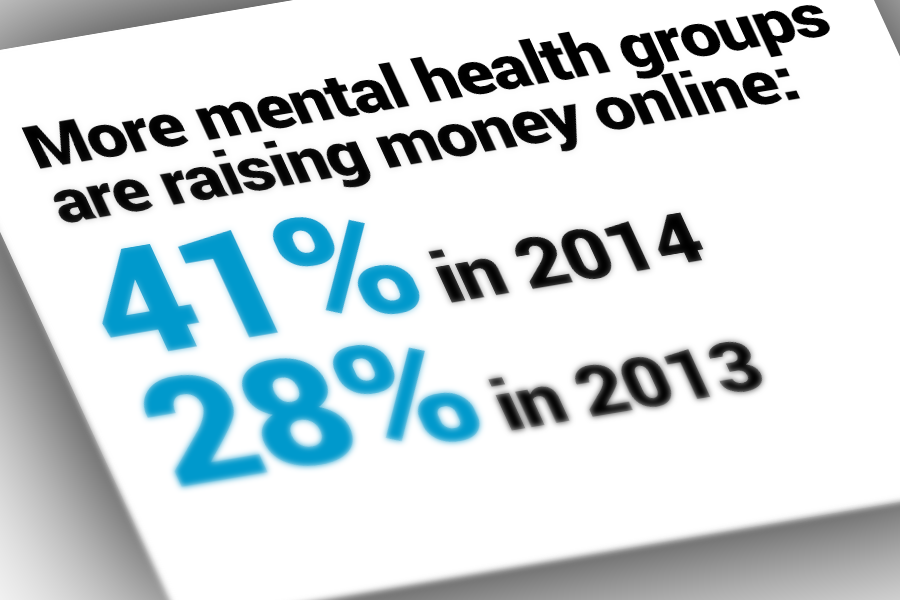
Among the study’s other findings:
Complaints that charity board members don’t do enough to help raise money probably aren’t unique to mental-health groups, Mr. Waxman says. But smaller groups, in particular, would benefit from giving their trustees more guidance in fundraising.
“The boards are made up of people who have empathy for the cause,” he says, “but don’t have a lot of training.”





