MIT Gets a Stake in Bose Stereo Maker and Draws Many Questions About Gift

By Ben Gose
Senior Editor
May 15, 2011 | Read Time: 5 minutes
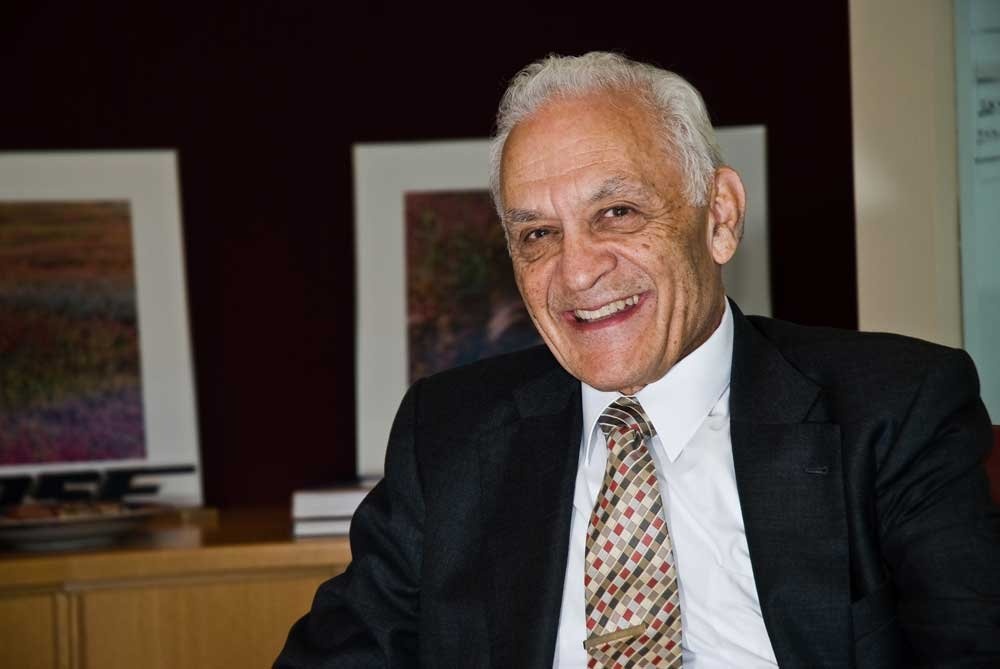
The Massachusetts Institute of Technology might be expected to sing the praises of Amar G. Bose, who last month provided the university with a majority stake in the famous high-end stereo maker Bose Corporation.
Instead, the university made a quiet announcement on a spring Friday and then hit the mute button on discussions about the gift.
The silence is piquing curiosity about what the gift is truly worth. Experts say it is probably worth at least half a billion dollars, but neither the donor nor the university is saying, and the unusual structure of the gift may reduce its value.
Adding to the questions for MIT: Some experts worry that the gift might be similar to a series of tax dodges that Congress investigated several years ago.
Not Talking
The concerns about the gift’s structure were first highlighted last month in a New York Times article, and university officials have not provided any additional details about the gift since then. Nathaniel W. Nickerson, an MIT spokesman, declined to answer a series of e-mail questions submitted by The Chronicle.
“Dr. Bose and Bose Corporation keep details of financial matters confidential,” he said. “MIT will honor that confidentiality and will not discuss the financial details of this gift.“
Because it is a private company, Bose Corporation is not required to file public financial reports. A company spokeswoman declined to answer questions or make Mr. Bose available for an interview.
Unusual Terms
MIT said last month that Mr. Bose, a graduate of the university who was also an engineering professor there for 45 years, had donated nonvoting shares in the company.
In a statement about the gift, MIT noted that it had agreed not to sell the shares or participate in the company’s management or governance. The university will receive cash dividends from the company, it said.
Some experts wonder how well the prohibition on selling the Bose shares will hold up over the long term.
Bryan K. Clontz, founder of the Dechomai Foundation, which helps charities receive, manage, and sell complex noncash donations, including business interests, envisions a day when the ban on selling runs up against the university board’s responsibility to manage MIT’s assets prudently.
What happens, he asks, if a weak management team succeeds Mr. Bose at the company and a suitor seeks to take over the company? The board’s investment committee may try to find an exit rather than be remembered as the board that “should have sold three years ago, before Bose tanked.”
Owning a company “puts charities in a different position than they’re normally in,” Mr. Clontz says. “They don’t have both hands on the reins. It’s a different animal.”
Dean Zerbe, a former Senate aide who investigated potential tax dodges as part of his Capitol Hill job, said “the packaging” of the Bose gift looks like transactions that were banned by lawmakers in 2004.
Under the arrangements, donors contributed nonvoting shares to a charity, then after some time had elapsed, the charity sold the shares back to the company. The charity’s tax-exempt status eliminated some of the levies that other shareholders of the company would have been required to pay.
Mr. Zerbe, who is now managing director of the Alliant Group, a tax consulting group, said he does not think any such deal had been made with the Bose gift, but he said the public has good reason to be skeptical of any gift with unusual terms, given that Mr. Bose may receive a tax deduction and MIT, like all universities, benefits from many government subsidies.
“You really don’t know until you rip off the paper and see what’s inside,” Mr. Zerbe said. “It’s disappointing that MIT is not coming forward.”
Profitable Company
Mr. Bose is one of America’s wealthiest people. Forbes estimated his net worth at $1-billion in March, based primarily on the value of his Bose Corporation holdings.
His Framingham, Mass., company had revenue of more than $2-billion in 2010, according to a spokeswoman. Many publicly traded companies have a market value of at least as much as their annual revenue, and Mr. Clontz points out that Bose has a strong brand. “I would assume it’s a very, very profitable company,” Mr. Clontz says.
If Bose is worth at least as much as its annual revenue, the donation to MIT could be worth more than $1-billion.
Jay Frost, a fund-raising consultant, notes that the cash flow from dividends could be “enormously valuable” to MIT.
“As long as a gift is in keeping with a charity’s policy and the donor and the gift have been properly vetted, then why wouldn’t they consider receiving it?” Mr. Frost says.
Restrictions on the Gift
Still, experts say the economic value of the gift will probably be reduced by the restrictions placed on it by Mr. Bose, including the nonvoting nature of the stock.
“The fact that MIT can’t trade the shares will have a negative impact on the gift’s value and will have a negative impact on the size of the deduction Mr. Bose takes,” says William Josephson, a lawyer in New York who previously headed the New York State Charities Bureau.
Federal tax law would prohibit Mr. Bose from receiving any tax deduction if he had placed a substantial block of his company’s shares in a private foundation, according to Mr. Josephson. The concern is that an individual might put company shares in a private foundation in part to maintain continued control over a company and ward off an unfriendly takeover.
He says the law should treat donations to charities the same way.
“Some of us don’t see any reason why this concept shouldn’t equally apply to gifts of significant control positions to public charities,” Mr. Josephson says.
The MIT shares could eventually be converted to voting shares, Mr. Josephson notes, and Mr. Bose or other company officials could press MIT to help them oppose an unfriendly takeover.