September 18, 2011 | Read Time: 7 minutes
See salaries of top officials at more than 300 nonprofits.
Charities and foundations are likely to award modest raises to their top executives in 2012 as they keep an eye on the turbulent economy, recruiters and compensation consultants say.
The median increase in pay for leaders of the nation’s largest nonprofit organizations was 2 percent from 2009 to 2010, according to The Chronicle’s latest annual survey of executive compensation and benefits. Executives probably did slightly better this year, and compensation experts say more of the same may be in store for 2012.
“Right now, almost everyone is budgeting a 3-percent increase,” says Brian H. Vogel, a principal of Quatt Associates, a Washington company that advises nonprofit groups and other employers on compensation. “We’re not seeing CEO compensation leaping ahead like it did before 2008.”
But the recent spate of bad economic signs could yet derail plans for a modest increase, as nonprofit groups are only now setting their budgets for 2012, he says.
Mr. Vogel, who works with large nonprofit organizations, including advocacy groups, cultural institutions, and colleges, says it would be “prudent” for charities to take some additional time setting salaries this year to see if the volatility wanes or if another financial crisis develops like the one in 2008.
Higher Raises for Some
Not every organization is sticking with modest raises. Compensation experts say some charity and foundation boards are eager to begin rewarding bigger increases to successful executives who have received below-inflation raises since 2008. The boards fear that a top performer with a stagnating salary will begin to look at other offers.
Yet at some groups, executive salaries remain frozen—or even below 2008 levels—and nonprofit leaders are voluntarily declining bonuses or seeing them cut by their boards. At many of these groups, the move is about public perceptions as much as saving money.
With unemployment remaining persistently high and the economy possibly entering its second recession in three years, charity boards are spending more time weighing how changes in executive salary will be received by clients, donors, and even state regulators. (See article.)
“Sometimes you have to sit back and say, ‘Wait a minute, even if we can support this, will this fly?’” says Michael W. Peregrine, a Chicago lawyer who advises several charity boards. “Today it is incumbent on boards to ask much more directly, What will be the reputational and financial impact on us if we thumb our noses at the public and stand our ground?”
Public Perceptions
The Jewish United Fund/Jewish Federation of Metropolitan Chicago is one of many organizations at which public perceptions enter into compensation decisions.
Steven B. Nasatir, president, is earning a salary of $477,783 for the second straight year in 2011. That’s up from the $445,626 he earned in 2009, when the federation cut Mr. Nasatir’s pay and instituted a slew of other cost-saving measures amid the financial crisis. But his salary remains lower than the $488,187 that he earned in 2008.
Aaron Cohen, a spokesman for the federation, says the reduction from 2008 levels is both a way to save money and a symbolic gesture at a time when many of the people the federation seeks to help are in “dire straits.”
“The institution is trying to operate as efficiently as possible and also demonstrate to our contributors and to the community generally that we get it,” Mr. Cohen says.
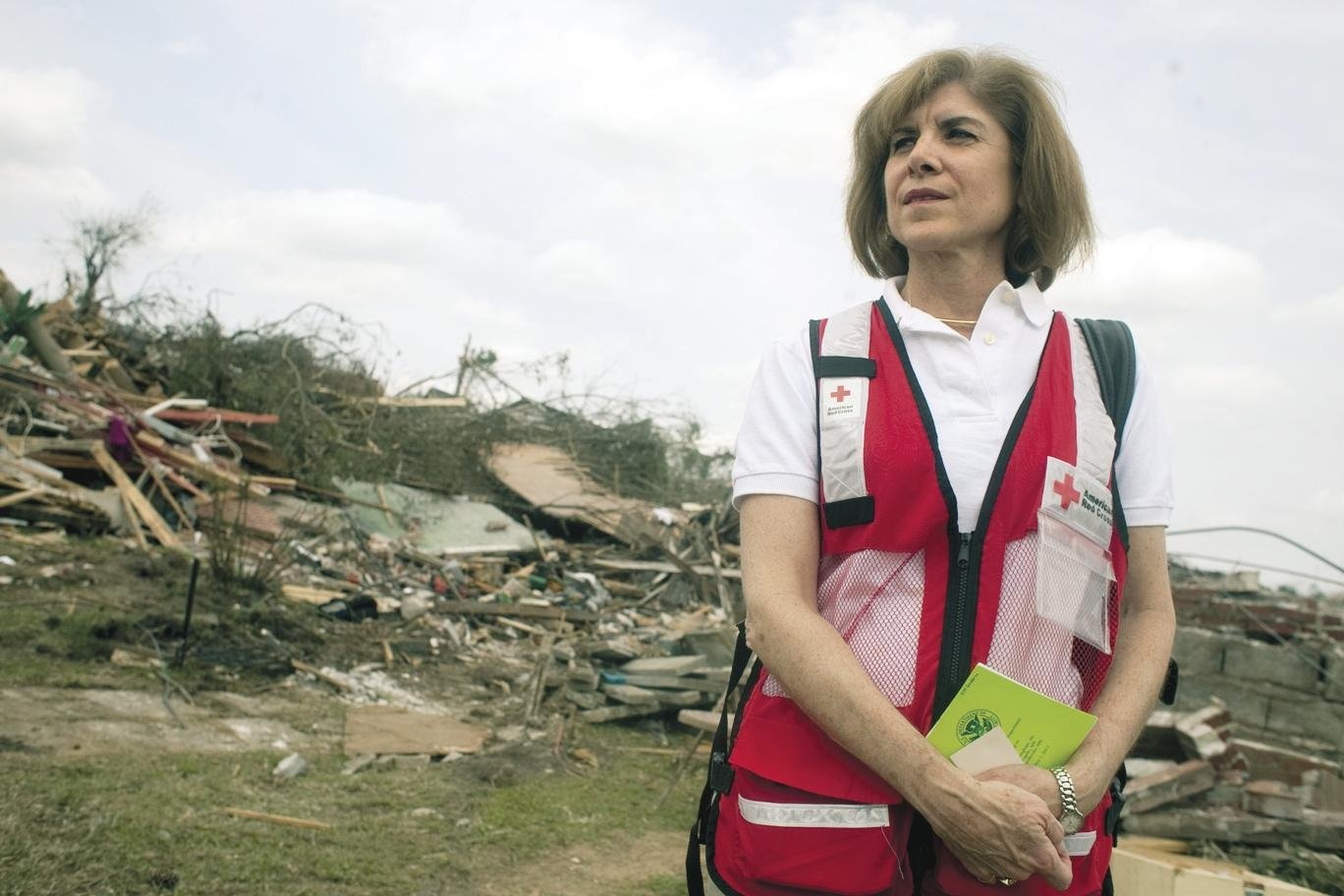
At the American Red Cross, Gail J. McGovern’s salary has remained flat at $500,000 since she became CEO in 2008, according to Roger K. Lowe, a spokesman for the charity. (She did receive a one-time relocation payment in 2009 worth $437,570 for “closing costs and other expenses” associated with her move from Boston to the charity’s headquarters in Washington.)
Ms. McGovern declined bonus payments totaling $250,000 in 2009 and 2010 even though she successfully met performance goals, including eliminating the organization’s operating deficit and increasing donations to the charity, Mr. Lowe says. Ms. McGovern also has made donations to the Red Cross totaling $175,000 since becoming president, he adds.
Even charities that are giving big raises and bonuses need not shrink from the public attention such payments might bring, says James Rocco, a compensation consultant in New York.
“The key thing for a board is that it has to explain the executive’s compensation, provide a rationale, especially if the compensation is at high end of market,” Mr. Rocco says.
What’s more, he adds, if the charity is paying a bonus, it must be careful to tie the payments to meaningful goals.
United Way Worldwide sharply raised president Brian Gallagher’s salary in mid-2010, after it had frozen his pay for 18 months due to what Marty Katz, the charity’s compensation consultant, describes as “sensitivity” about the weak economy.
Mr. Gallagher had been earning a salary of $436,000 plus a housing allowance (most recently, $47,500 a year) that had been part of his compensation since he took the chief executive job in 2002.
In July 2010, the board raised his salary to $525,000, an increase of 20 percent. The charity stopped providing the housing allowance at the same time. If that were included in the salary figure, the 2010 increase would be only 8.6 percent. Either way, the raise exceeded the median increase in The Chronicle’s survey.
John J. Dooner, chair of the United Way’s board and chair of the compensation committee when Mr. Gallagher received the raise, says the board was determined to retain Mr. Gallagher, who has led the charity’s shift from a broad focus on fund raising to a more narrowly focused and measurable “community impact.” In 2009 Mr. Gallagher oversaw the merger of the United Way of America and its affiliates in 45 countries and territories, creating United Way Worldwide.
Mr. Dooner, who is also chairman emeritus of McCann Worldgroup, an advertising firm, says the United Way board had “great sensitivity to the economic environment” but needed to reward Mr. Gallagher for taking on a much bigger set of responsibilities.
“This is not the same job—it’s a huge change,” Mr. Dooner says. “Mr. Gallagher has to be in China one day and Philadelphia the next.”
Mr. Gallagher, whose annual salary remains at $525,000 this year, also has the potential to earn an annual bonus worth 30 percent of his salary if he accomplishes what the charity describes as “rigorous” performance objectives.
Susan Egmont, an executive recruiter in Boston who specializes in searches for nonprofit leaders, says her clients who are looking for a new CEO exhibit similar thinking—they’re looking for the best person to lead the organization forward, rather than fretting about how the salary will play with the public.
“Organizations need to stretch, and will stretch, for exceptional people,” she says. “The micro factors are driving compensation more than the macro factors right now.”
Meanwhile, some charities that suffered greatly during the 2008 financial crisis have frozen or reduced pay for their top executive. The Starr Foundation, in New York, once held a large portion of its endowment in the stock of AIG, an insurance company that nearly went bankrupt in 2008 before the federal government intervened. The foundation’s endowment stood at $1.28-billion as of December 2009, down from nearly $3-billion three years earlier.
Florence A. Davis, the foundation’s president, says her salary has been frozen at $505,000 since 2006, which she describes as “completely justified by the changed circumstances here at Starr.” She expects the freeze to continue into 2012.
Frozen Pay
The American Civil Liberties Union suffered a hit to donations when two of its biggest foundation supporters collapsed after the Bernard Madoff investment fraud and a hedge-fund manager who had been giving the group $20-million a year couldn’t make a 2009 gift due to market losses.
Anthony Romero, the charity’s leader, got a salary of $342,868 in 2010, up about 4 percent from 2009 but below his 2008 salary of $345,000. ACLU officials did not return phone calls.
Ellis Carter, a lawyer in Phoenix who advises boards on compensation, says freezing or cutting pay at the very top can make good sense when a charity is going through hard times.
“What was a justifiable salary when the economy was strong—well, maybe that’s harder to justify when the economy falls apart,” she says.
Peter Bolton, Caitlin Harrison, and Marisa López-Rivera contributed to this article.