
More Charities Are Bringing In More Money With Help of Entire Staff

By Holly Hall
Contributor
March 23, 2014 | Read Time: 8 minutes
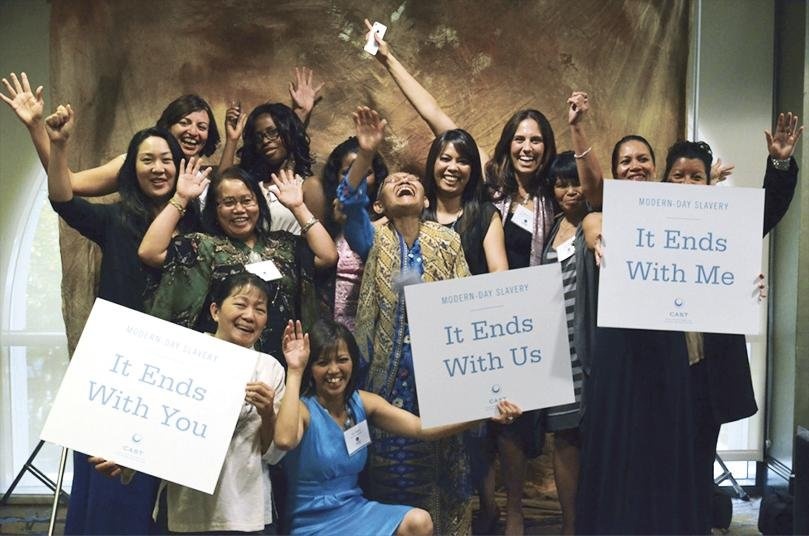
The Coalition to Abolish Slavery & Trafficking overcame two challenges that have weakened other charities: Government aid, once the coalition’s main source of revenue, has plummeted over the last decade. And the number of its clients exploded, from 30 a decade ago to 350 this year.
The Los Angeles charity hired Kay Buck in 2003 to help it cope, and she says she knew from the start what needed to change:
“Everyone has a role to play in fundraising,” she says.
No longer is the organization’s fundraising staff solely responsible for solicitations. Now other employees, board members, and volunteers—including people who were victims of sexual trafficking and other abuses—actively help raise money.
Enlisting such a wide range of people, says Ms. Buck, helped the organization attract more than $1.6-million last year, up from less than $300,000 the year she started. That money has changed the balance of revenue: Now the coalition gets just 22 percent of its budget from the government, compared with more than 80 percent a decade ago.
“It is really amazing to see the expertise and passion of my staff and survivors speaking directly to donors,” Ms. Buck says. “They help donors really understand our work.”
Building Ties to Donors
More and more charities are tapping a wider range of people to help seek donations, in part because groups can no longer count on mass solicitations to provide the bulk of their revenue.
Moving away from those techniques often requires charities to build personal ties to donors who can make large and regular gifts, fundraisers say. But that’s hard to do unless donors hear from and about people directly affected by a group’s mission.
But making such changes can be tough, especially because the leaders and senior officials of many organizations can’t shed long-held attitudes that fundraising is primarily the responsibility of the development office, with occasional assistance from maybe a couple of other leaders.
As charities seek to spread the fundraising load, they take many approaches. Among them:
Train staff members and ask them to give
As Habitat for Humanity Greater San Francisco gets ready for a capital campaign, it has made a quiet but concerted effort to educate workers about raising money and show them how they can help.
At an overnight retreat, staff and board members listened as a longtime volunteer who gives up a week’s vacation every year to work at Habitat and a local pastor talked about why and how they supported the charity.
Sharing such stories helps attract new donors, says Phillip Kilbridge, Habitat’s executive director, but it takes help from the staff to find the most moving personal stories.
“We are trying to build an organization where everyone is furthering philanthropy,” he says. “Everybody is an ambassador, advocate, or storyteller.”
Mr. Kilbridge tries to demonstrate how much he values employee help in fundraising. He makes it a point to thank people like Erin Colton, the charity’s construction manager, whenever she introduces him or other leaders to volunteers who are potential donors.
Recently, he says, he met with a prominent man who had told Ms. Colton he wanted to do more for the charity, including getting his family more involved.
“Erin could’ve had a blank look on her face or been busy with other things, but she was not. She is the face of Habitat; she understands she has a role in building supporters.”
Mr. Kilbridge says that he and his colleagues now ask Habitat employees to give money themselves, because donors to the capital campaign will probably ask what share of the charity’s employees contribute to its work.
He asked other managers to make a $500 annual gift, and other employees have been encouraged to give as well.
“We have 25 percent of the staff giving monthly now,” he says. “It was none three years ago.”
Show employees and trustees what it takes to raise money
At Autism Speaks, all new employees participate in a weeklong training effort to learn about the charity’s work, including a 90-minute session with a fundraiser who focuses on wealthy donors.
“They might not otherwise know who we are,” says Gary Jaworski, the charity’s senior vice president for development. “This builds camaraderie with major-gifts staff.”
It also pays off in fundraising. The organization’s hotline receives 20,000 calls a year. Now when people call to thank the charity and offer to help, the workers refer them to Mr. Jaworski’s department.
Other groups get boards more involved by showing them how the organization’s fundraising efforts compare with those of more successful groups.
Camp Agawam, in Raymond, Me., showed its board members a scorecard demonstrating that they were doing less fundraising than similar organizations were. Mike Bensen, the group’s director of development, says that in the two years since it did the evaluation, trustees have started to step up calls and visits to donors.
As a result, gifts to the camp’s annual fund grew by more than 10 percent last year, to $192,000, with a 20-percent increase in gifts of at least $5,000.
Focus attention on client needs
Karla Williams, a Charlotte, N.C., fundraising consultant, got a striking lesson in how to motivate staff members to give when she worked as chief fundraiser at a children’s hospital.
One evening when she was leaving work, she introduced herself to a woman she noticed in the hospital lounge every evening and found out that the woman’s daughter was in intensive care.
“She told me that she was staying at the hospital 24/7 because she felt her daughter could somehow sense she was nearby, and her treatment would be more successful if she, the mother, was close at hand,” she recalls.
The lack of a decent space for the woman to stay overnight made Ms. Williams wonder if the hospital could raise money to build an overnight facility for family members.
In focus groups with nurses and other medical personnel, she learned that not only did they embrace the idea of overnight housing, they said they would donate their own money.
“I learned that nurses and other frontline staff weren’t giving to the hospital’s fundraising program because they didn’t see the same needs that hospital leaders did,” Ms. Williams says. “They loved the idea of a place where patients’ families could stay.”
Armed with that information, Ms. Williams was able to persuade leaders of the hospital, who initially resisted the idea, to raise money for a new Center for Families.
“To serve as the voice of others is stronger than your own voice, Ms. Williams says. “There is more credibility when I can say, ‘This is what the patient needs, and this is what donors want.’”
Get neighborhood residents involved
Last year, fundraisers at Capital University added an event for local residents to its traditional alumni weekend: a daylong symposium on aging and care giving that people living near its Columbus, Ohio, campus could attend for free. The event drew 200 people, only 20 of whom were visiting alumni.
During and after the symposium, several people made gifts to the university, and two have written to say they will include the university in their estate plans, says Michelle Cline, the university’s director of planned giving.
Retired neighbors are helping raise money in other ways, too. About 20 of them, some of whom are alumni, take music lessons in the university’s conservatory and have helped inspire giving by faculty members with their stories about what the campus was like in their youth.
“Quite a few faculty and staff end up making a planned gift because they are in constant contact with donors who take classes in our conservatory after retiring,” says Ms. Cline. “They love talking to faculty and staff.” The retired students, she adds, “are doing my job for me.”
Coach top leaders to raise money
Jonathan Bridge, a fundraiser at the University School, a private school in Hunting Valley, Ohio, says too often efforts to spread fundraising duties focus “on the masses” instead of top officials.
“To change a fundraising culture takes time,” says Mr. Bridge.
He says that he managed to double his board members’ annual gifts to $800,000 after three years by interviewing them at length to learn what they thought about the school and what interested them. He also asked each person to give at least $25,000 annually.
“Focus on the top 10 people in your community,” Mr. Bridge says. “With their authentic, meaningful engagement, that will yield the greatest return per hour over anything else you do.”
InterAction, an umbrella organization for nonprofits that work overseas, recently hired OAI, a fundraising consulting firm, to spend six months training its eight most senior executives.
Consultants leading the training sessions, which end this month, helped the executives identify about 30 top potential donors.
They then listed multiple contacts within InterAction to those supporters and mapped out plans for how to get them involved in its work.
The executives also learned the importance of asking questions, listening, and interacting with donors without always asking them for money.
“There is an old model around: ‘Let me do the work. Don’t bother me with fundraising.’ But now fundraising is integral to the mission,” says Lindsay Coates, an InterAction executive vice president who participated in the coaching.
With some donors reducing their support and grant makers increasing their expectations that aid recipients will partner with one another, she says, “there is a new context for fundraising, and it requires new skills from leaders. We have to pull in the senior team.”




