More People See Charities’ Emails After Groups Pare Address Lists

By BRENNEN JENSEN
Contributor
March 10, 2014 | Read Time: 6 minutes
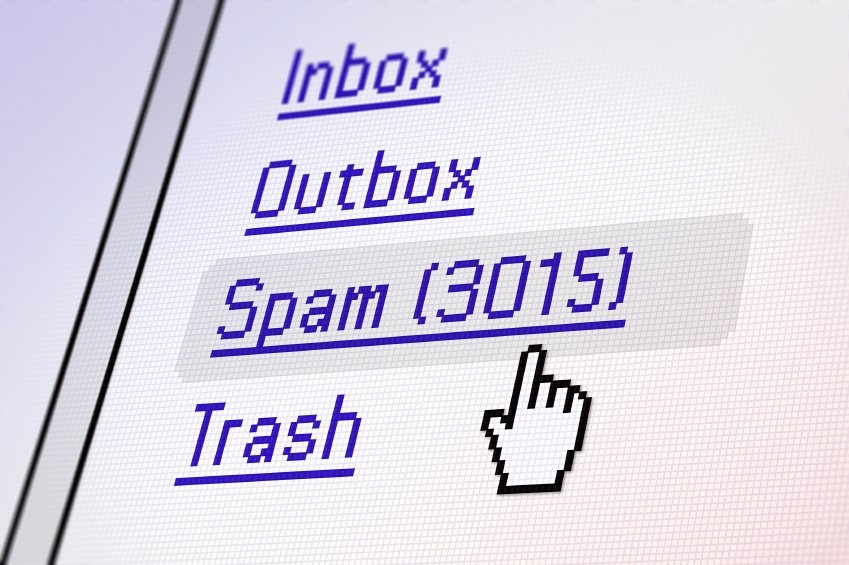
The Environmental Working Group was in the middle of an all-out push to raise money when it made a disconcerting discovery. The nonprofit realized that all the fundraising emails it sent to people who used Google’s Gmail service, one of the most popular email providers, were going straight into supporters’ spam folders, not their inboxes.
“We were really worried,” says Colleen Hutchings, director of online fundraising and engagement at the Environmental Working Group.
As big email service providers continue to wage war on spammers, nonprofits are getting caught in the crossfire. Organizations that send email to large numbers of people who never open the messages are tagged as suspicious mailers, and the companies route their messages to recipients’ spam folders.
Purging Addresses
The solution, as the Environmental Working Group found out, is a good old-fashioned email house cleaning.
The organization eliminated from its email list the address of every person who had not opened a message from the charity in six months. For Gmail users, the group was even stricter, culling every list member who hadn’t both opened an email and clicked on a link in six months. The purge reduced its list by about a third.
“We needed to get rid of people who were not engaging with us at all,” says Ms. Hutchings. “We didn’t see really big improvement in deliveries until we culled down to just the active people.”
The decision to delete supporters from a list is often a vexing one. Some nonprofits don’t want to give up on anyone who has ever indicated an interest in their causes, and they want to maximize every opportunity to make an appeal.
But that view is changing at many nonprofits. Aside from the delivery issues, small lists cost less to process. Emails also reach recipients faster, which can be crucial when a message is time-sensitive or connected to a certain event. And some groups fear angering donors with too many appeals.
Changes by Providers
Still, the biggest motivator comes from the changes email providers have made in the past year or two.
Big email service providers have ratcheted up their efforts to identify mailers whose messages aren’t being opened, says David Leichtman, a vice president at Salsa Labs, a company that helps charities send and track email messages.
He says companies like Yahoo—and especially Gmail—are monitoring how many people open organizations’ messages and rating them accordingly.
“Basically, if you are sending to a highly inactive list, you are going to have worse deliverability,” he says. “And the larger your list is, the worse your deliverability.”
The companies’ actions can translate into all or most of Gmail or Yahoo emails ending up in spam folders. That’s a big problem, says Mr. Leichtman, noting that Gmail addresses account for 20 to 50 percent of some charities’ email lists.
Mr. Leichtman says Gmail also engages in something he calls the “gray-listing” of certain email senders. “It’s not that they will send emails to the spam folder; it’s just that they will deliver your emails whenever they feel like it,” he explains.
The big email providers, faced with managing billions of daily emails while staying a step ahead of malicious spammers, are less than forthcoming about their filtering processes.
“Gmail uses a number of signals to detect and filter out spam, but in order to ensure spammers don’t abuse our system, we aren’t able to discuss the specifics of those signals,” Andrea Freund, a Google spokeswoman wrote in an email. Yahoo issued a similar response to Chronicle requests for comments on the issue.
Lost in Spam Folders
Among the groups facing problems sending to people with Yahoo and Gmail accounts: the United States Fund for Unicef, which recently culled its email list to 750,000 addresses, down from 1.6 million.
At one point all of the nonprofit’s messages to people with Gmail accounts wound up in spam folders, and as much as 90 percent of emails to Yahoo users did as well. But since the charity removed inactive addresses, 95 percent of its emails reach its supporters’ inboxes.
Unicef developed a scoring system to rate the activity level of everyone on the group’s email list, says Sameer Singh, the charity’s assistant director of digital marketing.
“If you open an email, you get 10 points, and if you click on an email link, you get an additional five points,” he says. “We’ve just been suppressing those who have been on our list for 12 months or longer and have an engagement score of zero.”
Smaller charities, with email lists counted in the thousands rather than millions, seem to fly under the email providers’ radar when it comes to these sorts of deliverability issues, say experts.
The Ohio Environmental Council says its tracking service shows that it has never had problems with people not receiving its messages, even though the organization doesn’t regularly clean its email list.
In fact, the only reason the group ever trims its list is when it threatens to grow beyond 12,500 addresses, the point at which its email vendor charges more to send out messages.
“I don’t know why we would routinely eliminate people from receiving our emails,” says Jodi Segal, the charity’s senior director of advancement and operations. “I’m sure there are plenty of donors and legislators and activists and media folks who get an email from the Ohio Environment Council and see we are doing something. They might have a positive association with it even if they don’t read it.”
Roger Carver, a veteran fundraising consultant, takes a harder stand on the issue, and one not related to matters of deliverability. He says it’s a “foolish waste of time” to keep sending emails that never get read.
“It’s just a sloppy practice,” he says. “Like my grandmother used to say, ‘You shouldn’t try to make a pig sing. It wastes your time and annoys the pig.’ And that’s the effect of hammering people who no longer want to hear from you.”
From Spam Folder to Inbox: How Unicef Solved Its Big Email Problem

850,000: Number of inactive addresses the United States Fund for Unicef removed from its email list
Problem: All of Unicef’s emails to Gmail addresses and 90 percent to Yahoo addresses were landing in spam folders. The likely reason: Because so many people never opened the organization’s messages, the email providers’ algorithms identified the group as a possible spammer.
Solution: Unicef removed the addresses of people who hadn’t opened a message in the previous year, cutting the group’s list from 1.6 million to 750,000. Now 95 percent of emails are being delivered to supporters’ inboxes.
Photo: UNICEF/Jeoffrey Maitem