

November 1, 2016 | Read Time: 5 minutes
Mutual funds have attracted billions of dollars from investors since the first one was established a century ago. They allow small-time savers to diversify their investments and manage risks just like the big shots.
Can mutual funds work for nonprofits? Two early-stage efforts based in San Francisco, Agora for Good and Bright Funds, aim to find out. They select charities that they deem effective, assemble them into themed funds, and market them to donors. Those donors can choose funds to alleviate poverty, improve health, or protect the environment, among other causes.
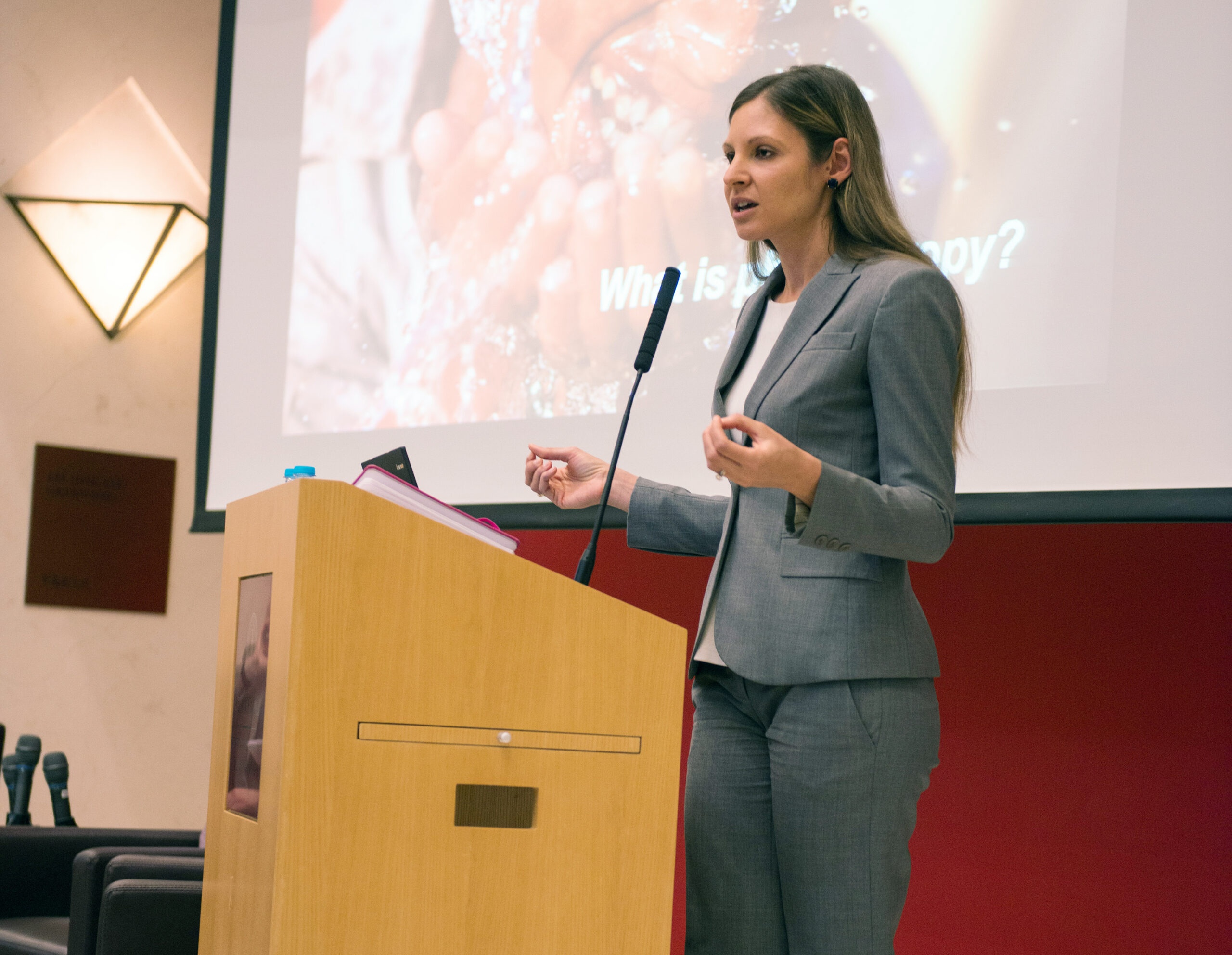
Agora for Good wants to “make the philanthropic marketplace more efficient and make it easier for exceptional nonprofits to scale,” says Angela Rastegar Campbell, the fund’s chief executive. “We’re trying to build a culture of effective givers.”
Ty Walrod, the CEO of Bright Funds, says: “We’re taking high-quality giving advice and bringing it to thousands of individuals. You can be a 25-year-old sales guy at Dropbox and give the way that Bill and Melinda Gates give.”
The two for-profit firms join a growing ecosystem of charity evaluators. Some, like GiveWell and ImpactMatters, dig deeply into a very small number of nonprofits. Others, like Charity Navigator, cover thousands of groups but have struggled to measure results.
Started by Millennials
Agora for Good and Bright Funds recommend dozens of charities chosen by outside experts. Agora’s global education fund, for example, consists of five charities — the Ethiopian School Readiness Initiative at New York University, the Akshara Foundation, IkamvaYouth, Shining Hope for Communities, and Numeric — that were selected by the ELMA Foundation and the Omidyar Network. The Bright Funds clean-water and sanitation fund consists of Water for People, Water.org, WaterAid America, Charity: Water, and the New Venture Fund (a part of Water.org). Donors can also create their own funds and share them with friends, or simply give to any charity they choose. Their donations are tracked throughout the year for tax purposes.
The two organizations share other similarities. They were started by millennials — Ms. Campbell is 32 and Mr. Walrod is 33 — and expect to appeal to younger donors who are just now forming their giving habits.
“Agora was inspired in large part by seeing my friends and peers treat their donations differently,” Ms. Campbell says. “Our generation is giving much more of our money outside of religious channels, which historically played a major role in helping people manage their charity. That means we’re looking for nonprofits ourselves at an early age, and, yes, we care about impact.”
Both have attracted outside investors. Bright Funds raised $1.75 million last year from venture-capital groups Aspiration Growth, Bloomberg Beta, 10k Investments, Wellspring Growth Partners, and Mission and Market. Agora for Good won backing this year from the Dalberg Group, the investment arm of Dalberg Global Development Advisors, a consultancy where Campbell formerly worked.
Fees for Service
Because Bright Funds and Agora for Good are, at heart, fundraising platforms, their business models depend on fees.
Agora for Good keeps about 5 percent of the money it collects for its funds to cover the services it provides as well as the credit-card processing fees it must pay. Bright Funds keeps about 7.5 percent, but most of its larger corporate clients cover the fees, Mr. Walrod says.
By comparison, Network for Good, an online-giving platform, collects a 3 percent transaction fee, plus licensing fees for its software. For-profit mutual-fund companies typically charge about 1 percent annually, although specialized or international funds charge more, and some funds add a one-time sales charge of as much as 4.75 percent.
Agora for Good and Bright Funds say their fees are well below typical fundraising costs for nonprofits, which can add up to 25 cents per dollar. They say they need to charge fees to finance research intended to assure donors that their contributions are being put to good use.
Both are for-profit companies, although Agora for Good is a benefit corporation, a designation for firms that pursue both social and financial goals.
The two services differ in one important respect. Agora for Good focuses on individual donors and smaller family foundations, while Bright Funds reaches most of its donors through corporate-giving platforms. Bright Funds has 40 corporate customers, according to Mr. Walrod, including software company VMware, investment-research firm Morningstar, and solar-energy provider SunPower. “We built Bright Funds specifically for millennials, and many of our first adopters were Silicon Valley companies,” he says.
Neither firm would release figures on how much money it has moved or how many users it has signed up, although Mr. Walrod said “thousands of users” have donated “millions of dollars” through Bright Funds since its launch in 2012. Agora for Good, which was incorporated last year, has just begun marketing itself.
Neither company has the resources to do rigorous evaluations of charities on its own. Bright Funds says it relies on research from GiveWell, Philanthropedia, Charity Navigator, CharityWatch, and UniversalGiving to assemble its funds, but it is vague about how it mashes the data from those sources together. Its funds recommend such sprawling entities as Care and the Environmental Defense Fund, which do so many things that their impact is difficult to measure. Agora for Good lists the foundations and researchers it uses to help select charities for its fund. Both say they intend to invest more in research.
Daniel Borochoff, the president and founder of CharityWatch, an independent watchdog group, says he’d prefer to see charities evaluated by nonprofits whose only purpose is to improve groups’ performance. But, he adds, there’s certainly a need for more scrutiny of charities. “Anything that can promote more thought in people’s giving can be helpful.”




