

November 11, 2012 | Read Time: 6 minutes
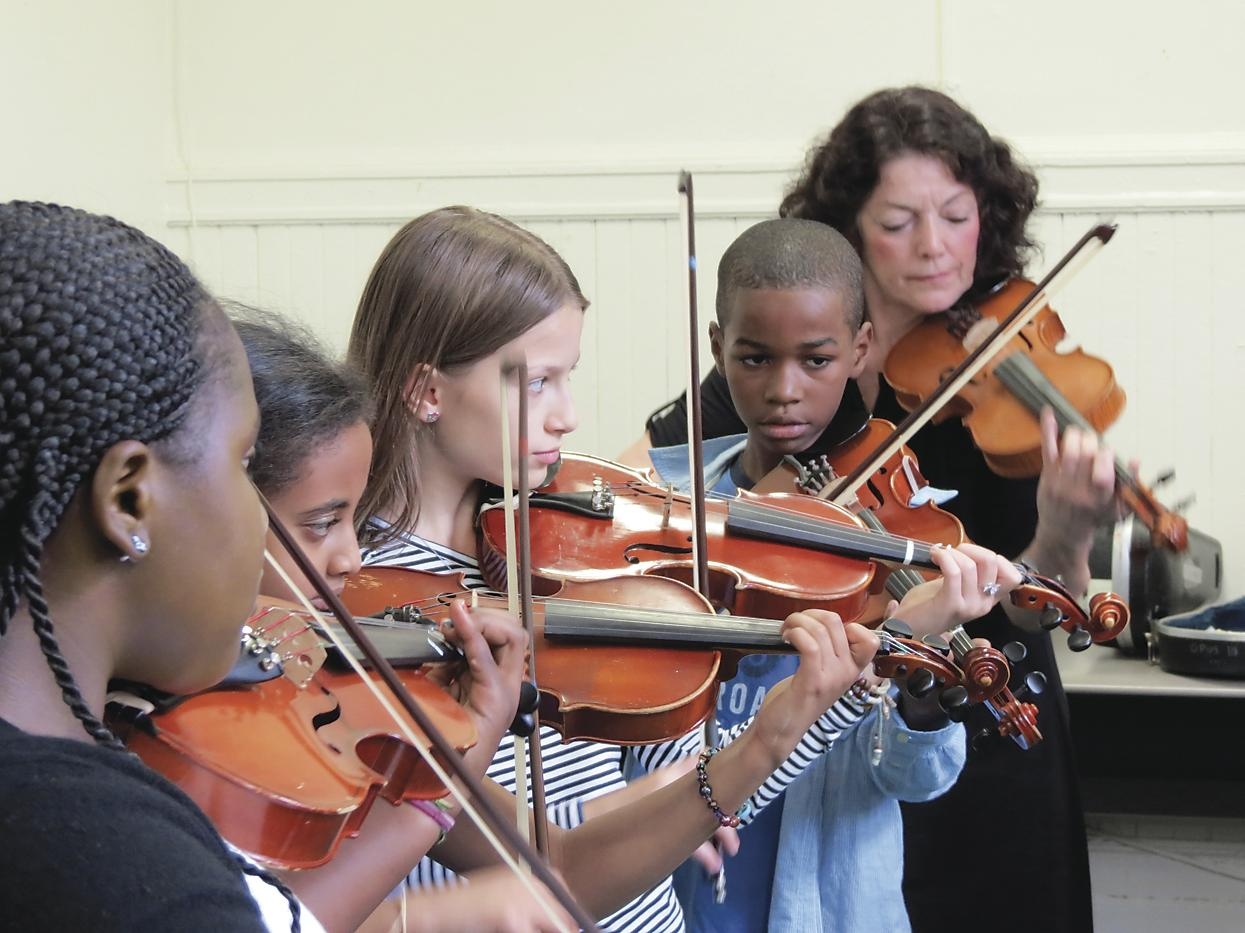
When leaders of the Kaufman Center, a Manhattan nonprofit that offers music instruction, were asked for help by a well-regarded but financially troubled music-education group in Harlem, they jumped at the opportunity to help more needy and talented youngsters.
Opus 118 Harlem School of Music, which had been evicted from its headquarters in March, could benefit from the Kaufman Center’s financial stability and management experience, they figured.
But as talks progressed, executives also saw some problems. If the groups formed a partnership, how would it work? And who would pay the costs of merging?
“We had had some exciting talks centered on the wonderful synchronicity of our missions,” says Lydia Kontos, executive director of the Kaufman Center. “But then you see the legal costs and logistics involved, and it all seems like an insurmountable hill to climb.”
Enter the New York Merger, Acquisitions, and Collaborations Fund—or Nymac Fund.
Formed in March by SeaChange Capital Partners, a nonprofit financial-services group in New York, and supported by a handful of private grant makers and donors, the Nymac Fund helps local charities by making grants to pay accountants, consultants, and lawyers who help bring about a merger or partnership as well as the costs associated with breaking leases, making severance settlements for employees, and integrating two organizations’ technology.
When talks between the Kaufman Center and Opus 118 slowed to a crawl this summer, the Nymac Fund stepped in, making $56,000 in grants to handle collaboration costs and offered some advice on how to shape an alliance.
“They really rejuvenated the discussion,” says Ms. Kontos. “Right before that, the whole thing seemed like too much to handle. We couldn’t have done this deal without them.”
Wall Street Traders
The Nymac Fund taps the financial knowledge of former Wall Street traders who decided to work to benefit charities.
“Most nonprofits know nothing about mergers and acquisitions, but we do,” says John MacIntosh, a partner at SeaChange.
The Nymac Fund is part of a trend. Similar local funds to promote mergers have popped up in recent years in Boston, Cleveland, Detroit, and the Research Triangle region of North Carolina.
Such funds fill a void. While many foundations and other donors, especially since the recession, have encouraged their grantees to collaborate or even merge to save costs and reduce competition for donations, few grant makers have been willing to cover all the expenses incurred from such marriages.
“In the last six months, we’ve seen an increase in inquiries about our expertise in this area,” says Peter Kramer, manager of the Catalyst Fund, in Boston. The program is run by the Nonprofit Finance Fund, which offers advice and lends money to charities to make them larger or more efficient.
Besides working on mergers and acquisitions, the new organizations help draft agreements between charities for other types of collaborations. For instance, in its first two years, the Catalyst Fund has made grants to aid 15 new partnerships, but only four have been mergers.
Other forms of restructuring, such as one organization taking over management of another or making one an affiliate of another, have been more appealing to nonprofits so far, Mr. Kramer says. Sometimes, he adds, groups aren’t ready for a full-fledged merger but may be open to other forms of collaboration that aid both charities’ missions.
A Local Fund
Three years ago, before the Nymac Fund was founded, SeaChange entered into a partnership of its own with the Lodestar Foundation, in Phoenix. Since then, the SeaChange-Lodestar Fund for Nonprofit Collaboration, a nationwide program, has reviewed 130 possible mergers and made 34 grants —totaling about $1.2-million— to bring some of them about. (Lodestar has made $18-million in similar grants over the past 16 years on its own.)
After seeing that approach work, Mr. MacIntosh and others decided to try something like it, focused on New York. The city is home to nearly 30,000 charities and other nonprofits that employ about 500,000 people, according to the New York City Nonprofits Project.
“We’re talking about a sector that represents 10 percent of the city’s economy,” says Mr. MacIntosh. “Many groups are under financial pressure here or are facing leadership-succession issues. We believe we can help groups partner so they can be more stable or more efficient.”
After Superstorm Sandy, Mr. MacIntosh doubts that more New York-area charities will seek to merge. However, he said, “it certainly serves as a reminder of how fragile things are and how getting things down requires cooperation.”
Not in Crisis Mode
SeaChange Capital sought out and received support from some of the city’s grant makers, including the Clark Foundation and the New York Community Trust, as well as from wealthy donors, such as the financier Jonathan Soros. It will use the $1.2-million it has raised to facilitate partnerships this year.
“We decided to set this up as kind of a rotating fund. So we won’t be asking for money until we’ve spent 75 percent of what we’ve already taken in to help groups collaborate,” says Mr. MacIntosh. “We don’t want to be perpetually raising funds. We’ve told our supporters that in another year or so, we’d come back to ask for more help.”
So far, the Nymac Fund has looked at 24 possible mergers or partnerships and made $235,000 in grants to foster six of them. Six more are under consideration, while 12 groups have “given up on the idea,” Mr. MacIntosh says, mostly because the would-be partners didn’t fit together.
Getting nonprofits to realize that they need to adapt to changing circumstances is key, adds Mr. Kramer. “We’re trying to change the conversation so that organization leaders come to us before they are in crisis mode,” he says. “We’re trying to get them to think strategically about the future.”
Leaders of merger funds say they require looking into a group’s finances, management, and missions before making grants. They talk with board members and other leaders but don’t ask them to produce lots of documents or sit for hours-long interviews. “We know they simply don’t have the time,” Mr. MacIntosh says.
The Nymac Fund steers clear of charities that have been told by their financial supporters that they must form a partnership to continue to receive money. If pressured, a group may not see a partnership as its own idea and make a strong commitment to it, he says.
Because charities may not have to merge fully to gain the benefits of a partnership, Mr. MacIntosh urges groups to talk about the advantages of forming an alliance.
“Most for-profit mergers are a bad idea,” says Mr. MacIntosh. “It’s exactly the opposite with nonprofits. If they get to the point where they think collaboration is the right answer, then they’re almost always right.”
At any rate, he adds, it doesn’t hurt at least to talk about it: “There are few bad reasons to have these conversations.”




