
Nature Conservancy CEO’s Reading List: Science, Mystery Novels, and Meditation

By Caroline Bermudez
Contributor
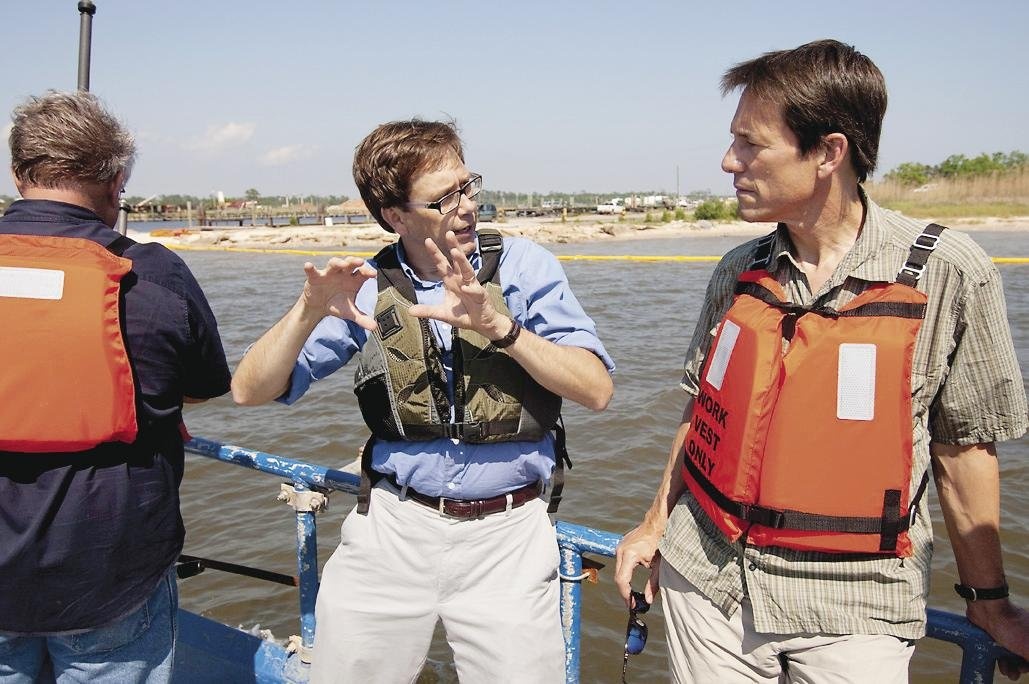
November 11, 2012 | Read Time: 4 minutes
Mark Tercek, chief executive of the Nature Conservancy, on what he reads.
His favorite publications:
• The Economist
• The New York Times
• National Geographic
Books he has recently read on his iPad and Kindle while traveling for work:
• Get Some Headspace: How Mindfulness Can Change Your Life in Ten Minutes a Day, by Andy Puddicombe: “I’m rereading this. This is a book for type-A, stressed people on how to calm down and think more clearly through simple exercises of meditation. Being the head of a big nonprofit is great, and it’s enormously fulfilling, but there’s never enough time to get everything done, so it’s hard to be satisfied.”
• World on the Edge: How to Prevent Environmental and Economic Collapse, by Lester R. Brown: “I read a lot of the great literature on the environmental field. I still have a lot to learn. In a very clear-minded way, he outlines a lot of the urgent environmental challenges we face, but offers thoughts on how we can go about addressing them.”
• What Money Can’t Buy: The Moral Limits of Markets, by Michael J. Sandel: “This is interesting for me because most of my career was as a private businessperson [Mr. Tercek was a managing director at Goldman Sachs before moving to the Nature Conservancy]. The Nature Conservancy has always been interested in working with the private sector, harnessing market power to achieve our goals, and I, naturally, am quite attracted to those kinds of opportunities. This book reminds me that there are limits to market thinking. We can get carried away.”
• Getting Better: Why Global Development Is Succeeding—And How We Can Improve the World Even More, by Charles Kenny: “Being an environmentalist, reading books like Lester Brown’s, thinking about how to achieve our mission, you can get a little bit discouraged sometimes. I don’t think that’s useful and I don’t even think it’s right because humankind continues, in my view, to make good progress. Sometimes we environmentalists forget that. I look for books to remind me of that because it pays in my business to be realistic, but also optimistic.”
• Give Smart: Philanthropy That Gets Results, by Thomas J. Tierney and Joel L. Fleishman: “Tom Tierney is one of my board members and a really close friend and adviser. It’s especially a good book for individual donors to understand how to make the biggest impact. If you run a nonprofit, it’s critical to put yourself in the shoes of the prospective donor.”
• The Cut, by George Pelecanos: “To a newcomer, D.C. seems like a wonky town, and Pelecanos gives one the impression that it’s actually a hip town.”
What he has recommended to his staff:
• Search Inside Yourself: The Unexpected Path to Achieving Success, Happiness (and World Peace), by Chade-Meng Tan: “He was an engineer at Google but was a highly stressed, overworked, type-A guy, always uptight and disappointing himself. He started to study the literature of emotional intelligence and meditating books. He created a course for Google employees called “Search Inside Yourself” to learn how to control emotional responses, be cool and calm, and clear thinking. I tend to sometimes get a bit uptight and overreact and I know that’s not good, and this book offers some really good exercises and approaches.”
• But Will the Planet Notice?: How Smart Economics Can Save the World, by Gernot Wagner: “He’s an economist at the Environmental Defense Fund. His whole point is that it’s great to have all sorts of environmental initiatives that feel good or get people to pay more attention to nature, but the ones that only matter, really, are the ones that have a true, measurable, and big impact on the world. Some people think driving a Prius [is enough]. He points out that driving a Prius isn’t going to deal materially with climate-change emissions; we need energy policy in the U.S. and in places like China and India that curb carbon emissions by putting a price on carbon. Sometimes environmentalists like to ignore those inconvenient truths.”
How he discovers and recommends books:
The Nature Conservancy “has about 500 scientists across the organization and we have a lot of would-be scientists, like me. Science Chronicles is the internal journal for our scientists to debate and discuss the work we’re doing, how we’re doing it, or to bring interesting stuff to one another’s attention. Every six months, we have a book-review issue. Our chief scientist, Peter Kareiva, always reviews a few books and I always review a few, too.”
What he wishes he had more time to read:
“Books that have nothing to do with my job. More novels. History books.”
What he plans to read on his next vacation:
Team of Rivals: The Political Genius of Abraham Lincoln, by Doris Kearns Goodwin, and 1Q84, by Haruki Murakami. Mr. Tercek is a fan of Mr. Murakami’s novels and has lived in Japan twice.
One of his job’s perks:
“For better or for worse, I travel a lot in this job, including really long flights. One of the benefits of that is it provides good, quiet reading time. Since I’ve taken this job on, I read even more than I used to.”




