Nearly 7 in 10 Millennial Evangelicals Give, Says New Study

By Emily Haynes
Senior Editor, Nonprofit Intelligence
May 20, 2019 | Read Time: 3 minutes
More millennial evangelical Christians — 68 percent — report making annual gifts to charities than their Generation X counterparts, only 63 percent of whom reported giving, according to a new study. Less surprisingly, evangelical baby boomers reported the highest share of donors, with 78 percent saying they give to charity each year.
These results come from a study commissioned by Dunham + Company, a fundraising consultancy that works with nonprofits, which explored the giving behavior of 1,000 self-identified evangelical Christians in the United States.
While a greater share of millennial evangelicals give yearly, Gen X donors — evangelical and otherwise — still contribute more money over all than their millennial peers. A 2017 Dunham + Company study found the average millennial donor gave $500 a year, while the average Gen X donor contributed $700.
Even so, the new study’s finding that such a high percentage evangelical millennials give could point toward a bright future for evangelical philanthropy. Already, evangelical Christians are more likely to give to charity than the general population.
According to the study, 71 percent of evangelicals said they make an annual charitable donation. But just 55 percent of the general population gives annually, according to a Philanthropy Panel Study, run by the Indiana University Lilly Family School of Philanthropy.
“There’s a correlation clearly between church attendance and giving,” said Rick Dunham, CEO of Dunham + Company.
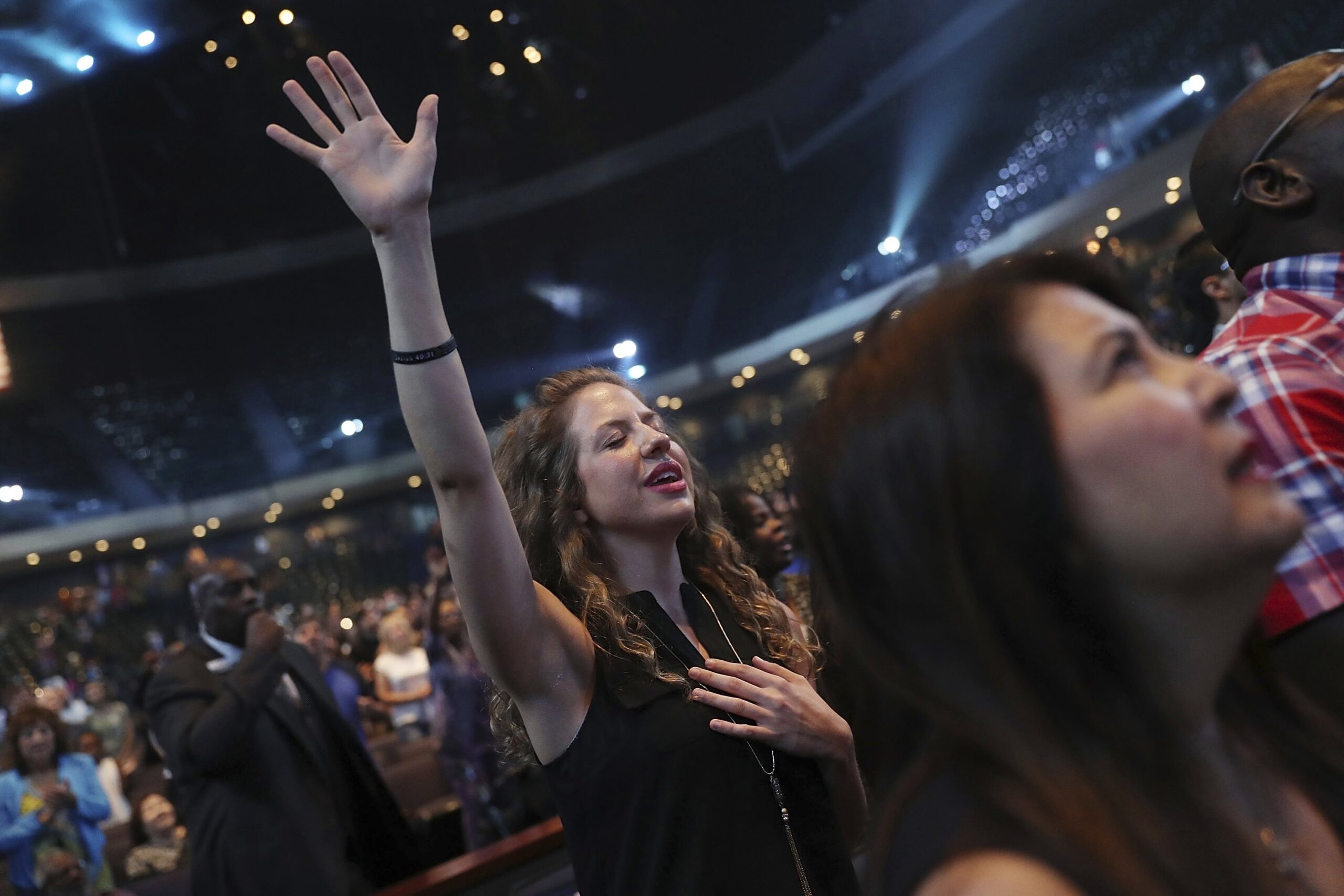
This new study found that millennial evangelicals reported the highest share of weekly church attendance, 61 percent. That compares with 54 percent of boomer evangelicals and 44 percent of Generation X evangelicals.
“The fact that there’s a higher incidence of millennials attending church, compared to Gen Xers, I’m sure there’s a very direct tie there to the higher percentage of millennial giving,” said Dunham.
Sixty-three percent of millennials said they consider the charitable tax deduction when determining the size of their donations. Interestingly, that percentage was lower among older respondents. Fifty-three percent of evangelicals in Generation X reported that the tax deduction would influence their contributions and 40 percent of boomers.
This is surprising since the 2017 tax law doubled the standard deduction and millennials were already unlikely to itemize their taxes.
“It’s a head-scratcher for me,” Dunham said of the finding. “I would’ve expected it actually to be reversed.”
Evangelical millennials were also most likely to say they would increase their charitable donations next year, with 34 percent saying they planned to do so. They were also the most likely to make an online donation.
Dunham says evangelical churches need to get on board with millennials’ giving preferences. “The whole trend is increasingly to give online and to give by mobile. Yet there’s no mention of it during that offertory,” he said.
Evangelical worship services are already pretty high-tech; most include projection screens that could easily display a link to give online. Dunham also said churches could teach congregants how to text-to-give and use giving apps to digitize tithing during services.
“You’ve got to meet the consumer where they are,” said Dunham. “And where millennials are, when it comes to giving, is that they’re going to give digitally.”
Correction: A previous version of this article mistakenly said that a Philanthropy Panel Study found that 71 percent of Evangelicals make an annual charitable donation. That information came from a Dunham + Company study.