

August 22, 2016 | Read Time: 4 minutes
A network of organizations that represent minorities who work at foundations has adopted a new strategy, and with it a name that spells out exactly what it wants to do: Change Philanthropy.
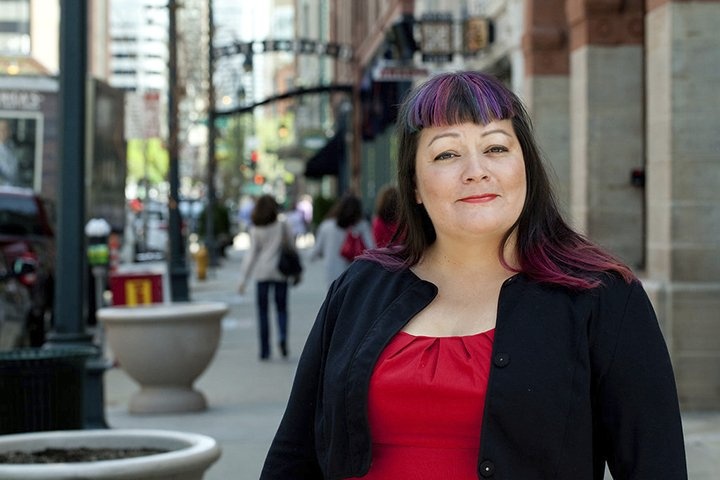
The new mission of the network, formerly called Joint Affinity Groups, is to ensure that grant makers practice what they preach when it comes to race and social justice, said Carly Hare, Change Philanthropy’s national director. Too often, she says, grant makers support social change but fail to discern inequities within their own walls and among their grantees.
The reset at Change Philanthropy comes against a backdrop of racial discord that has included a string of high-profile police shootings of black men, retaliation against law-enforcement officers, and soul searching among nonprofit leaders about the role of elite organizations in social-change movements.
“We want to change the status quo in the culture of philanthropy so it really is based on honoring and practicing inclusion,” she said. “Not just on the fringes, but so it is a sectorwide reality.”
The revamp was two years in the making and was aided by a three-year, $600,000 grant made in 2015 by the Ford Foundation.
Joint Grants
Since its inception in 1993, the organization has labored to connect people who work at its member organizations with one another. It promoted opportunities for grant makers to combine gifts, and it supported the professional development of its members. The network’s members include: Asian Americans/Pacific Islanders in Philanthropy; Association of Black Foundation Executives; Emerging Practitioners in Philanthropy; Funders for LGBTQ Issues; Hispanics in Philanthropy; Native Americans in Philanthropy, and the Women’s Funding Network.
In addition to that work, Change Philanthropy will now publish examples of how foundations have changed their hiring, grant making, and board composition to reflect a more inclusive approach. The site will include collections of recent articles and research on the subject. With the support of the Kapor Center for Social Impact, the group is building a Consultants of Color Database, which foundations can use to identify minority contractors. Even before the official launch of the new mission, Change Philanthropy spread the message to other membership organizations. For instance, in July members participated in a leadership retreat at the Forum of Regional Associations of Grantmakers conference in Indianapolis.
The goal, Ms. Hare said, is to change the culture of philanthropy.
“We want to see some actionable items that look different than just talking about it and putting a blurb on your website,” she said.
By changing the name and mission of the network, Ms. Hare, who previously served as Native Americans in Philanthropy’s executive director, seeks to capitalize on the growing momentum to look at philanthropy from the perspective of social justice rather than charity, a view that openly values the views and expertise of people who have long felt excluded.
Demanding Action
Often foundations that attempt to reduce racial disparities “perpetuate oppression,” according to E. Bomani Johnson, the lead consultant for the Black Social Change Funders Network, a group created by the Hill-Snowdon Foundation and the Association of Black Foundation Executives.
Mr. Johnson credits a series of populist movements in recent years — the Arab Spring, Occupy Wall Street, and the ongoing Black Lives Matter movement — with making it more acceptable for black nonprofit leaders to push foundations to look in the mirror and investigate their own practices regarding race, gender, and sexual orientation.
“If you spoke freely 10 years ago, you would be called a crazy radical,” he said. “You don’t have to hide now.”
The Black Lives Matter movement and the nationwide debate over the treatment of black men by the police has pushed leaders like Ms. Hare and Mr. Johnson to work with a greater sense of urgency.
“We can work faster, harder, and smarter to get this work we’ve been doing for a long time ingrained into the cultural fabric of philanthropy and into the cultural fabric of the United States,” Mr. Johnson said.
In recent weeks, black philanthropic leaders have pushed foundations to get more involved. For instance, the Black Social Change Funders Network called on philanthropy to be a “committed partner” in support of the Vision for Black Lives platform of the Black Lives Matter movement.
Vanessa Daniel, executive director of the Groundswell Fund, warned in an essay on the MomsRising blog that the intensified push for social justice has prompted white supremacists to boil in reaction. In a post on Medium, Rodney Foxworth, founder of Invested Impact, a firm that steers foundation support to disadvantaged young people in need of jobs, described the rage he felt when trying to get foundation leaders of a “privileged class” of mostly white donors to support programs for young black people in Baltimore.
The concentrated effort to push foundations to tackle inequity and racial disparities has raised tensions among grant makers, as was evident at the Grantmakers for Effective Organizations conference in Minneapolis this spring.
Ms. Hare said progress will be difficult because discussions about race, gender, and sexual orientation can make people defensive or open up old wounds. But once a foundation decides to investigate how it operates, it can ultimately have a bigger impact on the communities it is trying to serve.







