
New Evaluation Chief Learned Social Activism From Feisty Émigré Women
Jacqueline Hart takes a newly created position at American Jewish World Service

By Caroline Preston
Contributor
March 24, 2013 | Read Time: 3 minutes
Jacqueline Hart grew up in Long Island during the 1970s and 80s, but it was her experiences on a block of Manhattan that shaped what kind of person she wanted to be.
Her grandparents and her great-aunt lived in separate apartments on the same strip of 79th Street between First and York avenues. Ms. Hart and her parents visited for Sunday meals, along with a cadre of feisty Jewish émigré women immersed in social activism.
Ms. Hart’s great-aunt, who fled Belgium around the time of the Second World War, ran a family-therapy practice and later volunteered at the United Nations. Her friends worked at the International Rescue Committee, in biophysics, and as professors at Hunter College and other universities.
“They were phenomenal women who really rooted me in social justice,” says Ms. Hart, 46.
Creating a Role
The passion Ms. Hart developed for women’s rights and justice led her to volunteer work in college fighting sexual assault; to South Korea, where she became involved with a women’s movement pushing for greater equality on the job; and to Planned Parenthood of New York City, where she led research and evaluation.
Along the way, she received a doctorate in sociology from the University of Pennsylvania, which gave her the analytical skills she’s used to focus her career on understanding and evaluating how social change happens.
She’ll bring all that experience to bear in her new role at American Jewish World Service, a nonprofit that pushes for human rights and equality in the United States and abroad. Ms. Hart will serve as the charity’s first vice president for strategic learning, research, and evaluation.
American Jewish World Service created the position after a review of its work suggested the group could benefit from focusing on feedback from the people it serves and by clearly communicating its impact to donors.
The charity raises money from individuals and foundations—roughly $48-million each year—and makes grants to grassroots groups in the United States and overseas.
“We had been doing evaluation before, but we really wanted to ramp up what we were doing,” said Robert Bank, the group’s executive vice president. “We are trying to solve huge social and economic problems around the globe every day and we need to really learn from the world, from the people in the field, and adjust our strategy accordingly.”
Field Reports
Ms. Hart says she will focus on using the perspectives of grantees to shape strategy. She cites the charity’s work promoting gay rights in Uganda, where homosexuality is illegal and a prominent activist was murdered. American Jewish World Service will gather its grantees in the East African country to determine what they hope, and can reasonably expect, to achieve.
“We can decide, sitting in New York, that we are going to have a law passed or we’re going to make it possible for human-rights defenders to walk down the street and not be at any risk,” says Ms. Hart. “But the truth is we need to listen to the people on the ground, who are closest to the problem, and see how they see possibilities for change and what meaningful measures and outcomes would be.”
She says evaluation is evolving, and foundations and nonprofits are increasingly eager to learn from the people who receive aid.
Says Ms. Hart, “The field is in a place now where there’s much more emphasis placed on making sure evaluation is useful, relevant, and true to the lived experience.”
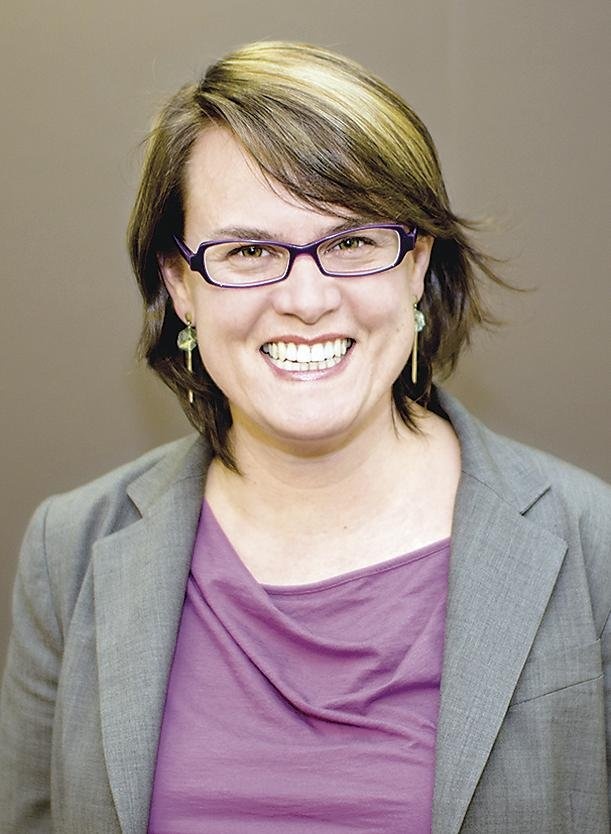
Jacqueline Hart, vice president for strategic learning, research, and evaluation, American Jewish World Service
Education: Bachelor’s degree, psychology, University of Michigan; Ph.D., sociology, University of Pennsylvania
Career Highlights: Director of planning, research, and evaluation, Planned Parenthood of New York City
Salary: She declined to provide it.
What she’s reading: The Orchardist, by Amanda Coplin; Why Be Happy When You Could Be Normal? by Jeanette Winterson




