

October 28, 2012 | Read Time: 7 minutes
Annemarie Grassi says it wasn’t until she was seven years into her 10-year tenure as the leader of Open Doors Academy that she became totally comfortable in the CEO chair.
“You have to show confidence to inspire staff and donors, so at first I faked being confident on the outside while I was shaking on the inside,” says Ms. Grassi, 34, whose Cleveland charity provides out-of-school educational and leadership programs to middle- and high-school-age students. But with time, experience, and advice from mentors, she says, she settled into the demands of the job.
Charity executives and management consultants say that it’s rare for a candidate to be completely prepared for the demanding top job; it’s a leap of faith in one’s abilities and a test of one’s sense of timing. However, with the proper training in management and leadership skills, plus a network of trusted mentors, many mid-level managers could succeed in the CEO role.
“To be ready, you don’t need to know everything, but you need to know how to find the answers you’ll need,” says Lisa Dixon, 31, who was hired as executive director of Maine’s Portland Symphony Orchestra in 2010.
Ready or Not?
While some people may worry that they are not prepared for the move, others overestimate their abilities.
“You’re never as ready as you think you are,” says Allen Fernandez Smith, 33, executive director of Urban Habitat, an Oakland, Calif., nonprofit that works to improve the economy and environment in cities. This is the second nonprofit he’s led.
“Almost every executive director can point to decisions made in their first or second year that they wish they had made differently,” Mr. Fernandez Smith says.
Caroline McAndrews, who recently finished a study on new nonprofit leaders for the Building Movement Project, a group in New York aimed at strengthening social-change organizations, says such rookie-year mistakes are “an indication of the tremendous demands on the top person.”
For a new study that her organization will issue in November, Ms. McAndrews, the group’s director of research and documentation, interviewed 17 new executive directors of social-justice organizations. Only a few told her that they had felt ready for the demands of their job when they started. Most fill in the gaps with help from strong mentors.
Charity leaders need to have a vision for how to move an organization forward, but they also need to be able to build relationships so that change will happen, Ms. McAndrews says. “Both skills are needed, and they’re very different,” she says.
“Knowing just the day-to-day management skills isn’t enough today, when many organizations are struggling with less money from government and donations are still down in many sectors,” Ms. McAndrews says. “These days, you have to be able to dream big.”
Following are some of the key skills nonprofit leaders need to acquire if they expect to succeed as chief executives, say experts.
People skills. Understanding how to inspire the staff, board, donors, and others is crucial, say people who have moved into the top job.
“While many people think of readiness in terms of knowing skills such as fundraising, managing people, and understanding financial statements, those skills are relatively easy compared to the psychological and emotional aspects of the job,” Ms. McAndrews says.
Jessie Singer, 27, in her second year as executive director of the Dysart Community Center, in El Mirage, Ariz., describes herself as a self-motivated individual, but she says that’s not enough: Leaders have to learn how to spread that motivation to the entire staff.
Ms. Singer, whose charity helps low-income families by offering after-school programs for children and English and job-searching lessons for their parents, says she is trying to learn what drives each of her five staff members so the whole organization can be more productive, she says.
The motivational aspect of her job is so intriguing to her, she says, that she is now working on a doctorate in organizational behavior.
Mr. Fernandez Smith, who came to nonprofit work from city government, says he has had to learn how managing a nonprofit differs from similar jobs in other fields because of the intensity of employees’ emotional connection to their work and their colleagues.
Those lessons were underscored, he says, when staff morale at his current organization dipped after a valued employee left. A mentor, Mr. Fernandez Smith says, advised him to acknowledge the loss openly to the staff, rather like a death in the family, so they could all move on. The need for that kind of emotional leadership was a surprise to him.
The feeling of responsibility for employees’ well-being also comes with the CEO job, he notes: “You have to understand that your job is to manage and fundraise not only for the work you do in the community but for the staff people who depend on you for their livelihood.”
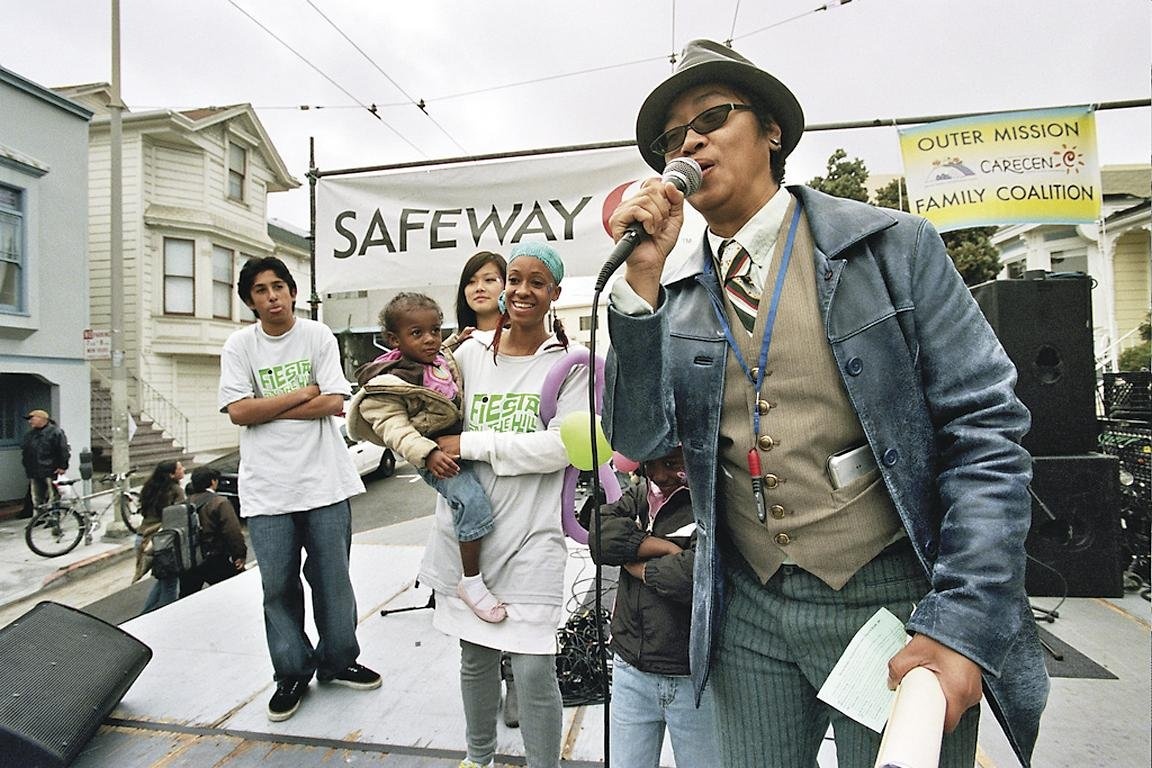
Ability to woo the public to your cause. Rachel Ebora, executive director of the Bernal Heights Neighborhood Center, in San Francisco, says her roots are in community organizing and she prefers working behind the scenes. But sometimes, she says, she has to be out there “as an evangelist for the cause.”
This fall, just like last year, she put her behind-the-scenes persona on hold and emceed Fiesta on the Hill, her charity’s biggest annual fundraising event. The neighborhood street festival drew about 15,000 people.
“You have to be able to represent the organization and make it sexy for funders,” she says.
Being a hard worker and caring about the mission isn’t enough to lead a nonprofit organization, says Ms. Grassi, of Open Doors Academy. “When you meet with funders, you have to engage them enough so they want more,” she says. “You have to be able to inspire staff and the board to do their best work. The people you serve must trust that you have a strong vision for the organization and passion for its mission.”
Fundraising experience. Attracting donors is a chief executive’s central duty, says J.R. Yeager, a project manager at CompassPoint Nonprofit Services, in San Francisco. He has helped more than 50 boards of directors find executive directors over the past dozen years, and he says that if a job advertisement stresses fundraising, applicants need to show they have done more than organize events or manage ticket sales.
That doesn’t mean only full-time fundraisers need apply. A program director with a good track record for writing grant proposals might have potential, Mr. Yeager says.
But aspiring charity leaders who haven’t built those kinds of skills might be better off postponing their attempt to move up the ladder.
Instead of setting themselves up for disappointment, he advises, they should find ways at their current jobs to boost their fundraising experience.
Mr. Fernandez Smith says fundraising is indeed about 70 percent of his job at Urban Habitat. At a smaller organization, which he also led, it took up even more of his time.
A strong support network. To prepare for a move into the executive director’s chair, Ms. McAndrews advises aspiring leaders to build relationships with a small group of other people who hold similar ambitions. That network can help a CEO candidate become ready for the top job and offer support during the difficult first years in the role.
Having a vision for the organization is crucial, Ms. McAndrews says, and those peer relationships can help a budding leader develop that vision.
“Big-picture ideas can grow during the deep conversations of those friendships,” she says.
Some of those peers might also become partners in projects, Mr. Yeager says, providing a new executive with the ability to move quickly and effectively. Board members typically want an executive director who can put people together to make things happen.
“No one wants a lone wolf,” he says.
For most boards seeking to fill a CEO role, the ideal candidate is someone who has done homework about the organization and brings a solid blend of experience and education.
But to land the job, Mr. Yeager says, the board has to see signs of real leadership.
“When they come to interview with the board, they need to be able to hold the room,” he says. “Many of the other missing pieces can be filled, but that elusive leadership quality needs to be there.
More from the 2012 Guide to Managing Nonprofits
How to Negotiate for a Bigger Paycheck 
Round Out Your Skills Through Mentoring





