New Head of Child-Advocacy Group Brings a Mother’s Perspective

By PETER PANEPENTO
Contributor
January 20, 2005 | Read Time: 5 minutes
Stephen Spencer has been shunned and misunderstood. He has been expelled from schools, excluded from social groups, and separated from his family.
Stephen, 14, is bipolar and, as a result of his condition, he has been routinely dismissed by teachers, other children, and parents as an out-of-control troublemaker.
But Sandra Spencer, his mother, sees a different Stephen. To Ms. Spencer, a single mother of three, Stephen is simply a child in need of extra attention — a child who can thrive when he is given the right medication and support.
Ms. Spencer has spent much of the past decade advocating for the rights of her son — and of other children who have been similarly excluded by a world that is not built for those who have mental disorders.
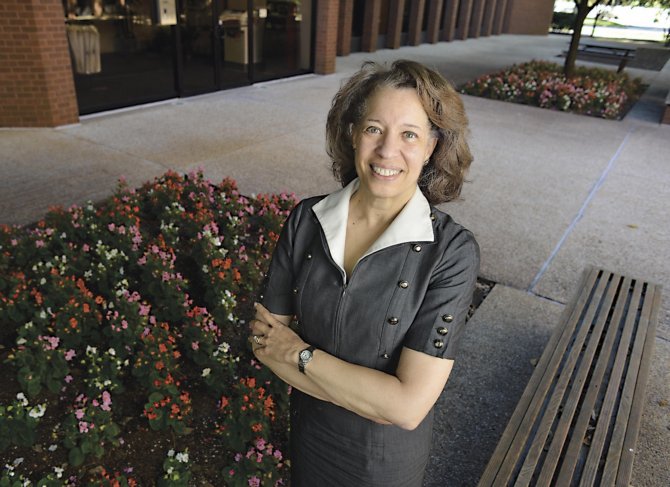
Ms. Spencer this fall took her campaign to the next step, as she became executive director of the Federation of Families for Children’s Mental Health, a role in which she serves as one of the top advocates for mentally disturbed children nationwide.
Her predecessor says Ms. Spencer is perfectly suited for the job because of her experience as a mother and a nonprofit manager.
“She brings all of the experience as a parent,” says Barbara Huff, the Alexandria, Va., organization’s recently retired executive director. “She represents the people we serve. She represents a large population of parents who have kids who don’t get served.”
Ms. Huff, who was the organization’s first executive director, decided this summer to retire and move back to Kansas, where she had lived before she started the organization with a group of 17 other parents 12 years ago.
Now it’s Ms. Spencer who is coming home. A Virginia native, Ms. Spencer went to college in North Carolina and then worked in Greenville as a teacher’s aide and a substitute teacher.
When Stephen turned 3, Ms. Spencer’s life took an unexpected turn. At that time, she noticed that her son was acting erratically; after a series of tests, he was diagnosed with attention deficit hyperactivity disorder — a diagnosis that led doctors to put Stephen on the drug Ritalin.
The medicine, however, did not solve his problems and, by the time he was 4, Stephen was diagnosed with bipolar disorder. The diagnosis, rare for a child as young as Stephen was at the time, relieved the Spencer family. But it did little to ease his journey to public acceptance.
When Stephen was in kindergarten, for example, the public schools in her hometown didn’t want him.
“I was told the only way to teach him was to put him in a residential treatment center,” Ms. Spencer says. “Children deserve to be in their own homes, their own schools, and their own communities.”
She soon left her job as a teacher and began working, first as a volunteer, to push for changes that would allow children like Stephen to get the resources necessary to gain access to public education and programs. As she learned more about her son’s condition, she found that the need for such resources is much greater than she had originally thought.
“I started to have to advocate on his behalf,” she says. “I had to tell people in the community about his condition. You really think you are alone until you get to the soccer field and talk to other moms and find out they are having the same problems.”
Ms. Spencer’s advocacy led her to oversee a regional effort to advocate for children with mental-health disorders, and by 1997 she was in charge of the North Carolina chapter of the federation she now heads.
Now, she is taking over a young and growing national organization with a $1-million annual budget, seven full-time employees, and a goal of becoming an aggressive force in changing both public and government perceptions about the challenges faced by mentally ill children.
Ms. Spencer, who is paid $130,000 a year, says one of her most important challenges is to raise more money for the national organization. With more money, the federation can work to spread its message more effectively and help its member organizations become larger and more vocal.
The Chronicle asked Ms. Spencer to talk about her new role:
Can someone lead this organization without firsthand experience as a parent?
The person in this position has to have the experience with children with mental-health disorders. You can run a nonprofit organization. But you cannot fully appreciate what we do if you don’t have the experience as a parent.
What’s the biggest challenge facing children with mental-health disorders?
It’s about stigma. My mission now is for people to see [Stephen] as a kid who has a mental-health disorder, just like a kid who has asthma. But it’s still a tough battle for him and many others. People are so stigmatized that they don’t get treatment. They don’t want that label. It’s also very hard because you have people who think parents use mental health as an excuse.
Have those perceptions changed at all?
We’re making great strides. There’s been a lot more attention now to mental health in the media. You have Jane Pauley talking about bipolar disorder. You have other people stepping forward. We need to take this opportunity. We need to get more attention in the media. We really need a national voice.
How will your son react to the change of address?
He is a very resilient young man. He’s been in and out of hospitals. He’s been in trouble in school. He’s been picked on and bullied. But he sticks with it.
This is going home for me. I’ll have family members there. I’ll have more support. That helps, because this transition is very difficult. It’s a lot of long hours and a lot of time away.
ABOUT SANDRA SPENCER, EXECUTIVE DIRECTOR, FEDERATION OF FAMILIES FOR CHILDREN’S MENTAL HEALTH
Education: Earned her bachelor’s degree in English and communications from East Carolina University in 1982.
Previous employment: Executive director of the local chapter of the Federation of Families for Children’s Mental Health, in Greenville, N.C., since 1997. She had previously worked as a teacher’s aide and substitute teacher.
What she’s been reading: “The Bible is the book I read most often,” Ms. Spencer says. Some of her other favorites include The Heart and Soul of Change: What Works in Therapy, by the American Psychological Association, and It’s Nobody’s Fault: New Hope and Help for Difficult Children, by Harold Koplewicz.