October 6, 2013 | Read Time: 7 minutes
After she served two years as chairwoman of the board of the Philadelphia Children’s Alliance, Betsy Scarcelli thought she had a fairly good grasp of the charity’s financial situation and of what it needed from her.
But last year, she learned just how much she didn’t know when she participated in a new leadership-training effort for board members.
She now understands that just because the organization lands a big grant doesn’t necessarily mean it’s time to congratulate the executive director for putting next year’s budget in the black. It might be a restricted grant that can’t be used for operations or one that can’t be used next year. It might also mean more fundraising is necessary to get the budget squared away.
“Those of us who have come from the corporate world, it doesn’t come as naturally for us to know these things,” Ms. Scarcelli says. “They sound like small things, but they could turn out to be big things if you don’t look at them correctly.”
Leadership Teams
That’s just the kind of epiphany the creators of the Nonprofit Board Leadership Institute were hoping to prompt when they launched the 14-hour workshop last year.
Officials at the Philadelphia Foundation and the United Way of Greater Philadelphia and Southern New Jersey say that while many training sessions are available for new board members or whole boards, they realized it was rare that anyone worked with board chairmen to help get them in sync with their executive directors.
By pairing the board chairmen and their executive directors in the same workshop, the organizers of the institute seek to give the board leaders a better understanding of the challenges their organizations face.
Nearly 90 people, representing 44 nonprofits from the Philadelphia area, have gone through the two workshops that have been held so far.
Organizers say the program helps strengthen leaders in roles that have become much more complex and challenging in the post-recession era.
The goal, says Jill Michal, president of the United Way of Greater Philadelphia and Southern New Jersey, is to strengthen the nonprofit field over all.
“If we learned anything from the past couple of years,” she says, “it’s that having a sustainable model with strong leadership makes all the difference.”
Understanding Priorities
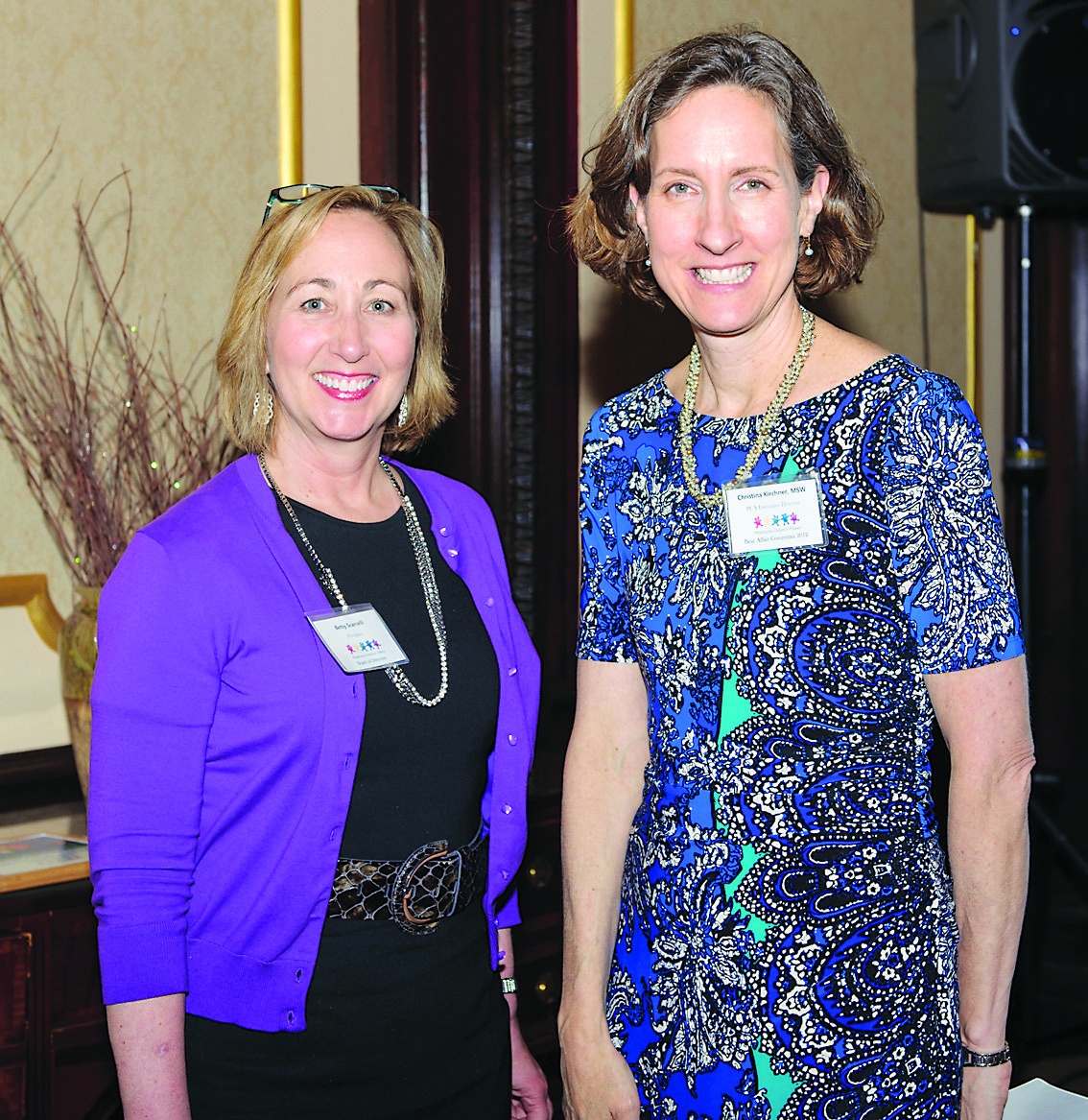
The institute left a strong impression on Chris Kirchner, chief executive of the Philadelphia Children’s Alliance, who attended with Ms. Scarcelli.
“We were both hearing the same things about the priorities of what an executive director should be working on and what I’m up against,” she says. “It was so gratifying to have Betsy there.”
Ms. Kirchner and Ms. Scarcelli went to dinner after the institute and compared notes. They decided to apply for a grant to bring in a trainer for coaching sessions with Ms. Kirchner and the development director, as well as sessions with the board’s fundraising committee and staff fundraisers.
It’s too early to tell for sure, Ms. Kirchner said, “but I can imagine this could end up being an organizational mind shifter in how we think about development and the board’s role in development.”
Added Ms. Scarcelli: “The training helped us realize, ‘Gosh, we’re bigger than we used to be. We have to do things differently.’”
A Dearth of Training
The institute grew out of a desire by officials at the Philadelphia Foundation and the region’s United Way to do more than just give charities money for programs.
About seven years ago, the Philadelphia Foundation surveyed its grantees and found dissatisfaction, says its president, Andrew Swinney.
Some charities felt the grants weren’t focused enough; others wanted more money.
The fund decided to move away from giving grants for programs in favor of grants that build charities’ internal strength. Sharpening the skills of board chairs, in tandem with their executive directors, emerged as a logical way to do that.
The United Way was interested in strengthening boards, too. United Way officials say they developed a plan for the institute after the group conducted a study on the best ways to build board leadership skills in the region. In surveying the local landscape, they found a dearth of education and training specifically for board leaders.
Joining forces with the Philadelphia Foundation, the United Way put on the first institute in the spring of 2012.
To accommodate the busy schedules of executive directors and board chairmen, the program was designed as two three-hour meetings, held in an evening and the next morning, followed a month later by another pair of sessions with a similar schedule.
The sessions cover topics such as board roles and “life cycles” of organizations, the board chairman’s relationship with the executive director, board development, board finances and financial management, and fundraising in today’s economy.
They aimed the program at organizations with budgets under $5-million, reasoning that chief executives at charities with small staffs lean more heavily on their board chairs than larger groups do.
To help institute participants put the ideas they receive into action, the Philadelphia Foundation and the United Way both offer competitive $5,000 grants that can be used to build the organization.
Fifteen grants have been awarded to date, Mr. Swinney says. Thus far, the foundation and the United Way have spent more than $200,000 on leadership-institute training sessions and grants, according to the organizations.
Too Hands-Off
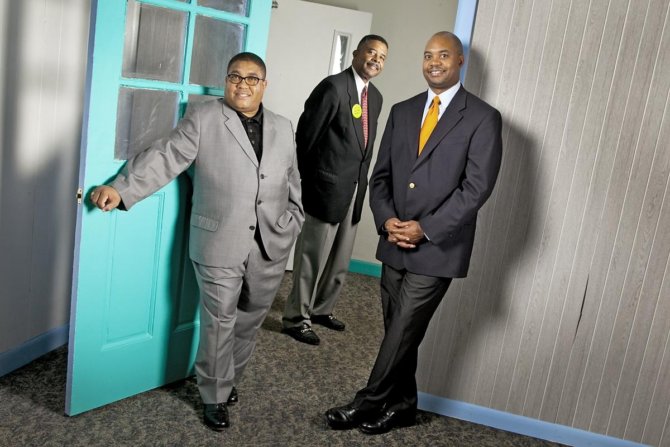
When Timothy Daniel went through the course last summer, he was just coming into his role as board chairman of YouthBuild Philadelphia Charter School. He had served on the board for a few years and had seen others handle the board-chair duties “with varying degrees of capability.”
The institute gave him much-needed time to think about the school’s direction with its executive director, Simran Sidhu, without the pressure of running a meeting or retreat.
“It was a great crash course for me. We were in a room and had lots of opportunity to talk and compare notes,” Mr. Daniel says.
He adds that it left him with a sharper sense of his role and responsibility to the organization.
Working with a capable staff, he said, it’s easy for a board member to “sort of sit back” and presume that staff always has everything under control.
For example, he says, the board took too much of a hands-off policy regarding succession planning for the group’s executive director and senior staff members and also was too passive about leadership development. Going through the institute showed him that “there are things, at times, that perhaps only we can say.”
Ms. Sidhu says she went into the initial session with low expectations, thinking, “Oh, another training.”
But she came out of it so energized by the give-and-take with Mr. Daniel and others, she says, that YouthBuild decided to bring presenters from the institute sessions to talk to staff and board members about fundraising and performance evaluation.
“I feel like what it’s led to is shared language between the board and the staff,” she says, “and that’s a wonderful thing.”
Training Board Leaders: What a New Program Teaches
- How to lead an organization through each stage of a typical nonprofit’s life cycle
- Ways to build a trusting, productive relationship between board chairs and charity CEOs
- Strategies for recruiting new board members
- Financial-oversight responsibilities for boards
- How to play a leadership role in fundraising
- Approaches to assessing an organization’s work
Source: Nonprofit Board Leadership Institute
How to Set Up a Board-Leadership Program
Officials at the Philadelphia Foundation and the United Way of Greater Philadelphia and Southern New Jersey offer the following tips for creating a program like their Nonprofit Board Leadership Institute:
- Do some research. Find out what board-education programs already exist, and look to add value with whatever you seek to create.
- Ask leaders what they need and want. Survey and interview heads of charities and their board chairs to get a grasp on where their knowledge gaps lie. Get a sense of how much time they can realistically commit to a leadership program.
- Collaborate. Seek partners who share the same interest in improving nonprofit leadership and that can contribute useful resources.
- Offer not just training, but money. Grants give leaders an additional incentive to participate; they know they will get the resources to help them implement what they learn.