New United Way USA Leader to Urge Autonomous Groups to Work Together

By Doug Donovan
Contributor
September 30, 2012 | Read Time: 3 minutes
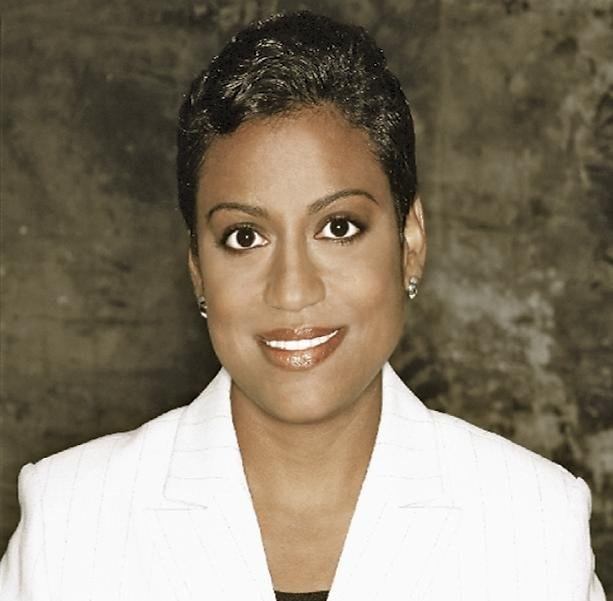
Pairing public service with professional passion is a skill that Stacey Stewart learned early.
The newly appointed president of United Way USA grew up in Atlanta to parents who emphasized both.
Her father, Albert Davis, was a physician in Atlanta in the 1960s and president of the local NAACP at the height of the civil-rights movement. Her mother, Myrtle Reid Davis, was a pharmacist, president of the Fulton County League of Women Voters, an Atlanta City councilwoman for 12 years, and a candidate for mayor.
At 48, Mrs. Stewart is providing a similar model for her own two children: Her interest in business, coupled with a legacy of service, steadily led her to a position running the largest division of the nation’s biggest charity.
“I was always interested in how to leverage private dollars for the public good,” Mrs. Stewart said. “That theme has carried with me.”
‘A Long Path’
Now that she has been appointed to run the U.S. division of United Way Worldwide, Mrs. Stewart will play a pivotal role in raising and distributing nearly $4-billion in private dollars. United Way USA’s fundraising in 2011 made up 75 percent of United Way Worldwide’s $5.14-billion raised last year.
Mrs. Stewart’s job as president will be to get the more than 1,200 American United Way organizations to work more closely together to carry out an approach United Way started pushing in 2008—to distribute its money mostly to groups achieving three goals: cutting high-school dropout rates in half; reducing by 50 percent the number of families who don’t earn enough to cover basic expenses; and increasing by one-third the number of Americans who avoid health risks such as smoking and excessive weight gain.
Stephen Delfin, chief executive of America’s Charities, said Mrs. Stewart’s top challenge will be to continue to convince donors to give only to those three causes. “It’s a valid strategy,” he said. “But that can’t be the only choice, especially in a workplace giving model.”
Her position is a newly created one, the result of the merger in 2009 of two formerly separate organizations—United Way of America and United Way International.
“We have been on a long path to move from traditional fundraising to an organization that is about creating meaningful and sustainable change in communities,” said Mrs. Stewart, who joined the organization the year of the merger. “I’m not only thinking about the money we raise. We also have to stay focused on how our resources are being applied and how we’re measuring success.”
Culture Change
Mrs. Stewart is committed to no less than, as she said, changing the culture of United Way, whose local members have always enjoyed autonomy. She does not intend to disrupt those on-the-ground local connections. Instead, she wants the local organizations more often to share with the entire network the approaches that produce measurable results.
She said her experience has prepared her to unify the local offices around the national mission. She initially worked in public finance for Merrill Lynch on Wall Street, putting together bond deals for local governments. She went on to lead the Fannie Mae Foundation from 1999 until 2007, when it was shut down. In 2006, she earned a salary of $548,393 at the foundation. She was then named senior vice president for Fannie Mae’s Office of Community and Charitable Giving, established after the foundation was closed.
Brian Gallagher, chief executive of United Way Worldwide, said in a statement that Mrs. Stewart’s experience working across “multiple sectors” will allow her to have a “real impact throughout the United Way network.”
Mrs. Stewart sees her mission as a continuation of the one she inherited from her family: working together for the public good.
“We’re about creating an opportunity for a better life,” she said. “If we do those things and do them in a more aligned, interdependent fashion, we can be more successful together than each of us can doing it alone.”