

September 10, 2024 | Read Time: 2 minutes
Village Health Works has always taken on big challenges. The organization got its start providing medical care in rural southwestern Burundi in 2006, soon after the end of the country’s 12-year civil war. Its campus in the village of Kigutu is seven miles from the nearest paved road and a three-hour drive south of the country’s largest city of Bujumbura.
Infant mortality has dropped by 50 percent in the past 10 years, and malnutrition is a fraction of the national rate.
In the early days, doctors and nurses slept in tents during the week and traveled back to their families in the city on weekends, and at night, they provided care by candlelight, says Joelle Bukeneza, a doctor at Village Health Works and deputy director of outpatient services.
“In 2006, if you looked at satellite images, it was empty,” Bukeneza says of the campus. “When you see the images now, it’s different. It’s full of buildings.”
The joint Burundian-American nonprofit takes a holistic approach to health care by providing free medical care but also seeking to address the root causes of illnesses. In addition to seeing patients at its facilities in Kigutu, the organization employs community health workers who make home visits. It also runs schools, supports farming and livestock co-ops, teaches people about nutrition, and more.
The impact has been significant. Infant mortality has dropped by 50 percent in the past 10 years. The graduation rate is twice as high as the nationwide rate, and the area’s acute malnutrition rate is 1 percent, compared with 5 percent nationally.
Last summer, Village Health Works opened the Kigutu Hospital and Women’s Health Pavilion, an 85,000-square-foot teaching hospital, the first of its kind in Burundi. The hospital is a big step forward that allows the organization to treat patients facing serious health problems, Bukeneza says. “We have many specialists now, and the rate of transfers has decreased.”
The organization’s work has won the support of some high-profile donors. The Bill & Melinda Gates Foundation made a $2 million grant in 2017 for the hospital, and last November, MacKenzie Scott gave the organization $5 million.
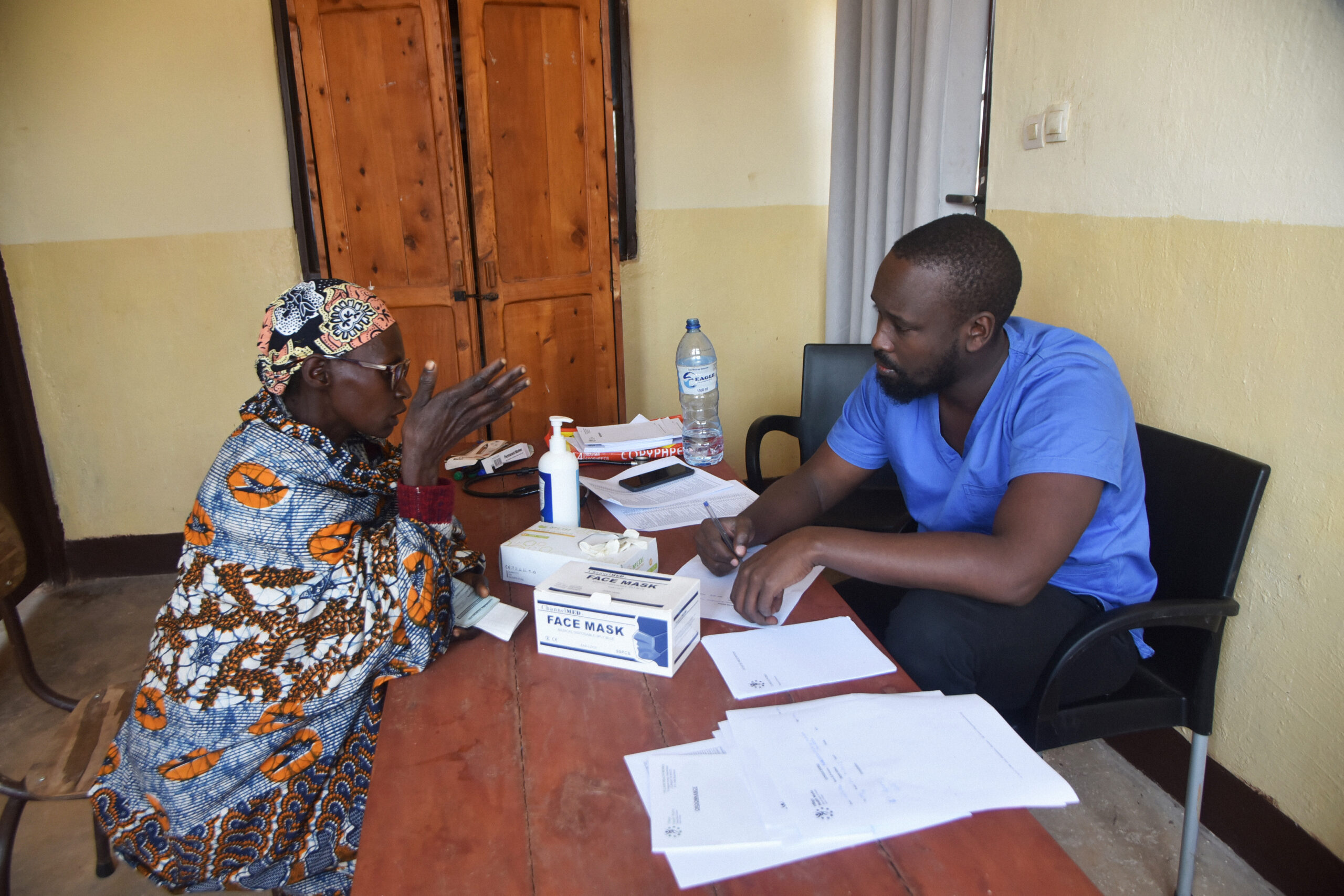
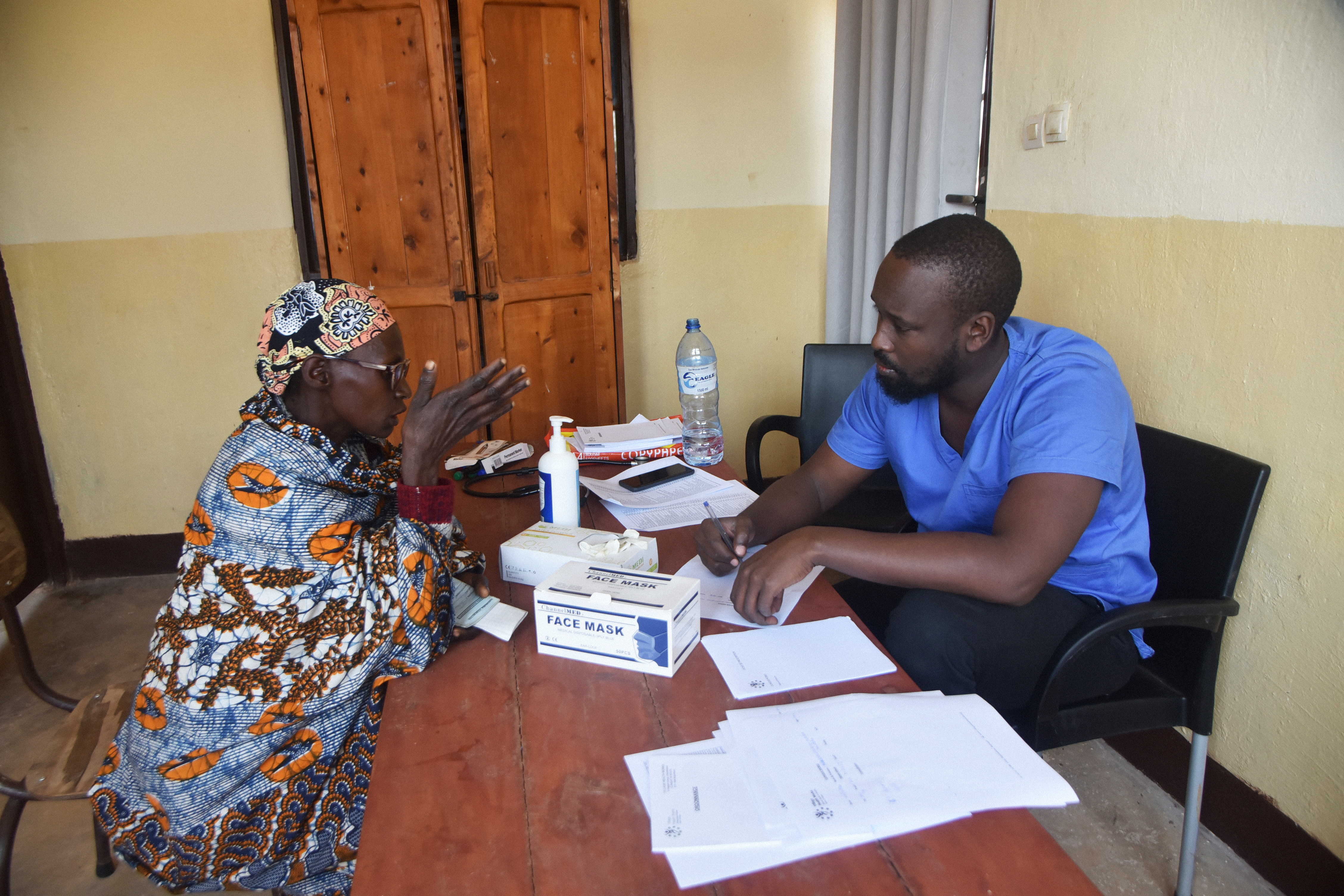
Here, a Village Health Works physician sees a patient at a mobile clinic in Vyanda.





