

July 31, 2018 | Read Time: 2 minutes
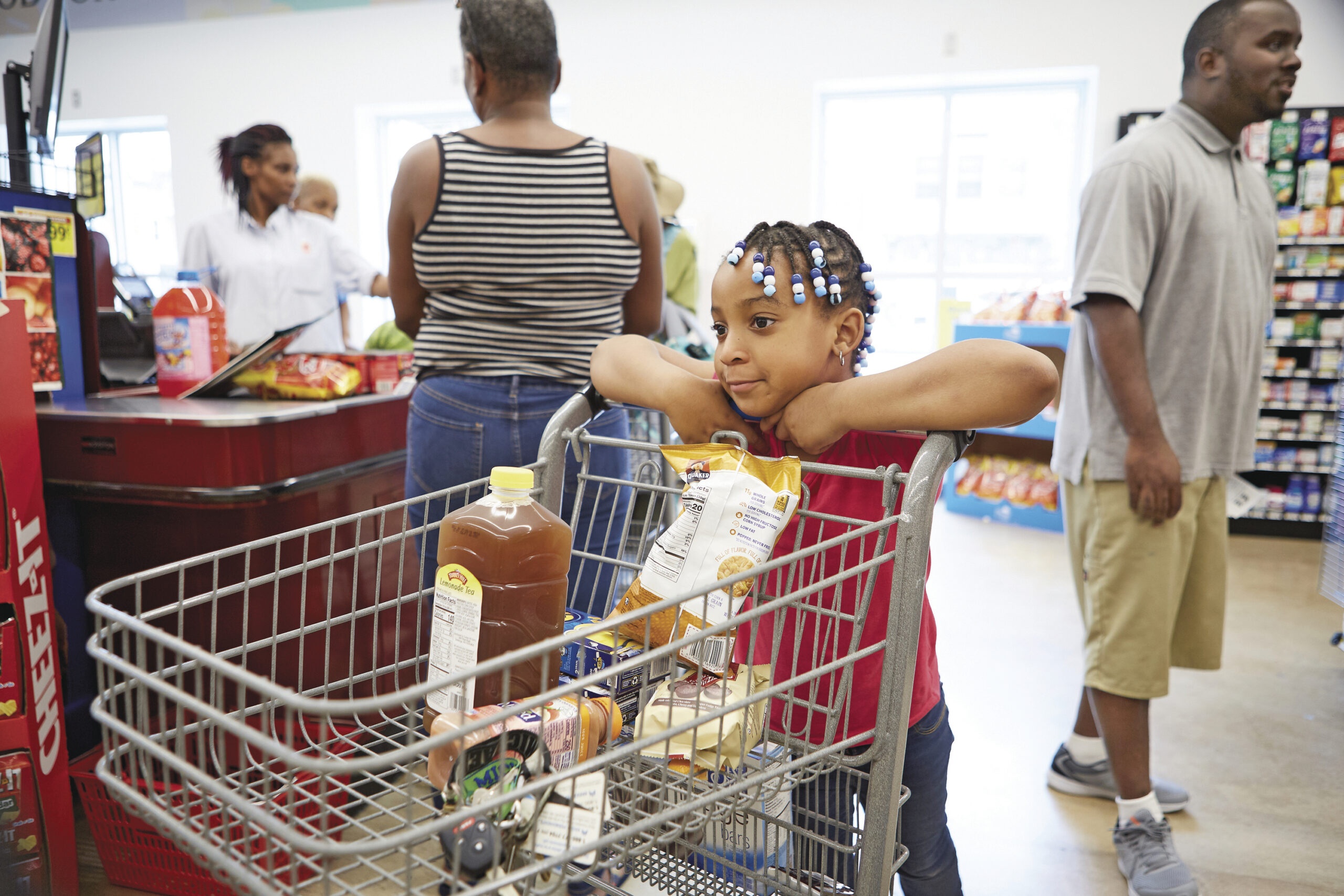
DMG Foods looks like an ordinary grocery store. Displays of tomatoes and avocados beckon, and aisles of milk, baked goods, and fresh-cut meats await East Baltimore residents. Parents, retired folks, and students at nearby Johns Hopkins University stop in for its budget-friendly options.
The Salvation Army opened DMG Foods — one of the first nonprofit grocery stores in the country — in March to improve access to healthy food options. The store grew out of the charity’s work during the unrest after the death of Freddie Gray, a young African-American man who died in police custody in 2015. Its name comes from the nonprofit’s motto, “Doing the Most Good.”
Before the store opened, many residents survived on prepackaged foods from local bodegas, says Major Gene Hogg, the Salvation Army’s central Maryland commander. DMG Foods is miles from a discount grocer like Aldi.
“We do more than sell groceries,” Hogg says. “We’re really trying to focus on nutrition, food education, work-readiness programs, building community.” The store aims to empower residents by letting them choose their own food, unlike a food pantry that distributes whatever is in stock.
“We all want to have similar experiences,” he says. The store offers a loyalty card with digital coupons for all customers. Those who get SNAP benefits can load coupons onto their card for free chicken, light bulbs, and more.
The store, which is not yet profitable, is supported by grants and private donations. Hogg says the goal is to change residents’ habits, and that doesn’t happen overnight.
The question is how much time and charitable subsidy it will take to get people to switch to healthier diets, he says. Foundations are coming around to the idea that the store and its nutrition programs benefit the entire community, but donations aren’t a long-term solution.
Hogg says the store has a year to demonstrate it’s changing local eating patterns. If the model is successful, more stores could be on the horizon.
“We have to change people’s habits,” Hogg says. “We’re trying to strengthen the family table.”







