Nonprofit Group Devises Credentials for Socially Conscious Businesses

By NICOLE WALLACE
Features Editor
October 3, 2010 | Read Time: 8 minutes
IceStone, a building-supply business in Brooklyn, N.Y., is focused on more than just making money. The company also wants to use its enterprise to help protect the environment and improve the lives of its workers.
The company manufactures countertops, vanities, and flooring from recycled glass and concrete. More than 30 percent of its employees and more than 25 percent of its suppliers are from low-income neighborhoods.
B Lab, a nonprofit group based outside Philadelphia, also believes in the power of business to do good. And it has a big goal: to help define and promote a new breed of companies, like IceStone, that care as much about creating social and environmental benefits as they do about earning profits.
Recent Victories
B Lab won a very public victory this spring when at its urging the State of Maryland created a new legal structure—called a benefit or B corporation, for companies that blend business with social and environmental good. Vermont soon followed suit.
Efforts are gathering steam elsewhere, notably in New York, where a bill to allow the creation of benefit corporations has passed the Senate, and Pennsylvania, where a bill is expected to be introduced in the coming weeks.
But some critics question how much a new corporate form will do to promote socially responsible business.
The other primary tool in B Lab’s drive to promote socially responsible business: a certification program. The group’s rating system scores companies on how their products and business practices affect their employees, customers, suppliers, the towns and cities where they are located, and the environment.
So far, more than 300 companies—that together generate annual revenue of more than $1-billion—have been certified by the organization as B corporations. Most are traditional for-profit companies, but a few are businesses started by charities to generate revenue and further their missions, such as the Greyston Bakery, in Yonkers, N.Y.
Redefining Success
Founded just four years ago and fielding a staff of only 16 employees, B Lab has accomplished a lot.
The organization credits its success to strong local partners and being aggressive when opportunities present themselves. A case in point: When Maryland State Sen. Jamie Raskin asked one of B Lab’s co-founders how soon the group could provide draft legislation, the group had a bill, tailored to the state’s corporation law, to the senator within a week.
The effort represents a very different second career for the group’s three co-founders. Jay Coen Gilbert and Bart Houlahan built AND 1, a $250-million basketball footwear and apparel business. Andrew Kassoy spent 16 years in the private-equity industry and was one of AND 1’s first investors. The three men have been friends since their college days at Stanford University.
“Our hope is that the community of B corps redefines success in business, and that companies will begin competing not just to be the best in the world, but to be the best for the world,” says Mr. Coen Gilbert. Helping companies stand out in a marketplace where more and more businesses are claiming to be good corporate citizens is one of the biggest benefits of certification, he says.
“It’s increasingly difficult for consumers to tell the difference between good companies and just good marketing campaigns,” says Mr. Coen Gilbert.
Mission-driven companies say the work B Lab is doing is critical to the future of their industry.
Pointing to a third-party certification is important, says Brandon C. White, founder of Lateral Line, a company in Easton, Md., that makes high-end fishing apparel.
Certified in 2007, the company donates 2 percent of its pre-tax sales revenue to grass-roots conservation projects.
Mr. White says that it’s gotten to the point where customers are automatically skeptical when he says that his company is socially responsible.
“They roll their eyes, because everybody in the freaking marketplace is saying that,” he says. “At least I can say, ‘No, no, really. Here, we’re certified.’”
An Advertising Push
B Lab has negotiated other more tangible benefits for the companies as well.
The Yale School of Management forgives loans to students who take a job at a company certified as a B corporation, potentially a powerful tool for the companies’ recruiting.
Philadelphia recently passed modest tax breaks for companies that are certified, and more than 40 companies, including technology firms and headhunters, offer discounted rates to B corporations.
This holiday season, B Lab will run its first advertising campaign to introduce B corporations to consumers.
The organization expects the campaign to reach 17 million consumers. Advertisements will appear both in print publications, such as Mother Jones magazine, and online at Web sites such as Care2.com, which promotes health and environmental conservation.
Passing the Test
The B Impact Assessment is free and available online. In all, nearly 5,000 companies have used the tool to measure their social and environmental performance. Companies that seek and receive certification pay an annual fee based on their revenue that ranges between $500 and $25,000, and their assessment scores are posted on the B Lab Web site.
Fees make up 20 percent of the organization’s $2-million annual budget. The rest comes from foundation and corporate grants.
To earn certification, companies must answer a series of questions on how they run their businesses and how they help the communities in which they work. They must score at least 80 on the assessment’s 200-point scale.
The questions that companies are asked and how their answers are weighted varies depending on the size and type of business.
“It may be wonderful that the law firm says, ‘Please don’t print this e-mail’ on the bottom of their e-mail signatures,” says Mr. Coen Gilbert, of B Lab. “But what the paper mill does with its gray water and where it sources its pulp from obviously has a much more significant environmental impact.”
To ensure the certification’s rigor, B Lab has another requirement: Companies must amend their charter to say that they will consider the impact of their business decisions not just on shareholders but also on employees, suppliers, the environment, and their communities.
Deciding to change a company’s founding documents is not something that a social-responsibility or marketing manager can do, says Mr. Coen Gilbert. It’s a decision that has to be made at the chief executive level and requires shareholder approval.
“It’s a big deal,” says Mr. Coen Gilbert. “We’re not asking people to pay some dues and join a club.”
Best Intentions
By asking companies to make that difficult decision, the organization is tackling a problem that has long dogged entrepreneurs.
Too many times, social-purpose companies started with the best of intentions have trouble holding on to their missions when they grow to a point where they want to go public or are large enough to be acquired, says Timothy O’Shea, who for many years was a consultant advising socially responsible businesses.
The prevailing understanding of fiduciary responsibility holds that companies must make decisions based on what is in the best financial interest of shareholders, and businesses end up selling to the highest bidder.
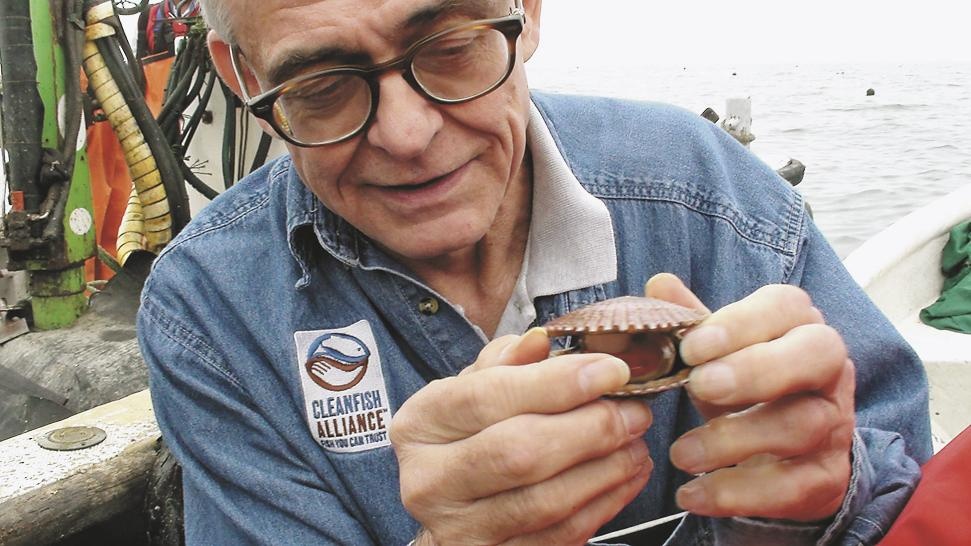
About five years ago, Mr. O’Shea co-founded CleanFish, a San Francisco company that buys and sells seafood that has been raised or caught in environmentally responsible ways. He says that incorporating the company’s ecological values into its charter was a relief.
“To have that out there just reinforces the intention of why we started the business,” says Mr. O’Shea. “I didn’t start the business to just be another commodities seafood dealer.”
Looking Ahead
But not everyone thinks new legal entities are the best way to encourage the growth of mission-driven businesses.
“The more you say we’re special and we’re different, the easier you make it for other people to marginalize you,” says Jeff Trexler, professor of social entrepreneurship at Pace University in New York.
Mr. Trexler worries that the new corporate form has the potential to create enmity between social enterprises and traditional companies without increasing the number of mission-driven businesses. He points to the community-interest company, a similar corporate form introduced in Britain five years ago. He says relatively few businesses have taken advantage of the new designation, just a few thousand, because there weren’t any financial advantages to doing so.
It’s easy, inexpensive, and a good public-relations move for state legislatures to pass benefit corporation legislation, says Mr. Trexler. But, he says, neither the states nor the federal government are in a position financially or politically to offer tax breaks or other incentives to for-profit entities.
B Lab plans to seek tax benefits and procurement preferences for benefit corporations eventually. But for now, the most important thing the new entity provides is clarity, says Mr. Coen Gilbert, giving business owners and overseers legal protection to run their businesses in socially responsible ways.
Ultimately, B Lab wants to change the business world as a whole, says Mr. Coen Gilbert.
The group hopes that by increasing the number of companies that believe business has the power to be a force for good and helping them grow will, in time, influence more traditional corporations.
“There is tremendous power in what folks have called social enterprises,” he says. “But there is also tremendous power in addressing the 99 percent of the economy that is producing the run-of-the-mill products and services that we all use every day.”
Social-Purpose Businesses: Questions They Must Answer
- What multiple is the highest compensated individual paid (inclusive of bonus) as compared to the lowest-paid full-time worker?
- What percentage of your company’s significant suppliers are independent and located in the same community as one of your offices?
- What was the average annual percentage of net profits or net revenues that your company gave to charity in the last two fiscal years?