May 4, 2021 | Read Time: 2 minutes
A nonprofit called Nest has helped artisans around the world find new markets for their handcrafts and preserve cultural traditions since the group started in 2006. Two years ago, the organization turned its attention to the United States and started Makers United, an effort to help artisans of color reach more customers.
The first big project is a partnership with quilters in Boykin, Ala., a small, isolated town, where most residents trace their lineage to enslaved people on the Pettway Plantation. The average income in the area is roughly $12,000. The community — better known as Gee’s Bend — won renown for its quilt-making tradition in the early 2000s. Exhibits of historic quilts from Gee’s Bend traveled the country, and some of those quilts are now in museums.
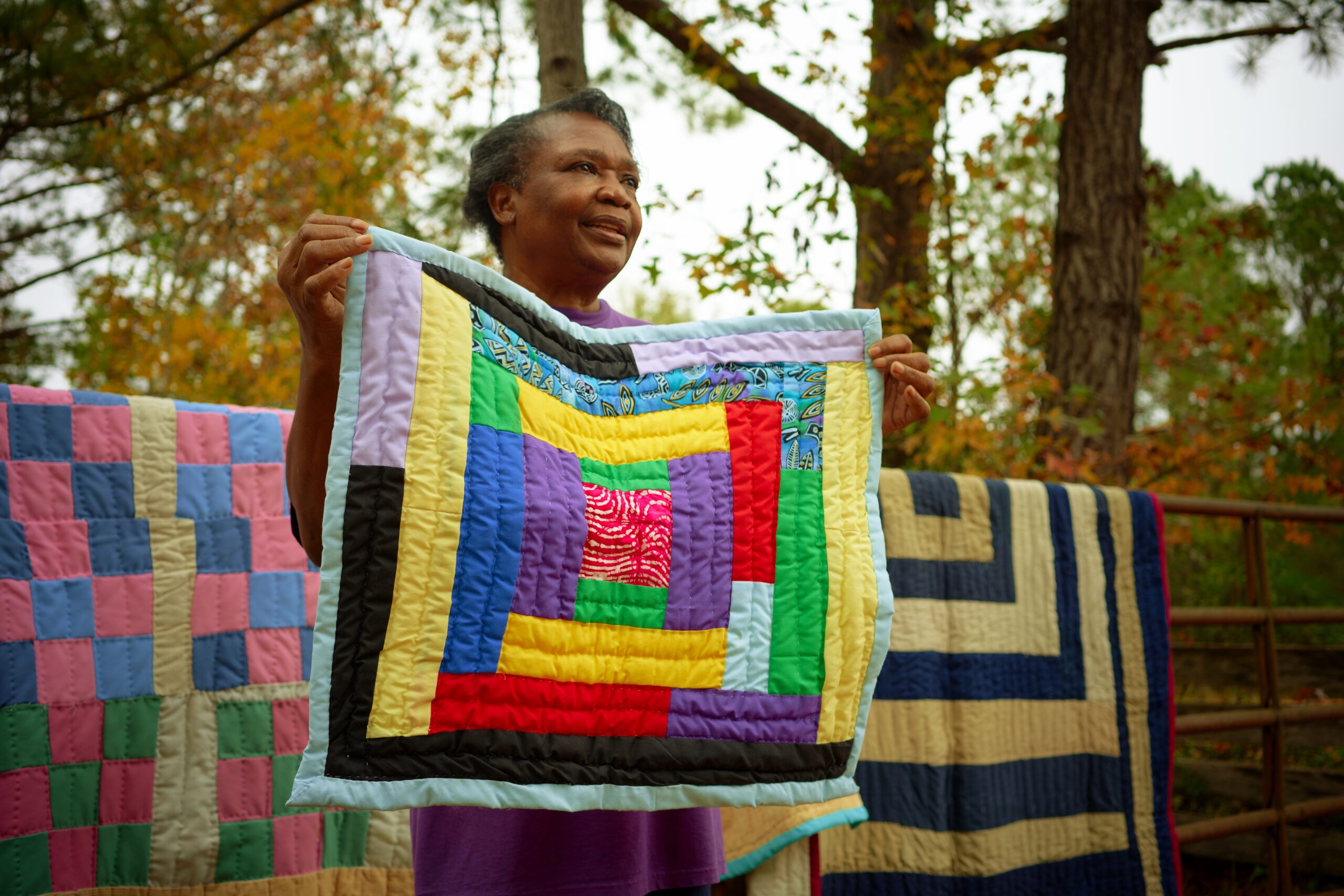
The attention revived what had been a dying art form, but contemporary quilters, like Stella Mae Pettway, shown here, struggled to reach a broad audience.
“You just basically had to go there and hope you find a woman outside her house in the Bend to ask if you can buy a quilt,” says Rebecca Van Bergen, Nest’s founder.
Nest worked with the quilters to increase sales. A key part of the plan: setting up shops on Etsy. The company has waived its fees so all the money goes directly to the quilters. When the sites went live in February, the women sold $75,000 in quilts in 48 hours.
“It’s been extremely empowering for them,” says Lakenzise Mayberry, the organization’s project manager for Gee’s Bend. “They get to make all the decisions themselves. They get to see the benefit and the consequences of those issues. ‘If I set my price here, are they going to sell fast or are they going to sell slow?’”
Nest will continue to work with the community to create more economic opportunity related to quilting, including post-Covid tourism. Makers United also works Native American artisans and is starting a program with Gullah weavers who make sweetgrass baskets in coastal South Carolina with financial support from Bloomberg Philanthropies.