Nonprofit Shares Data About Troubled Teens With Researchers

By NICOLE WALLACE
Features Editor
August 18, 2014 | Read Time: 2 minutes
Researchers are gaining access to enormous amounts of data about teenagers who are struggling with depression, bullying, and other problems, thanks to Crisis Text Line, which has been operating for a year.
The service makes it easy for teens to get crisis counseling and referrals simply by sending text messages on their cellphones. The nonprofit is making available data about roughly 60,000 counseling sessions in the hope that academics, government officials, and other charities can help even more troubled young people.
“With researchers and policy makers being starved for this kind of data, suddenly they’ll be able to make more informed decisions about how do you try to help teens in crisis,” says Bob Filbin, chief data scientist at Crisis Text Line.
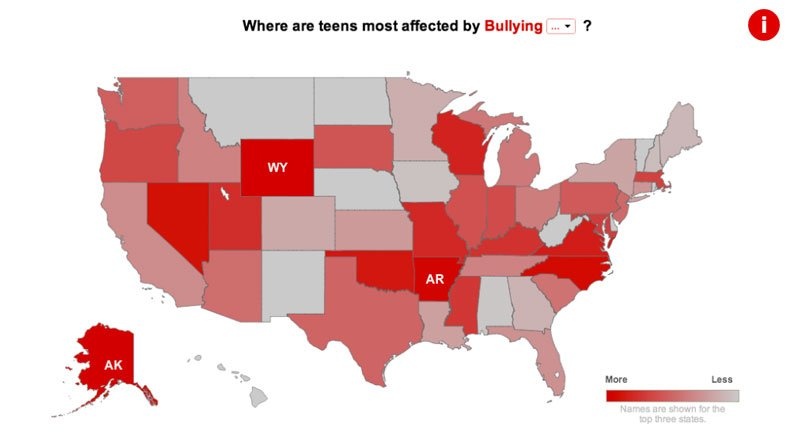
The public dataset provides visualizations of aggregated information. Among the findings:
- Alaska, Kentucky, and Montana have the most requests per capita for help for suicidal thoughts.
- Requests for assistance related to sexual orientation are highest on Sunday and Monday.
- Text messages about self-harm peak between 9 p.m. and 10 p.m. The data don’t contain information that could identify individuals.
Researchers who apply to gain access to more in-depth data go through a formal application process, are restricted in how they can use the information, and have to follow strict guidelines to keep the data safe.
Professors at the Johns Hopkins University, Massachusetts Institute of Technology, and the University of Rochester are already working with the data, and researchers from the University of California at Berkeley, Princeton, and Stanford have started the application process.
“A lot of people are interested because there just isn’t data available on teens in crisis,” says Mr. Filbin.
Officials at Crisis Text Line say that the value of its data will only grow as the group provides assistance to more young people. Crisis specialists with the nonprofit have more than 7,000 text-message exchanges with troubled youths each month. The organization plans to update its datasets at least weekly.
Mr. Filbin thinks more nonprofits need to weigh whether they can expand the impact of their work by making their data available to others: “The idea behind the public data project is that as an organization trying to create social change in the world, this data can create more of that value if we share it with other people.”