

February 24, 2013 | Read Time: 7 minutes
When three nonprofit groups merged last year to form the University of Arizona Health Network, problems quickly emerged with its new board of directors.
The parent organizations had appointed equal numbers of trustees to protect their interests, but that approach backfired. The 27-member board was big and hard to manage, and the trustees failed to come together as a board, leading to heated disagreements. They were, as one board member put it, “dysfunctional from the start.”
With help from an outside expert, the health network reexamined its leadership needs, whittled the board’s size, and appointed 17 mostly new trustees. The board is now working better.
Nonprofit organizations are increasingly taking a hard look at their boards and putting more resources into recruiting the right trustees, says Susan Meier, a governance expert with BoardSource, a nonprofit group that works to strengthen charity boards.
“It’s not just knocking on your neighbor’s door and saying, ‘We want you to serve on our board because you love kids,’” she says. “It is now more strategic.”
Even with charities putting more effort into finding the right trustees now, recruiting is still much easier than keeping board members focused and engaged over the long term, according to Ms. Meier and other board experts.
To do a better job of recruiting and engaging their board members, experts say that charities can:
Ask top local leaders for advice. Linc Housing, a Long Beach charity that provides low-cost homes in California, sought a new recruiting method after adopting term limits for board members. Jan Masaoka, chief executive of the California Association of Nonprofits, urged the housing group to bring local leaders together and ask them to recommend potential trustees because she has seen that work well for other charities.
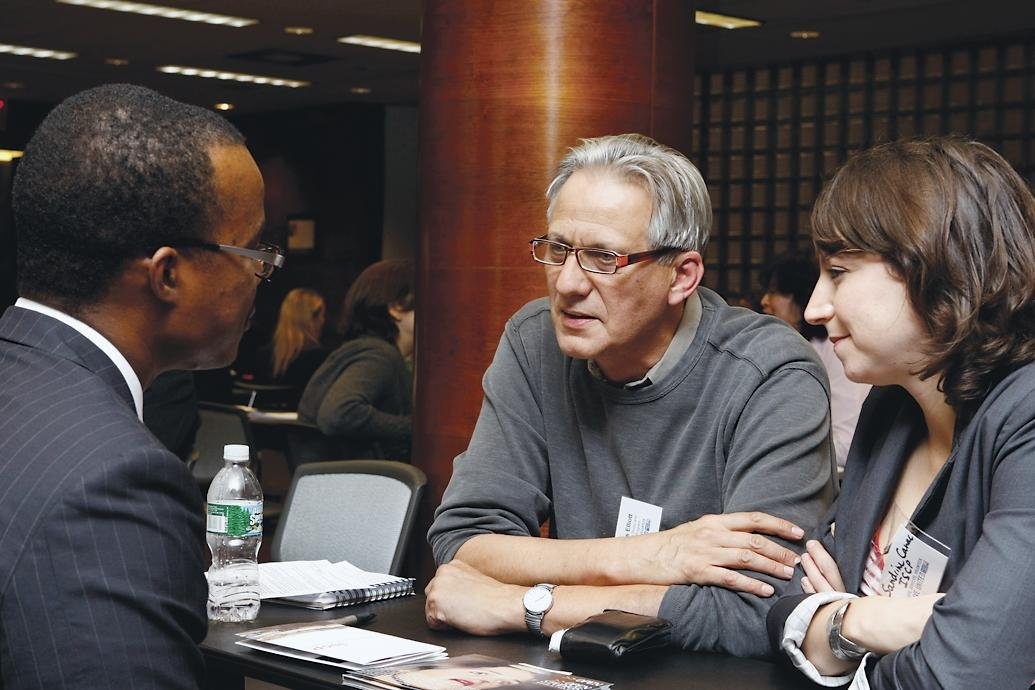
The housing group invited a handful of influential people from construction, finance, and other industries related to housing to a 90-minute after-work event, with the promise it was all the time they would have to give.
Over drinks, the charity gave the guests a short update on critical issues facing Linc Housing and a job description for trustees. Then it asked each guest to suggest five people who could help the charity by joining its board.
Ms. Masaoka says at events like this, it’s important for people to base their suggestions on what each board member could actually accomplish for the charity. For example, the charity might seek a new board member who could help it build ties with Latino groups; just recruiting a Latino board member might not be enough to meet that goal.
After the “search party,” as Linc Housing called its event, officials ranked the recommended candidates and then got in touch with about two dozen people it thought had the most potential as new board members.
They were invited to one of four luncheons to learn more about Linc Housing and talk to trustees and employees. That led to formal invitations to six people who agreed to join the board.
The process helped prepare the new trustees for the issues they would confront from their first day on the board, says Nina Dooley, the charity’s director of communications, and it also broadened the pool of candidates.
Use a board matching program. Nonprofits can often take advantage of free or low-cost services that connect them with potential board members, including those offered by local United Ways and companies that want their executives to help charities.
In Cleveland, companies gathered together two decades ago to form Business Volunteers Unlimited, which has since recruited 2,300 charity trustees.
Making Books Sing, a small New York group providing theater and arts education to city schools, recently found two new trustees by participating in BoardServeNYC, a United Way program that has placed nearly 450 trustees at charities since 2009.
The program offers training for new board members and invites them to quarterly “peer learning groups” to hear experts lead discussions on topics such as making change and nonprofit finances. BoardServeNYC also holds matchmaking events at which charities can meet potential board members.
Andrew Frank, executive director of Making Books Sing, says he was hard pressed to find someone with financial acumen to join his small board before coming to BoardServeNYC. Now his group has both an accountant and a financial manager of a local family foundation on its board.
“If you are going to grow a board,” Mr. Frank says, “you cannot just rely on your existing board to bring in new members. You have to use everything out there to succeed.”
Hire a recruiter. Companies often pay executive recruiters to find board members, and nonprofit organizations have started to do the same, says Jim Gauss, chairman of Witt/Kieffer, an executive recruiting company that recently started a new practice to find qualified board members for nonprofits.
So far Mr. Gauss has helped a handful of health-care groups recruit new trustees and is now looking for board members for the Methodist Hospital of Southern California, in Arcadia.
Help/PSI, a New York charity that serves people with HIV and AIDS, recently recruited two new board members after hiring Carol Weisman, a St. Louis consultant who advises nonprofit boards and also writes a blog on trustees and fundraising for The Chronicle.
Because Help/PSI is considering a merger with two nonprofit housing organizations, it needs board members who can help evaluate the financial risks of combining three charities.
John Russell, the first trustee Ms. Weisman recruited, is a wealth manager who supports a St. Louis charity that provides housing for people with AIDS. He also has a home and clients in New York, so he was open to getting involved in civic affairs there.
Ms. Weisman also recruited Charlene Butterfield, a Standard & Poor’s director who does credit ratings on nonprofit hospitals, private schools, and other nonprofits. Since joining the board in August, Ms. Butterfield has not only shared her analytic skills but also helped with fundraising.
Start a group for potential trustees. To improve the fundraising returns of its golf tournament, Junior Achievement of Tampa Bay formed a group of local business people. The effort helped identify several people who went on to become board members.
The group of 12 executives meets monthly from September to June to plan ways to make the annual tournament “the highest quality ever golf package,” says Richard George, the charity’s chief executive. It now raises $750,000, up from just $18,000 when the group started 15 years ago.
The key is treating the business leaders well without asking them for money, Mr. George says.
The charity offers the executives several ways to get involved, including teaching business principles to local students, giving tours of their businesses to other members of the group, and attending dinners honoring leading entrepreneurs.
The approach has worked so well that Junior Achievement started a similar group for young executives, Mr. George says. “These groups are like feeders to our real board.”
Focus on governance, not nominating people. The Community Foundation of Lorain County, in Ohio, replaced its nominating committee with a governance committee when its leaders decided it needed trustees who reflected its region, a combination of rural and urban spaces.
Not only did the committee diversify its board but it also worked to improve its performance by setting up annual reviews so trustees could evaluate their own work and that of the whole board.
Forming a committee on governance emphasizes broad responsibilities to the board in a way that the typical nominating committee doesn’t, according to Berit M. Lakey, author of The Board Building Cycle.
Ask the committee to figure out when the board needs new expertise and how to deal with poor performance, she advises. And the governance committee should also focus on succession, seeking ways to groom future board leaders.
Offer meaningful work.
Nonprofit groups often recruit board members who are movers and shakers, then don’t give them responsibilities commensurate with their talents, says Ms. Meier of BoardSource.
“They expect the person to fit into their culture without thinking about how to engage a person of this caliber,” she says. “If you want the best and the brightest, you cannot just have them review financial statements.”
Carl Terzian, a Los Angeles consultant who places executives on local nonprofit boards, recalls recruiting a corporate leader who was given the agenda at his first meeting on a hospital board.
“The first item was to select the color of toilet paper in hospital rooms,” Mr. Terzian says. “He got up and walked out and never came back.”
To avoid such mishaps, charity leaders should eliminate administrative details from their board agendas and seek trustees’ ideas for discussion topics, Mr. Terzian says.
Charities can also get guest speakers for board meetings and use other resources to engage board members, he says. “If you see an outstanding reference book or a seminar, get them for the whole board.”




