
Nonprofits Need to Think Like Businesses to Raise Money From Them, Says Author

By Caroline Bermudez
Contributor
February 10, 2014 | Read Time: 3 minutes
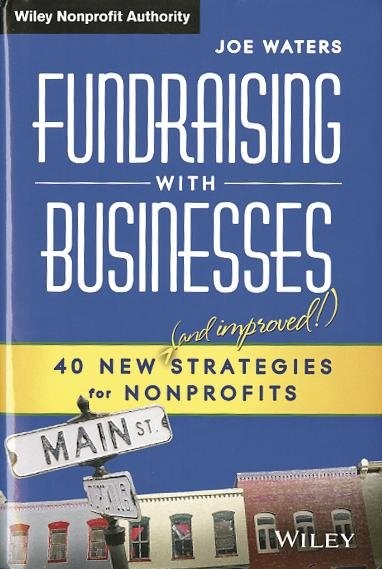
Charities do a poor job of raising money from businesses because they do not focus on what companies want, says Joe Waters, a fundraising consultant, in his new book, Fundraising With Businesses: 40 New (and Improved) Strategies for Nonprofits. In an interview, Mr. Waters shares advice on how nonprofits can improve:
What don’t nonprofits understand about raising money from businesses?
If you’re going to be successful with businesses in working at a nonprofit, you have to focus on what’s in it for them.
Businesses are interested in growing, new customers, and making money. The more you talk about the things they’re interested in, the more they’re going to be interested in you.
Everyone has an outstretched hand when it comes to businesses. If you just take a minute to go into a business and talk to them about how your nonprofit may be able to help them, it will knock them on their butts because no one talks that way.
Why don’t they take this advice?
Businesses, in terms of philanthropy, don’t make up a huge piece of the pie for most organizations. On average, it’s about 6 percent.
What nonprofits are missing by not talking to businesses, you have access to individuals, which is the biggest donor base you can have.
This is the difference between Lowe’s giving a $5,000 check to a school and then last March raising $8.8-million for muscular dystrophy in its stores by asking their customers to donate a dollar.
What skills are fundraisers lacking?
Business acumen. Thinking about how businesses work and what businesses need.
A lot of nonprofits don’t know how to pull businesses in. They don’t know how to become this magnetic brand that becomes this place where businesses want to be seen.
The best business fundraisers have a strong interest in how businesses work.
Ninety-nine percent of the nonprofits I go into say the only things they ask businesses for are cash and sponsorships.
There’s a whole world of other things they could be doing. They use the same strategy again and again. When you’re talking to a movie theater, it’s different from talking to a restaurant or a real-estate firm.
How can nonprofits better build their brands?
Where nonprofits should start in terms of bolstering their brand is understanding the essence of what a nonprofit brand is: Is your organization having an impact and are you communicating that impact?
Are nonprofits still reluctant to use social media?
Nonprofits haven’t gotten it enough into their DNA that this is something they need to be doing on a regular basis.
What I tell nonprofits is that they don’t have to be on every social network. You should be on the network that you enjoy using the most because that’s the thing you’re going to stick with and develop an audience around.
The challenge of nonprofits is that they see social media a little bit too much as a tool and not realizing they’re in the publishing business.
This publishing business is much more like People magazine and less like The New England Journal of Medicine. When I say People magazine, it’s gotta be up-to-date, visual, urgent, and sensational. That’s not what nonprofits are focused on.
What advice do you have for nonprofits to get started on approaching businesses?
People always think you have to be out there looking for that next business. It really isn’t about discovering opportunities; it’s about detecting the ones you already have.
Focus on your assets. Are you already working with a company in some way that you could convert into a fundraising partnership?
What do you have that companies want? Do you have a desirable demographic? Do you have a strong emotional message? Do you have a large work force?




