

February 13, 2015 | Read Time: 3 minutes
Love is in the air, and nonprofits are making moves to promote their Valentine’s Day-theme campaigns, some of which are sweet, others risqué.
Museums are getting in on the action, with some promotions that are classy—like an after-hours reception and a couples’ tour of the collection at the Museum of Modern Art in New York City—and some that are kooky, like the Crimes of Passion event at the Crime Museum, during which couples tour exhibits while handcuffed.
People love their pets, so it’s fitting that organizations concerned about the animal kingdom are taking advantage of the holiday as a marketing opportunity. People for the Ethical Treatment of Animals is promoting a list of “cruelty-free treats,” or vegan candy, on its website to guide people in selecting snacks for their valentines.
The World Wildlife Fund created a quiz, Find Your Valentine’s Animal Match, that correlates animals with desirable personality characteristics and prompts quiz-takers to symbolically adopt their animal match by purchasing a donation package.
“We do find that these symbolic animal adoptions are a great way to drive revenue but also for people and families to talk about what matters to them,” said David Glass, senior director of online marketing and membership for World Wildlife Fund.
Emails the fund sent to promote the quiz got three times as many click-throughs as the more traditional emails it sent around the same time, Mr. Glass said.
“I think people found it really unique and innovative and a new way to learn about our work,” he said.
Some organizations take a traditional tack. For the first 14 days of February, Jesuit Volunteer Corps Northwest is running a Click Campaign encouraging everyone who loves a current or former Jesuit volunteer to donate using a heart-shaped icon on its website.
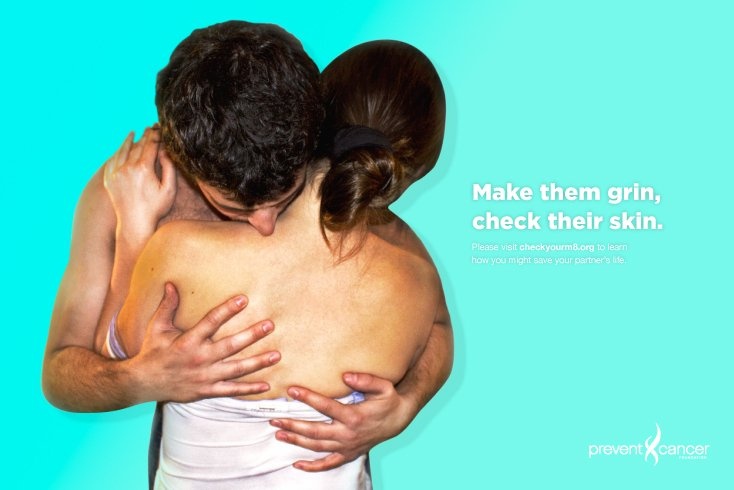
Others take risks. The Prevent Cancer Foundation enlisted the efforts of its younger staff members to create a series of Check Your Mate public-service announcements, which use photos of scantily clad couples to encourage romantic partners to look for suspicious lumps and bumps that may be signs of skin, breast, or testicular cancer.
“It is designed to get people talking,” said Jan Bresch, executive vice president of Prevent Cancer Foundation. “It’s proven that your mate or partner finds moles and suspicious lumps on you faster than you do. We wanted to do something that fit in that category of ‘You’re already there, check it out!’”
Ms. Bresch said the team tried to be as inclusive as possible, depicting interracial and same-sex couples as well as people of different body types. So far, she said, the response from the board, donors, and people who saw the ads on social media have been positive.
A lot of people are in last group: The organization got more than 500,000 impressions on its Facebook page when it posted the ads there.
“There’s always the initial shock when you do something like that,” Ms. Bresch said. “It was shared and shared and shared, which is terrific. It was edgy enough to get somebody’s attention.”




