
Nonprofits Remain Quiet as Republican Primary Campaign Heats Up

By SUZANNE PERRY
Contributor
November 13, 2011 | Read Time: 7 minutes
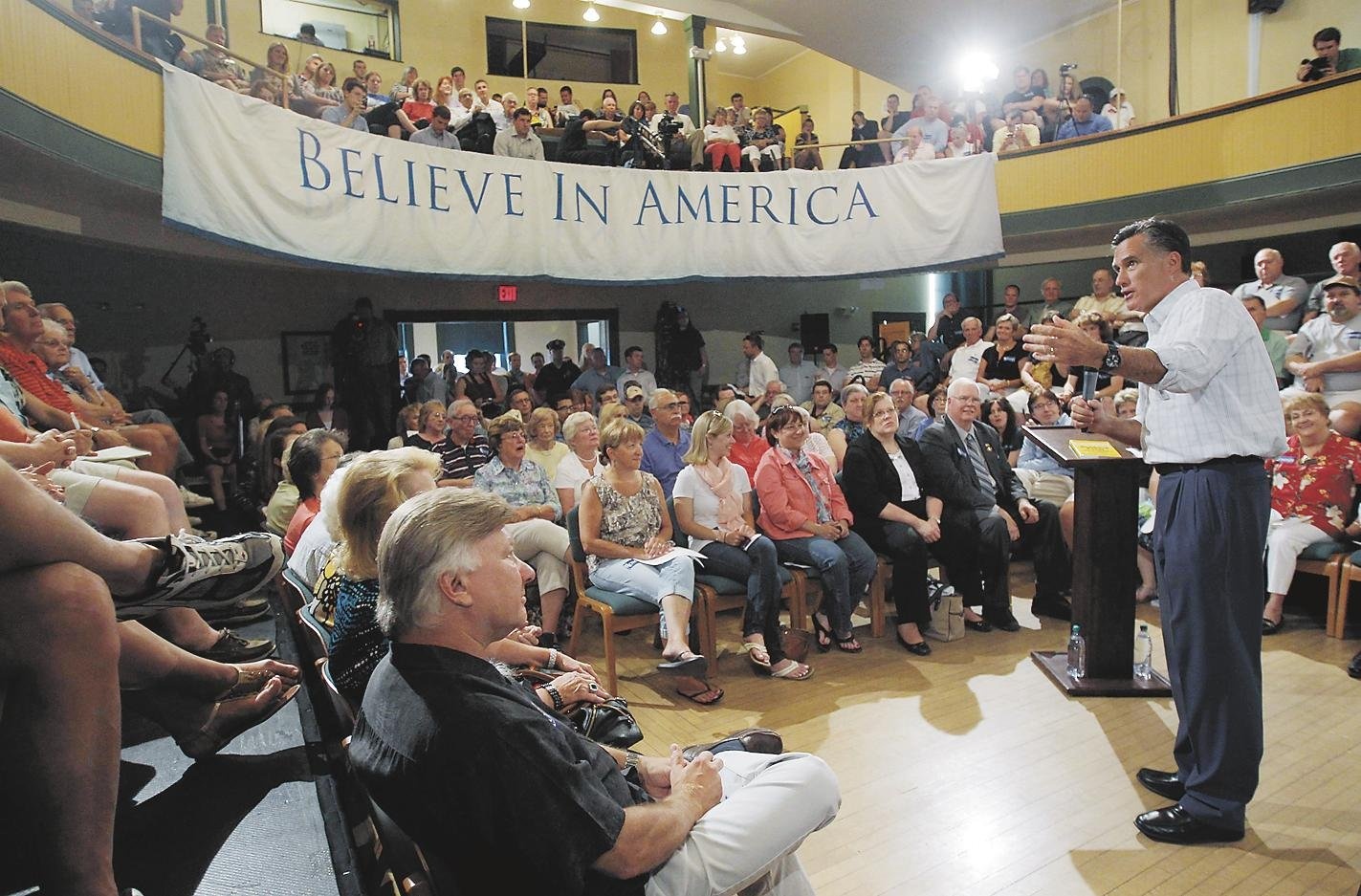
Michelline Dufort, a nonprofit advocate in New Hampshire, has been tailing the Republican presidential candidates who are swarming through her state in anticipation of its 2012 primary—and asking them questions they don’t normally hear on the campaign trail.
She asked Jon Huntsman Jr. how he would work with nonprofits if he were elected. She told Rick Santorum she was concerned about proposals to limit the value of charitable deductions. She urged Newt Gingrich to consider how government budget cuts affect nonprofits that provide human services.
Ms. Dufort, director of advocacy at the New Hampshire Center for Nonprofits, has spoken to Mr. Huntsman, the former governor of Utah, so many times that he now recognizes her. “I saw him in a coffee shop,” she says, “and he was, like, ‘Hey!’”
Following Candidates
Ms. Dufort is “bird-dogging” the Republican contestants as part of the Nonprofit Primary Project, an activity her center leads to take advantage of New Hampshire’s position as the state that holds the nation’s first presidential primary, making it a must stop for election hopefuls. The 2012 contest will be held on January 10.
Policy Concerns
Supported by an anonymous donation of $30,000, the center is reprising an effort it made during the 2008 presidential primary campaign to educate candidates about the role of nonprofits in the economy—an effort the center hoped would inspire similar efforts in other states.
All of the Republican candidates are proposing policies that could have a big impact on nonprofits, including steep federal budget cuts and tax changes that could discourage charitable giving. For example, most want to end the estate tax, and remove the capital-gains tax. Both of those taxes provide incentives for people to give to charities as a way to lower their tax liabilities.
But few, if any, nonprofit organizations seem to be following New Hampshire’s lead. Some groups are gearing up to quiz candidates about specific causes. For example, Voices for America’s Children, a nationwide network of child-advocacy groups, just adopted a game plan for raising concern about children’s issues during the primary season and beyond.
But there is little activity in many states when it comes to confronting candidates about issues that affect the wider nonprofit world.
“There hasn’t been a lot of action here at all,” says Brenda Peluso, public-policy director at the Maine Association of Nonprofits. She says her group will eventually send a questionnaire about nonprofit issues to all federal and state candidates, as it did in 2008. But for now, it has no plans to “bird-dog” candidates the way her New Hampshire counterparts have been doing, even though she visited her neighboring state to observe them in action and admires the approach.
“We’ve thought about just getting the information out there, at least publishing the campaign stops and encouraging people to go ask these questions,” she says. However, she says, her group lacks “the real bandwidth to recruit people and train them.”
Things are also quiet in Pennsylvania, always a critical battleground state in presidential elections. Joe Geiger, executive director of the Pennsylvania Association of Nonprofit Associations, says charities there are both cautious about getting involved in partisan politics and feeling overburdened because of the bad economy.
“The vast majority of 501(c)(3)’s aren’t getting involved in the process,” he says, referring to the section of the tax code that governs charitable organizations. Such groups cannot endorse or oppose political candidates and are limited in how much lobbying they can do, although nothing bars them from asking candidates where they stand on the issues.
Mr. Geiger says his organization conducts an annual survey that asks executive directors of nonprofits in Pennsylvania whether they contacted any elected officials in the past year, and every year about 10 percent say they did. That number doesn’t budge, he says, even though about 20 percent say they intend to contact officials in the next year.
“I think it’s a capacity issue as much of an issue of being wary they don’t get caught doing something they’re not supposed to,” he says.
Changing Times
Iowa will be the first state to hold election caucuses, on January 3. So, like New Hampshire, it is a big magnet for political candidates. But Richard Koontz, director of the Iowa Nonprofit Resource Center, which serves as the state’s nonprofit association, says his center hasn’t organized any election projects—partly because it is affiliated with the University of Iowa, which restricts the political activities of its employees because as a public institution it doesn’t want to appear biased.
Nonprofits in South Carolina, which will hold the country’s second primary, on January 21, seem to have little interest in presidential politics right now, says Tim Ervolina, president of United Way Association of South Carolina. “In the last election, we were very involved,” he says. “We really spent a lot of time. The times are different.”
Mr. Ervolina says prospects for an overhaul of the health-care system generated enthusiasm among nonprofits activists in 2008, when there were heated primary races among both Democrats and Republicans. This year, President Obama faces no serious challengers, so the Republican contest is the only game in town.
“The agenda items that are at the top of the campaign,” Mr. Ervolina says, “are so far removed from the day-to-day plight of our communities that I think all of the groups that would normally ask the questions have walked away, they’ve checked out.”
The candidates, he explains, are not talking about “social justice, poverty, and equality under the law.”
Eyes on Washington
In addition to the focus on taxes and spending, much of the Republican contest has revolved around dueling plans to ease business regulation, tighten enforcement of immigration rules, and repeal the health-care law championed by President Obama.
Some nonprofit associations are worried less right now about who wins the White House next year than about what’s going on in Washington. Many are focusing most of their federal advocacy work on a campaign to ensure that Congress does not cut the tax break that donors can get for their charitable donations as it seeks ways to close the enormous budget deficit—a move that nonprofit leaders fear could dampen giving.
About 4,000 groups have signed a letter, drafted by the National Council of Nonprofits, that urges members of the bipartisan “super committee”—which is supposed to recommend budget savings before Thanksgiving—to reject any changes that would “threaten the ability of nonprofit organizations to serve those most in need.”
Barry Silverberg, chief executive of the Texas Association of Nonprofit Organizations, says his group has been sending out alerts and encouraging nonprofits to sign the letter at speaking engagements; so far, more than 300 Texas groups have done so.
The Republican candidates, too, are making proposals that could also affect the charitable deduction.
Most have proposed simplifying and lowering income taxes, for example, by introducing fewer brackets, or a flat tax that would eliminate or minimize tax deductions and credits. That would affect the amount that donors could write off on their taxes for charitable gifts, which is now allowed at the same percentage as an individual’s particular tax bracket.
However, several candidates who have proposed flat taxes, including Herman Cain, Rick Perry, and Mr. Gingrich, have specifically said they would preserve a giving incentive.
Voting Priority
Mr. Silverberg says his association will pay more attention to the presidential campaign closer to the general election, which is still almost a year away.
Some groups are giving more priority right now to get-out-the-vote efforts, with help from Nonprofit Vote. The national organization is pushing nonprofits to encourage their employees and constituents to register and plan to get to the polls.
Protecting Arizona’s Family Coalition, an alliance of health and human-services advocates, will probably organize a forum of presidential candidates next summer or fall, asking campaign representatives to fill in for the Democratic and Republican challengers, says Timothy Schmaltz, the group’s chief executive. But the group is focused now on a yearlong project among nonprofits in Arizona, started in October, that aims to increase voting turnout by people who care about nonprofit causes. .
“We wanted to get the word out early to the nonprofit sector that you can participate in electoral politics in a legal and effective way and in a very concrete way,” he says.




