
Nonprofits Scramble to Learn Rules on Advocating Versus Politicking

By MAUREEN WEST
Contributor
July 22, 2012 | Read Time: 6 minutes
It’s the busy season for David Heinen. As director of public policy and advocacy at the North Carolina Center for Nonprofits, he’s looking ahead not only to the heated presidential race but also to a governor’s election, a handful of Congressional contests, and campaigns for up to 40 percent of the seats in the statehouse.
He’s urging the center’s more than 1,600 member groups to get their issues in front of state candidates, many of whom are battling in redrawn districts in this election and may be more receptive to the groups’ concerns than ever before.
But he’s also reminding groups that they need to be aware of the strict ban against politicking by charities and to make sure everyone keeps an eye on what they say on social networks. He plans to bring up the use of Twitter and Facebook and the need to rein in reckless and partisan comments at a gubernatorial candidate forum the center is hosting this fall
“One thoughtless tweet could cause a lot of trouble,” he says.
Confusion on Rules
With the charitable tax deduction potentially on the chopping block—along with support for national-service and safety-net programs—as lawmakers consider ways to trim the federal deficit, many people in the nonprofit world are worried about how the elections will influence policies that affect them. But many are fuzzy on the laws that govern the involvement of nonprofits in election-year politics.
To explain what charities can do to influence public policy, groups such as Nonprofit Vote and Alliance for Justice are responding to record numbers of requests to train people who work and volunteer at nonprofits.
Leaders at Nonprofit Vote, for instance, say that in the first five months of this year, 3,000 nonprofit leaders registered to get online training about political activities, compared with 1,200 in 2008, the last presidential election year.
Charities must follow a different set of rules than other types of tax-exempt groups. Charities under Section 501(c)(3) of the tax code cannot endorse candidates, rate candidates, give to candidates’ campaign coffers, or do anything else that might be construed as intended to help or hurt a candidate’s chances in an election.
Advocacy groups, however, are often classified under Section 501(c)(4) of the tax code, since they want the leeway to get more involved in partisan activities. They can’t offer their donors a deduction, but they do offer anonymity. As a result, they have received a lot of donations, as well as scrutiny from the IRS and others, in the two years since the Supreme Court lifted limits on corporate spending in the Citizens United decision.
When there’s confusion about the nature of an activity, the IRS generally tells charities to consider how their actions could look to an outside observer, says David Levitt, a San Francisco lawyer who specializes in advising nonprofits. If someone is likely to conclude that an organization is boosting or turning its thumbs down on a candidate, it very well may be.
Social-Media Concerns
Social media has raised the stakes, says Abby Levine, legal director of advocacy at Alliance for Justice. The IRS, she notes, has not yet spelled out its rules regarding those forms of communication and advocacy.
Any partisan comment—even an unscripted remark made in the rush of the moment at a banquet or a rally—can, moments later, be enshrined on YouTube for everyone, including the IRS, to see, she says.
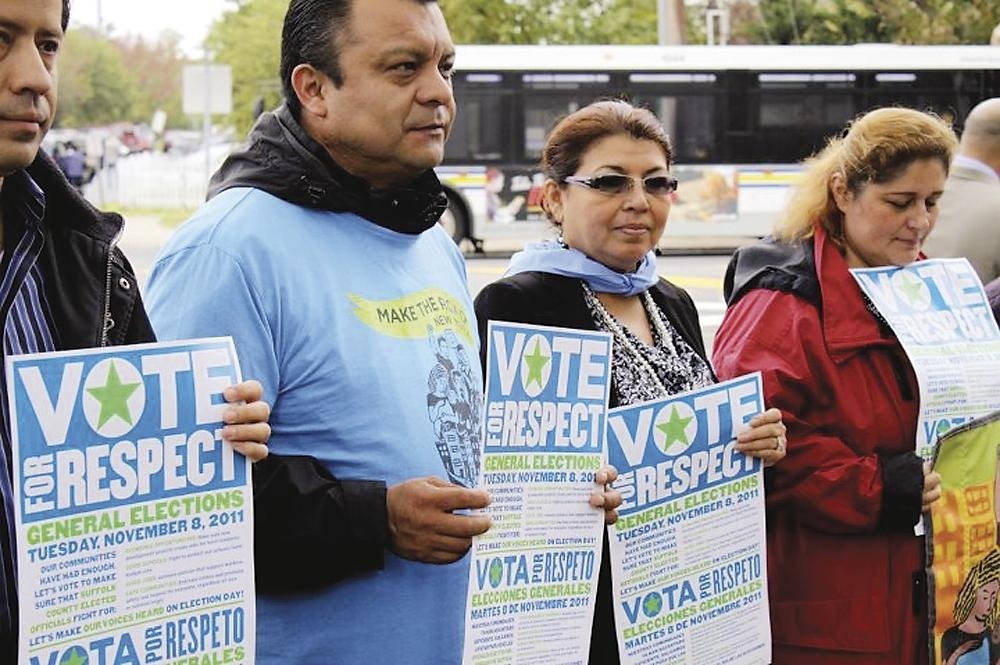
The Long Island Civic Engagement Table, a coalition of community organizations in Suffolk County, N.Y., is one nonprofit that is eagerly learning all it can before the state, local, and national candidate forums it is organizing for the fall.
The group wants to call attention to issues affecting underrepresented blacks and Latinos in the suburbs and to register new voters, says Daniel Altschuler, coordinator of the coalition’s election-year efforts.
Alliance for Justice recently conducted a workshop for the group on the rules of interacting with candidates. Until he learned otherwise, Mr. Altschuler says, he might have asked candidates at a town hall or forum to pledge that they would vote a certain way, but now he knows he can’t go that far.
The nuances of language matter, Mr. Altschuler says. Questions need to be asked in open and impartial ways, and they should invite more than yes or no answers.
“Instead of asking the candidate a question like ‘Would you support the Dream Act?’ I would ask ‘What is your position on the goals of the Dream Act?’ or ‘How would you address that issue?’”
Caution on Questionnaires
Likewise, questionnaires, a traditional tool that nonprofits request from candidates, must have open-ended, non-leading questions, experts say.
At the North Carolina Center for Nonprofits, Mr. Heinen is encouraging his members to distribute questionnaires to candidates. The advantage of such a tool, he says, is that after the election, “you can remind elected officials of comments they made.”
In 2009, a couple of months after North Carolina’s Gov. Beverly Perdue took office, Mr. Heinen says he and other nonprofit leaders reminded her that in an election questionnaire, she wrote that she wanted better communication between agency directors and nonprofits in the state. After being reminded of that, she took steps that reduced regulatory red tape.
This summer, Mr. Heinen’s group asked gubernatorial candidates 10 questions, requesting answers of 100 to 200 words per question. The candidates’ replies were linked from the center’s Facebook page without editorial comments. The Facebook link was also sent to an e-mail list of 4,000 staff members and volunteers at nonprofits. “It takes a lot of work to do that, but it’s worth it,” Mr. Heinen says.
Danielle Brazell, head of Arts for LA, an arts-advocacy nonprofit, says her group is planning online forums in the coming year with mayoral candidates in Los Angeles and Santa Monica.
She sees the nonpartisan rules as a strength for nonprofit groups, not a challenge.
“They require us to focus on issues, not personalities,” she says. “If you start taking sides, it only divides. And if you get on the losing side, you could be toast because of the backlash.”
The negative response, she notes, could also come from donors who pull support because of a charity’s partisan stand: “The law really is on our side.”
Resources for Nonprofit Advocates
Alliance for Justice offers many publications on advocacy by charities, including “Rules of the Game,” a guide to election-related activities, and “Influencing Public Policy in the Digital Age,” which spells out rules on online advocacy. Both are available as free downloads on the Web site. Go to: bolderadvocacy.org. The alliance also fields advocacy- and voting-related questions. Call (866) 675-6229 or send an e-mail to: advocacy@allianceforjustice.org.
Center for Lobbying in the Public Interest was absorbed in April by the National Council of Nonprofits. The center’s Web site continues to feature election-oriented information, including specific advice on working in coalitions. Go to: clpi.org
Nonprofit Vote offers a wealth of advice, including the free booklet “Nonprofits, Voting, and Elections,” which can be downloaded. It offers guidance on how charities and foundations can remain nonpartisan while advocating for their causes. Go to: nonprofitvote.org.





