
Nonprofits Should Follow Businesses’ Example in Learning From Errors, Say Authors

By Caroline Bermudez
Contributor
March 6, 2011 | Read Time: 3 minutes
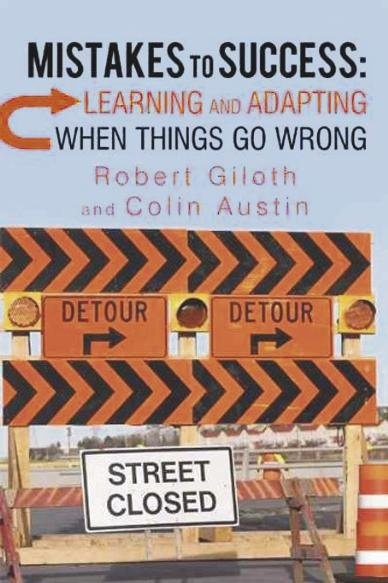
Charities and grant makers should not fear failures but embrace them as opportunities to learn valuable lessons, write Robert Giloth and Colin Austin in their new book, Mistakes to Success: Learning and Adapting When Things Go Wrong.
Mr. Giloth is vice president of the Annie E. Casey Foundation, in Baltimore, and Mr. Austin is program director at MDC, a group in ChapelHill, N.C., that focuses on economic and work-force development.
For this book, they collected case studies of unsuccessful community economic-development programs and asked people who led those projects what they would do differently. In an interview, Mr. Giloth and Mr. Austin discuss what other nonprofits can learn and how grant makers can help foster a more open atmosphere when it comes to making mistakes.
Why did you write this book?
Mr. Austin: What was interesting to me and to Bob was thinking about the way businesses often approach mistakes and the case-study method of looking at business failures and trying to learn from them.
We were beginning to see some signs that philanthropy was starting to get interested in engaging a little more with their grantees around things like outcome measures but also trying to figure out what was going wrong.
What lessons can nonprofits learn from the business world?
Mr. Giloth: There’s much more openness, and there’s much more realization that during the innovation business, you also have to be in the mistakes and learning business. That kind of cultural change is something we need in the philanthropy and nonprofit sector.
Mr. Austin: Businesses heavily invest in prototyping and in testing and retesting. We sort of touch on that as a theme of the book. We use the example of the Wright brothers and the number of years that they spent out on the Outer Banks of North Carolina testing and crashing their models. They were engineers; they were trying to define problems in very precise terms.
How much of the pressure to succeed comes from foundations?
Mr. Austin: The book really has a message for practitioners, but a lot depends on the funding agencies as well.
Private and public funders need to make space for this kind of learning and understanding mistakes and that means going beyond charitable giving and really engaging with grantees about problems in order to produce innovations.
Mr. Giloth: The investors set the tone for what nonprofits think they can talk about. It’s difficult when there’s a certain amount of public skepticism about the results that nonprofits are creating, or how efficient they are.
The stories we tried to select were ones where people really did their homework, they were pretty much topnotch groups, but some things still didn’t quite work out because of the nature of the problems and solutions that people were grappling with.
The investors of philanthropy and the public sector really need to lead the way on this if we want to open up more broadly this kind of mistakes conversation.
How does the bad economy affect whether nonprofits make mistakes?
Mr. Austin: There’s a huge amount of pressure on nonprofit organizations. We’ve seen a lot of our sister organizations close their doors.
At the same time, there’s an opportunity in the recession and the economic climate because foundations are also thinking about how to do more with less, so there’s a certain level of rethinking going on and there’s an opportunity there to interject a lot of this mistakes practice and consideration of failures.




