

February 6, 2012 | Read Time: 3 minutes
Sometimes the best compliment a lawyer can get is that her work is invisible, says Lesley Rosenthal, general counsel at New York’s Lincoln Center for the Performing Arts.
That’s the kind of praise Ms. Rosenthal earned when Lincoln Center unveiled a major redevelopment effort in 2010, which included a rooftop garden for visitors. Architectural reviews said they were pleasantly surprised that lawyers, worried about safety and access, hadn’t gotten involved to scuttle the rooftop project. Indeed, says Ms. Rosenthal, she and her legal team, were deeply involved in planning and vetting the outdoor space.
“It was the greatest object lesson for lawyers,” she says. “Do your job, do it well, but do it in a way that’s invisible, that enables the visionaries at your organization to do their job well.”
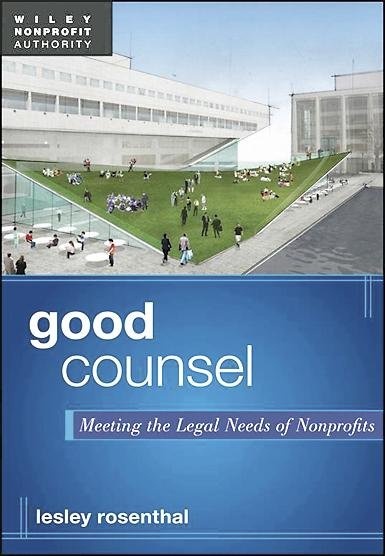
Now, Ms. Rosenthal has written Good Counsel: Meeting the Legal Needs of Nonprofits, an overview of legal matters that affect an organization’s governance, programs, fund-raising, and operations.
The Chronicle spoke to Ms. Rosenthal about her book.
Did you intend for charity officials and their legal counsel to literally “walk through the halls of a nonprofit organization with this book in hand”?
Yes, the book is meant to provide an actual work plan for legal counsel and to launch and facilitate relationships between charity executives and legal counsel.
Are these relationships not already going on?
The nonprofit sector is quite underserved by the legal profession. There are many pressing legal issues that have to do with organizations’ nonprofit status and tax-exempt status, and plenty of issues that arise pertaining to ordinary, general business law that go unaddressed. In the State of New York alone, we have 80,000 charities, 60,000 of which are not represented by counsel.
What’s the upshot of that?
We have many, many organizations that are not aware of or familiar with their obligations and responsibilities, such as to hold annual meetings, to have a minimum number of board members, to make annual filings both at the federal and state levels. The IRS last year started striking hundreds of thousands of nonprofits from the tax-exempt roster because they failed to meet basic requirements.
You say it may be time for nonprofits “to add a budget line for an in-house lawyer.” Do you see that happening?
It largely depends on the nature of the organization, the size of the organization, and the scope of its activities. There is no one defining moment when an organization wakes up and realizes it needs counsel, but there is increasing complexity of nonprofit rules of governance; growing expectations of the IRS filing requirements; increasing scrutiny of the charitable sector; and many issues of contract law, intellectual property, and human resources that need oversight, and more charities are recognizing they need a lawyer in charge of their legal affairs.
You describe your job as 85 percent general legal work and only 15 percent related to the arts. Is that kind of split a turn-off for lawyers?
It’s important to keep perspective in your legal practice and professional life. People are interested in serving nonprofits because they are interested generally in helping the cause. It’s a worthwhile matter to note that you will not be spending all day thinking about the Shostakovich string quartet. If that’s what you think you’ll be doing by going into a nonprofit arts organization, it would be a good idea to be disabused of that. But, honestly, it is such a joy to be able to apply my legal skills directly to the greater artistic good. When I’m working on a contract, I’m not hearing Shostakovich, but I am furthering the cause.




