
Old-Fashioned Fundraising Helps a Charity Aid Wounded Veterans

By Jennifer C. Berkshire
Contributor
October 20, 2013 | Read Time: 5 minutes
Old-fashioned fundraising techniques have helped the Wounded Warrior Project, a nonprofit just 10 years old, vault to the top ranks of the charities that raise the most money in America.
Donations to the group more than doubled last year, attracting $148-million, compared with $70-million in 2011.
Many charities have rushed to embrace digital fundraising tools to increase the appeal to younger donors, but the Wounded Warrior Project relies on television ads and mail appeals to showcase the services and advocacy work it does to help injured veterans.
Adam Silva, the organization’s chief development officer, says the Wounded Warrior Project’s success has convinced him that there is plenty of life—and donor dollars—left in TV and mail appeals, which bring in two-thirds of the organization’s contributions.
Those approaches work well because they appeal to Americans 65 and over—the charity’s most-reliable donors.
“When you abandon these tools, you can end up abandoning older donors,” says Mr. Silva.
And just because those tools date back to the analog era doesn’t mean there’s anything musty about the charity’s fundraising.
Mr. Silva describes himself as a measurement fanatic, noting that he and his colleagues are relentless about tracking results for every appeal. “We try to be as scientific as we possibly can about knowing who is going to give when.”
Corporate Model
The Wounded Warrior Project’s fundraising style resembles a corporate marketing effort more than the approach of a traditional charity, Mr. Silva says. That’s probably because he has spent his career in the military and as a salesman for a musical-instrument company. Half of the staff members at the charity have served in the military, he notes.
Although Mr. Silva didn’t set out to hire people with little experience in nonprofit fundraising, he says he has found that people are more creative and successful in soliciting when they are doing something they never did in the past.
Most of the organization’s donations come from individuals, but the charity is increasingly reaching out to companies, both for dollars—which today provide 7 percent of revenue—and to get marketing attention and other kinds of help.
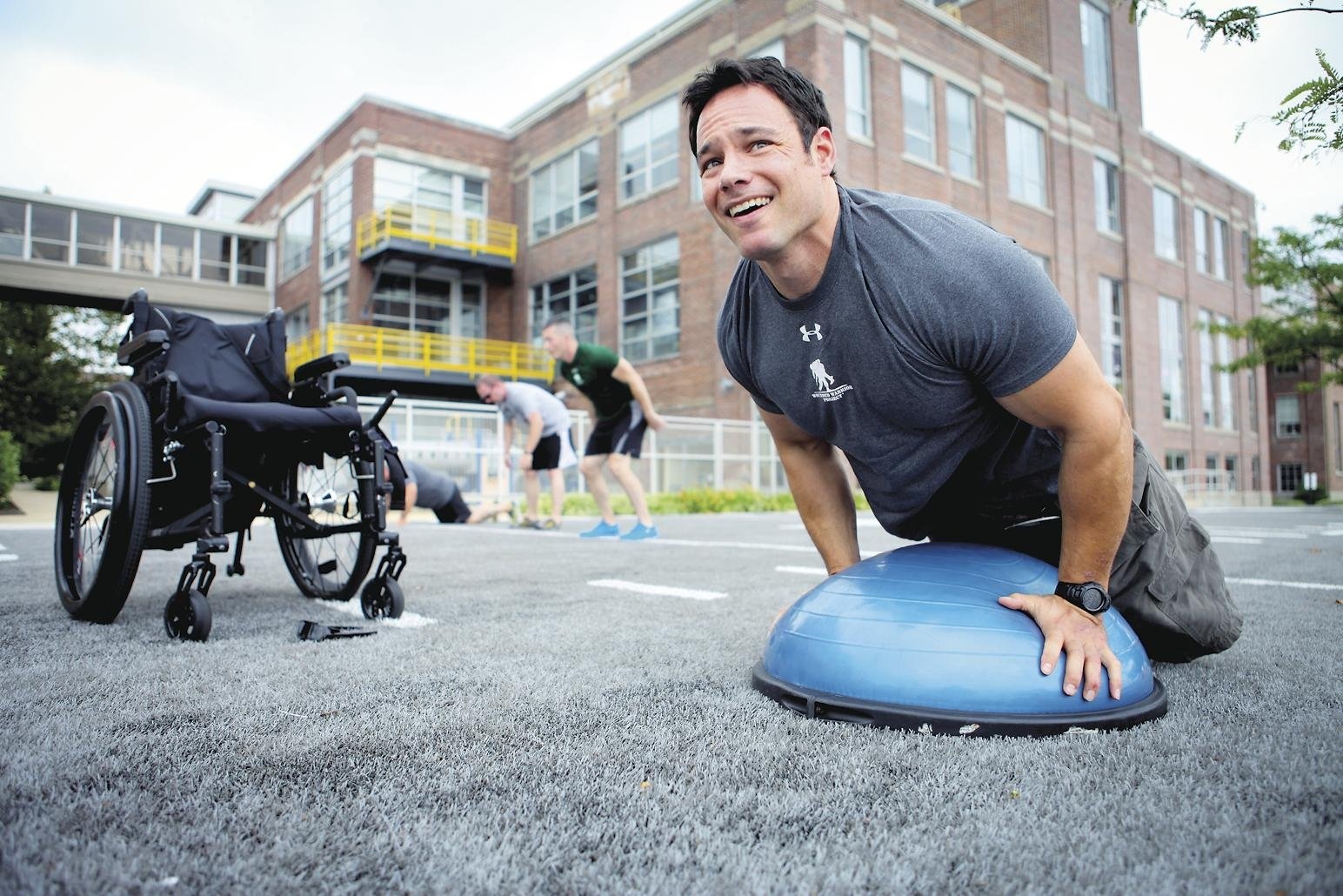
Among the groups offering new visibility and other aid to the charity: the clothing maker Under Armour, which sponsors the charity’s Backpack Project to send Under Armour gear to veterans across the country.
Kevin Plank, the CEO of Under Armour, mentions the group at every public appearance and even sports a signature black wristband bearing the charity’s name. What’s more, the company invites injured veterans to the organization’s headquarters to use its extensive workout facilities.
The Wounded Warrior Project cultivates these corporate relationships carefully, says Mr. Silva, seeking out CEOs who have a particular passion for the group’s mission and companies that have a connection to the U.S. military.
Under Armour’s clothing is endorsed by the Marines and is very popular with the troops, Mr. Silva notes. “That combination is like nirvana to us.”
The charity is now arranging fundraising deals with two more corporations: Stanley Black and Decker, the tool maker, and Hershey Company. Both are iconic American brands that loom large in the lives of service men and women, says Mr. Silva. “Hershey’s was such a big deal in World War II, and even today you’ll find their chocolate in the MREs that soldiers eat.”
More Federal Giving
The Wounded Warrior Project has also been gaining ground in the Combined Federal Campaign, the charity drive for government workers.
According to the Workplace Giving Alliance, which monitors gifts from federal employees, the charity raised more than $5-million in 2012, a $2-million increase over 2011.
Only two other charities in the country, the American Red Cross and St. Jude Children’s Research Hospital, raised more from federal employees last year, the alliance says.
Mr. Silva attributes the strong growth in donations among federal workers to extensive advertising and to word-of-mouth at military bases. “A lot of federal employees are current or former military, and we’ve really made an effort to make sure that they know about our work,” he says.
Although federal workers are a key source of revenue, the Wounded Warrior Project does not accept any government dollars directly because it wants to maintain the independence needed to lobby on behalf of veterans regardless of whether its policies are popular with the administration.
Rosy Outlook
Mr. Silva won’t say just how much Wounded Warriors expects to raise in 2013, but it’s clear that he sees continued growth in the charity’s future. The group’s work to promote big gifts is already attracting significant interest from donors interested in bequests, he says.
The Wounded Warrior Project is also spending money to keep its profile high, including on the Internet. Its technology staff has worked to ensure that the Web site pops up prominently in search engines.
Although that’s potentially important for donors who give online, they are not the main audience Mr. Silva has in mind. “We want a wounded veteran or a caregiver to be able to connect with us. It’s that simple.”
Despite the charity’s fundraising success in recent years, Mr. Silva acknowledges that the group’s direct aid to 45,000 veterans so far hasn’t met all needs. The charity estimates that 50,000 military personnel were injured in recent conflicts, another 320,000 suffered a traumatic brain injury, and 400,000 suffer from combat-related stress or depression. The group has set a goal of helping 100,000 veterans by 2017.
Mr. Silva says the group is discussing what programs will be needed to support wounded veterans, including those returning from Afghanistan.
“One of the questions that I get asked all of the time is ‘What are you going to do when the war ends?’ But that’s the point when our work is just getting started,” he says. “We may have only been around for 10 years, but we have a lifetime commitment to these soldiers.”
Wounded Warrior Project
Rank on Philanthropy 400: 149
How much it raised in fiscal 2012: $148-million
Increase from 2011: 111 percent
How it fared in the recession: Donations are now nearly 625-percent higher than in 2007 when inflation is taken into account




