One Third of Foundation CEOs Are Reluctant to Disclose Failures, Report Says

By Julian Wyllie
Contributor
November 8, 2018 | Read Time: 3 minutes
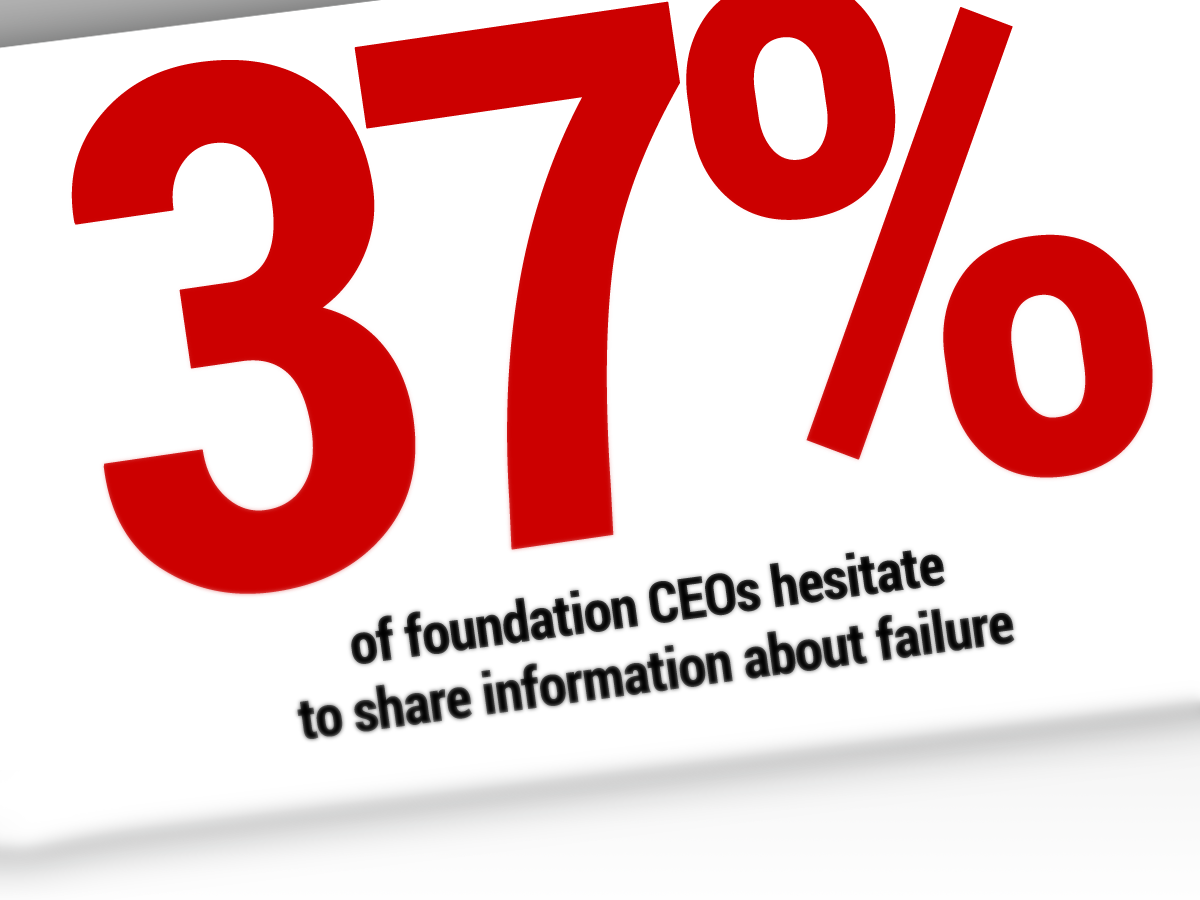
Thirty-seven percent of private and community foundation CEOs hesitate to share information about program mistakes or failures, according to a new report. And a similar percentage, 34 percent, said they feel pressure from their board of directors to withhold information about failures.
Those are among the findings in a new report from the Center for Effective Philanthropy titled “Understanding & Sharing What Works.” The survey analyzed responses from 119 CEOs of private and community foundations that give at least $5 million annually.
In recent years, it’s become fashionable for nonprofits and foundations to speak openly about their failures. However, the new report indicates that resistance to do so remains strong among many grant makers.
“I think it is human nature,” according to one anonymous CEO cited in the report. “Everybody wants to show the things they did really well. It’s not as easy to say, ‘Here’s something we really missed completely or screwed up.’ ”
A fear of losing funding was among the concerns cited about admitting failure.
“People give us money because they trust us,” a community-foundation leader said. “And if we’re screwing up, foundations don’t want to tell a lot of people.” The CEO added, “Despite a lot of rhetoric to the contrary, I think a lot of people get caught up in this stuff as a measure of accountability, as opposed to it being tied to a learning strategy.”
Still others wondered whether information sharing had value, especially since many programs do not provide “apples to apples” comparisons, and questioned whether other foundations pay attention regardless. As one CEO put it, “Are we just sending it out into the ether, or is it actually being utilized by other folks in a helpful way?”
The report’s authors note in their conclusion, “There seems to be a missed opportunity when it comes to understanding and using the learnings of peers.”
A companion piece was also released with case studies from leaders of the Rockefeller Brothers Fund, the Weingart Foundation, and Communities Foundation of Texas, in the United States, and Impetus-PEF, in London.
Stephen Heintz, president of the Rockefeller Brothers Fund, encourages sharing of the group’s data and assessments. “It would be a failure of management” not to, he said.
Fred Ali, president of the Weingart Foundation, said “We have a hard time understanding why there are so many secrets in this field. It would be much better if people would share this information … with anyone who could benefit from it.”
Knowing What Works
Other parts of the report were more upbeat.
Almost two-thirds of CEOs said they understood very well or extremely well which of their foundation’s programs are working. However, more than 40 percent said their foundation is not investing enough time and money to develop this understanding.
The most useful ways of assessing what is and isn’t working, the CEOs said, were site visits, focus groups, and anecdotal feedback from grantees.
More than 60 percent of CEOs say knowledge of what works gets shared in formal ways, such as through membership groups, reports, and speaking events.
Nearly three-quarters of CEOs said their foundation works with third-party consultants, and most found their services helpful.