January 17, 2013 | Read Time: 2 minutes
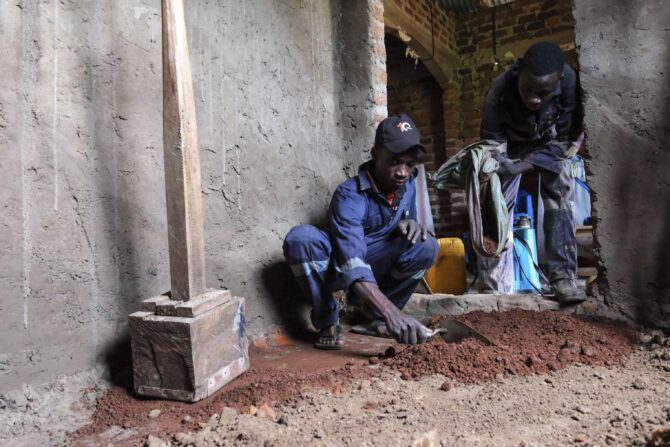
 Jacob Chikayiko (right), a farmer in Malawi, bought insurance from MicroEnsure to protect against crop failure caused by inclement weather. (Photograph by Opportunity International)
Many people in the developing world are one failed crop, one illness, or one emergency away from financial ruin. In 2008, Opportunity International started MicroEnsure to provide low-cost insurance to the people the microfinance charity serves.
“If something happens and they run into a season where they have a poor crop or they have some unusual weather, they can lose everything in one season,” Vicki Escarra, chief executive of Opportunity International, says of the farmers her group works with in Africa. “Setting up insurance provides them with stability so they don’t lose everything.”
MicroEnsure provides a variety of low-cost insurance products—including crop, health, disability, and even political-violence insurance—to 4 million low-income people in Africa and Asia. The business is growing fast, adding roughly 100,000 customers a month.
New Investors
To date, MicroEnsure has operated as a nonprofit subsidiary of Opportunity International.
But now to help the business gain access to the capital it needs to continue to grow, MicroEnsure is starting the transition to becoming a for-profit venture. The International Finance Corporation and the Omidyar Network are investing $5-million in MicroEnsure and will join Opportunity International as owners of the enterprise.
Opportunity International has taken steps to protect the business’s mission. The shareholder agreement stipulates a commitment to maintaining a low-income customer base. The charity has a seat on the venture’s board of directors, and Terry Watson, chairman of Opportunity International UK, will serve as the company’s first chairman of the board.
“To meet the needs of that kind of growth, we needed more capital infusion than we were capable of getting,” says Ms. Escarra. “The rate of growth was what drove us to say, ‘We need partners to help us do this.’”
Dig deeper: Read how a microfinance organization in Haiti tested insurance in the aftermath of the devastating earthquake in 2010.