
Outside Reviews Help Charities Reach More Donors
As the economy improves, more groups are hiring consultants to help them learn new approaches

By Raymund Flandez
Contributor
April 7, 2013 | Read Time: 6 minutes
Heifer International, the economic-development group, was worried when its usually lucrative gift catalog started attracting fewer gifts during the worst of the economic downturn.
So it turned to consultants for advice. They commissioned two surveys of 25,000 people—a mix of loyal donors and potential supporters—and found that the economy was not the only problem the charity faced. Many donors were frustrated when they tried to give online. They wanted a more seamless process, like the kind they had while shopping from Amazon and other online retailers.
The surveys also pointed to another trouble spot: Three-quarters of donors who hadn’t given in a while hadn’t gotten a reminder to donate.
Now the charity is investing in data systems and software to keep better track of donors’ status and give them a better online-giving experience.
The review helped the charity focus on “donors and what they need and want,” says Steve Denne, Heifer’s chief operating officer. The study, he says, is helping Heifer shore up its revenue.
A growing number of organizations are hiring outsiders to examine their fundraising efforts. The reviews—which fundraising consultants say they are getting more requests to conduct as the economy has started to recover—typically cost $10,000 to $35,000 and up, depending on the charity’s needs.
The findings have led nonprofits to take a variety of new approaches, including training board members to do more fundraising and shifting staff members and budgets to tasks that have greater potential to increase giving.
Centralized Database
An outside review helped Operation Smile, an international medical charity, realize that it had no method for turning people who gave less than $1,000 a year into bigger donors.
After the consultants pointed that out, the charity started sending fundraisers to visit people it figured could afford to give up to $10,000 a year. Two fundraisers are now expected to make at least 250 in-person visits to donors a year, and together they hope to raise $2.5-million over three years.
To help make it easier for the fundraisers, the charity has updated and centralized its database to give fundraisers access to donors’ giving histories from their smartphones.
The new approach is already paying off. When a fundraiser visited a donor whose previous gift to the charity was $1,200, she asked him to increase his giving to $18,000 over three years.
But during the meeting, the donor spilled his coffee, ruining the gift form. The fundraiser went out to her car to get another one, and when she returned, the donor said he was willing to give $20,000 annually.
It turns out, he had misheard the original suggestion, says Jann Schultz, associate vice president for donor services, thinking the request was for $18,000 a year. “That really shows the power of getting in front of our donors.”
But Ms. Schultz says not everyone at the charity initially welcomed the ideas from the outside reviewers. “It’s always difficult to receive information that recommends change,” she says. “Change can be perceived sometimes as frightening, unfamiliar territory.”
Communication Issues
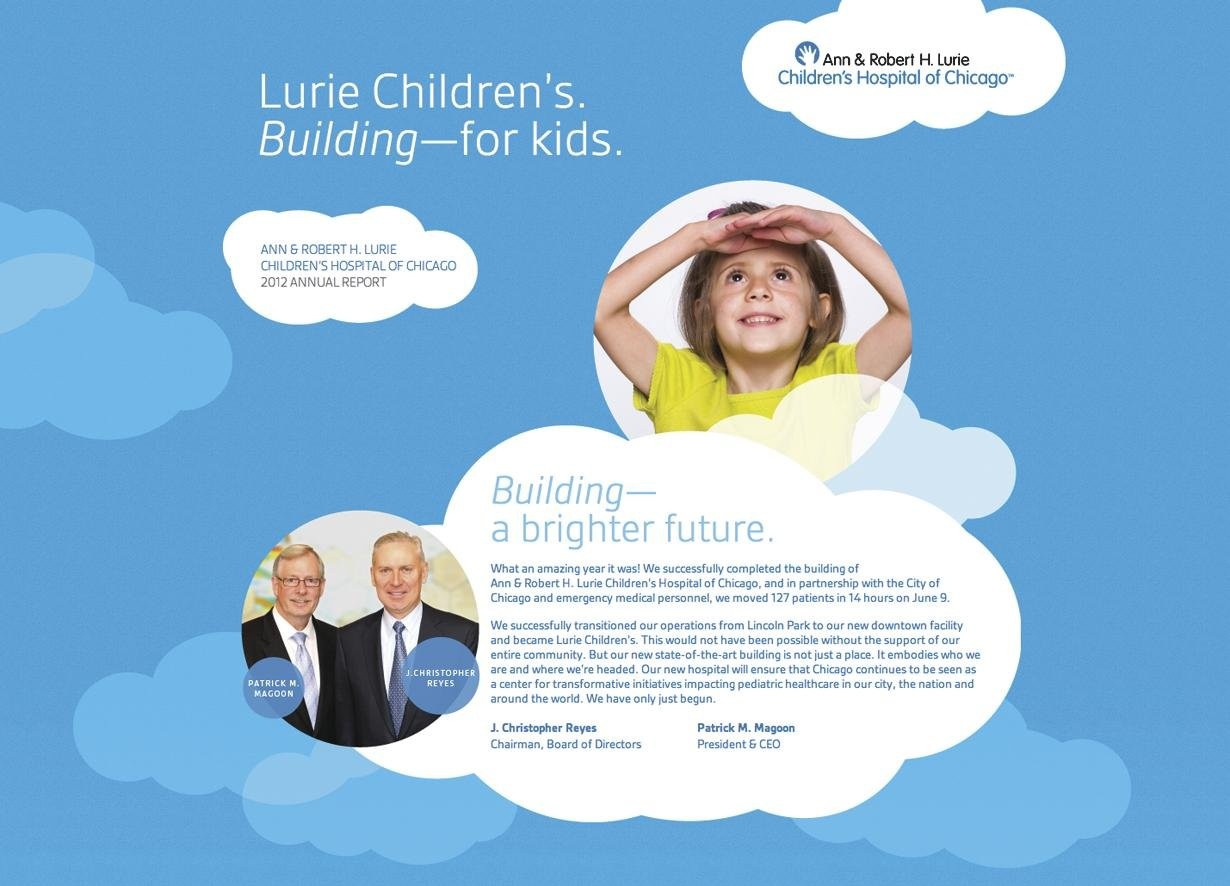
The Ann & Robert H. Lurie Children’s Hospital of Chicago Foundation learned it had communication problems when it conducted a review of 1,600 donors in 2009: Its fundraisers were telling donors too much in some ways but not enough in others.
“They wanted to know more about how their gifts were being used,” says Erin Shields, the foundation’s spokeswoman. Donors wanted to hear the stories of children who were being treated at the facility and learn how donations were helping to transform care at the hospital.
The survey also found that people who gave $10,000 or less a year felt a weaker connection to the hospital than those who gave more.
“We felt that it was very helpful,” Ms. Shields says. “This was the first time that we’ve really asked our donors, our constituents, what type of information they want to receive and how they want to receive it, instead of the organization deciding what information we should give them.”
As a result of the study, the foundation revamped its print and online communications, phasing out a pair of donor newsletters. It ditched the print edition of its little-read annual report and created an interactive, online version.
The move helped the foundation reduce its annual-report budget by more than half.
The organization also assigned a fundraiser to reach out to donors who gave up to $10,000 annually. These donors now receive frequent communications related to their interests, in addition to the information other donors get. Each November, they also get a personalized report detailing how their gifts made a difference during the previous year.
In 2012, giving by donors in the $10,000-or-less-a-year category jumped by 19 percent compared with 2011. Today, giving by those donors is ahead by 6 percent from the same point last year, and the foundation expects by year’s end the increase will total 20 percent.
The organization plans to do a follow-up donor survey this May to track its progress.
Identifying Weaknesses
In some cases, outside reviews look not just at what donors want but what a charity’s peers are doing.
When Boston College conducted a review in the mid-2000s, it learned that it lagged in seeking bequest commitments compared with similar institutions.
Now the college distributes brochures about bequests to its alumni and invites donors to sessions about estate planning and planned giving.
As a result, Boston College has seen its bequest commitments grow from 1,000 in 2005 to 2,400 now, contributing to its capital campaign, says Thomas Lockerby, vice president for development. So far, the seven-year, $1.5-billion drive, scheduled to end in 2015, has raised $1.02-billion.
“It’s been a good conversation to have with our donors,” says Mr. Lockerby.
‘A Culture Shift’
Outside reviews often aren’t just aimed at how well the staff does in fundraising but also at the board’s work.
Big Brothers Big Sisters of Middle Tennessee spent about $15,000 to get advice from consultants on how to bolster private donations after board members struggled to raise enough to replace cuts in government support for a program that offered mentors to children whose parents were in prison.
A consulting firm combed through the charity’s donor rolls and identified 300 loyal supporters who might give more.
Board members split up the names; staff members then encouraged them to get to know the donors better and ask them for big gifts. The board members hope their work will raise $30,000 by the end of the year, says Doug Halleen, vice president for development.
“Sometimes it takes having a third party coming in from the outside to make recommendations or at least confirm some of the process,” says Lowell Perry, the group’s former chief executive and now national vice president for corporate partnerships at the national headquarters.
“From our standpoint, what we invested in pushed our board in the direction of a culture shift,” said Mr. Perry. “Hopefully, they’ll continue to build on that and to focus on that, to hold each other as board members accountable.”




