Performing-Arts Group Sees Boost by Supporting Use of Mobile Devices

By NICOLE WALLACE
Features Editor
August 11, 2014 | Read Time: 2 minutes
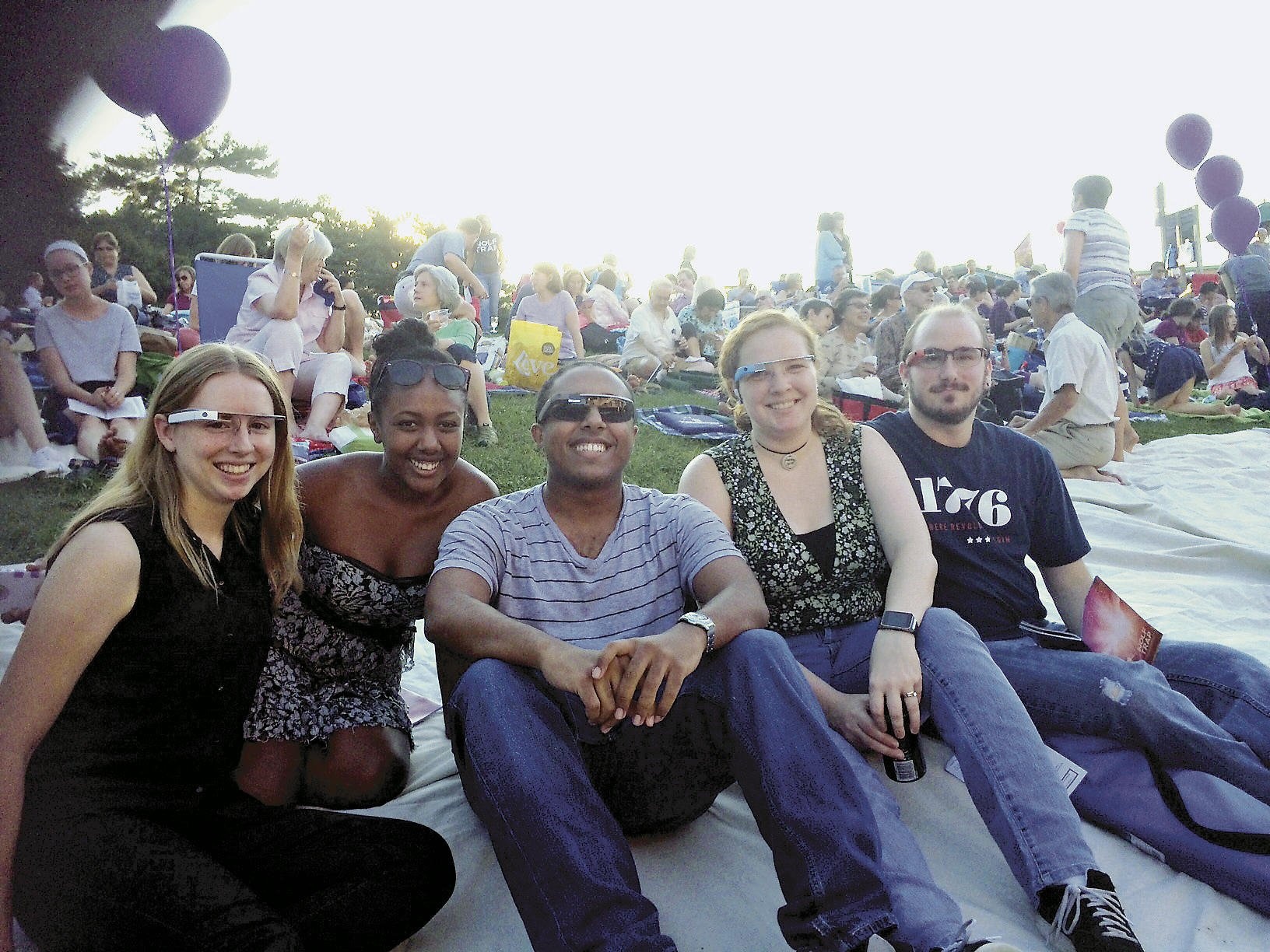
Live opera and mobile devices don’t seem like a natural combination. But an arts organization in Virginia recently tested a new system that let patrons follow the English translation of “Carmen” on their smart phones, tablets, and even Google Glass.
The Wolf Trap Foundation for the Performing Arts presents music, dance, and theater performances at an outdoor amphitheater. Audience members choose between seats in a covered pavilion or sitting outside under the stars.
For the “Carmen” experiment, Wolf Trap reserved one-third of the lawn for people who wanted to use their mobile devices.
“For those people on the lawn, you’re pretty far from the stage,” says Arvind Manocha, Wolf Trap’s chief executive. “We thought this would be a cool way for them to get that supertitle experience.”
More than 800 people took advantage of the mobile translations.
‘Perfect Storm’
In fact, the technology’s popularity combined with other mobile activity overwhelmed the wireless network that Wolf Trap built for the experiment. The evening of the performance, the organization had to take the system down for 10 minutes and reboot.
“We had kind of a perfect storm,” says Mr. Manocha. “We had more people using our program than we thought, and we sold a lot more tickets to the opera than we anticipated.”
To reduce the distraction from glowing screens, the captioning appeared as white text on a black background. “When I was standing watching that part of the lawn, facing them, I didn’t see any of the reflection on people’s faces,” says Mr. Manocha. “But when I went to the back and looked at them from that perspective, I could see there were hundreds of them using the technology, but there was almost no visual or light bleed.”
At least 30 people received the English translation on Google Glass, many of them members of Glassingtonians, a Washington-area group of Glass enthusiasts.
The wearable computer, which is mounted on eyeglass frames, is an ideal device to deliver captioning, says Mr. Manocha.
“You’re not doing the dance of looking for your title and looking at the action,” he says. “It’s all happening at the same time.”
Send an email to Nicole Wallace.