Preschool Programs, Including Nonprofits, Would See a Big Lift in Spending
The federal government would spend $2-billion next year to ensure all kids from needy families participate in early-learning programs

By Doug Donovan
Contributor
April 21, 2013 | Read Time: 2 minutes
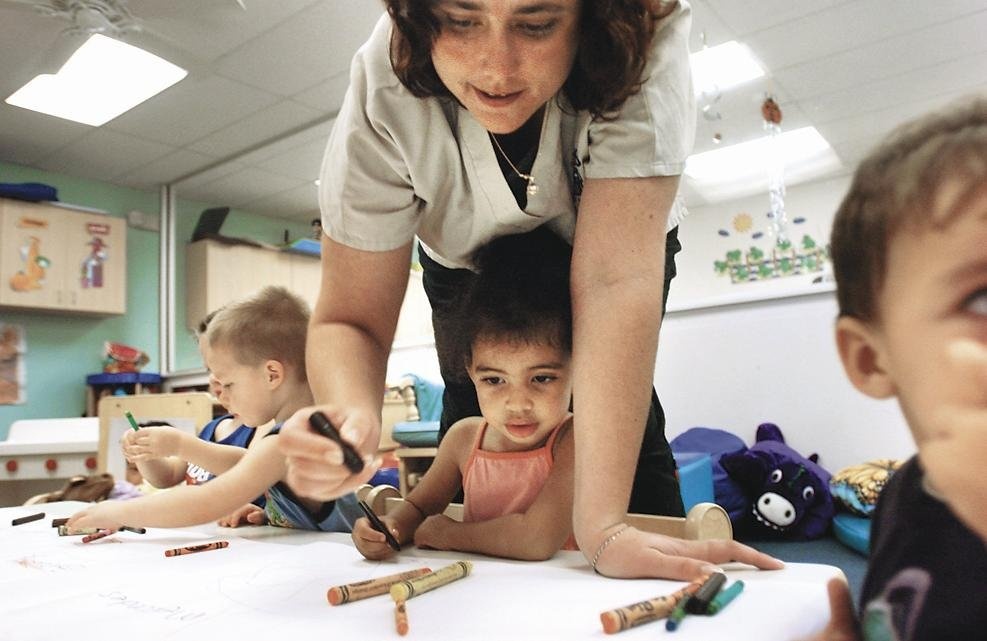
The federal government would spend $2-billion next year to start a program to ensure that all kids from needy families go to preschool, in a plan President Obama proposed as part of his fiscal 2014 budget.
Child-care advocates have long pressed for such a program. Decades of studies have shown that children who begin learning before kindergarten are less likely than others to drop out of school, get in trouble, face challenges getting a job, or encounter any of the other problems that make them a drain on society as adults.
Yet the United States has one of the worst enrollment rates of 4-year-olds in school among 38 leading economies, according to the Organization for Economic Cooperation and Development.
“I’ve been working on this for 25 years, and so have a lot of other people,” says Kris Perry, executive director of the First Five Years Fund, a nonprofit that promotes early-childhood education. “It’s gratifying to see all the research and findings drive policy.”
Matching Funds
Mr. Obama’s proposal, included in his budget request for fiscal 2014, still requires Congressional approval.
He suggested paying for expansion of preschool programs by raising the federal tax on cigarettes and other tobacco products.
Under the plan, the federal government would award $750-million to states with plans to establish or expand government-financed preschools for 4-year-old students from low-income families.
States that already support such programs but want to expand them—for example to include middle-class students—would be eligible to receive money from the $1.3-billion more that the president requested in his budget. That would cover the 15 states expected to apply for the money.
States would be required to partially match the federal grants with state money over the next few years; by the eighth year of their preschool operations, the states would be expected to match every federal dollar.
Most of the funds would be funneled to local school districts, but nonprofit groups would also be eligible, the Education Department says.
That’s good news for the Dunbar Learning Complex, an Atlanta early-learning program started in 2010. A partnership among the nonprofit Sheltering Arms, the Annie E. Casey Foundation, and Dunbar Elementary School, the complex was created to close the education gap between children from needy families and those who are better off. Children can start in the programs when they are just six weeks old.
Gail Hayes, director of Annie E. Casey Foundation’s Atlanta office, says she wants to expand the approach to all of the city’s schools that serve the poor.
Money from the federal preschool effort could make that happen, she says. “For us, the timing couldn’t be better.”