

September 18, 2011 | Read Time: 3 minutes
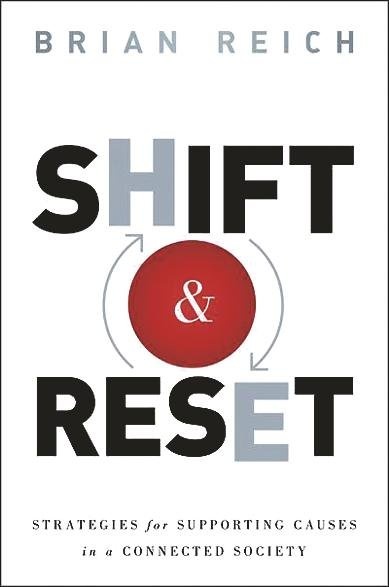
Too many nonprofits are overly concerned with staying alive, not with achieving meaningful results, argues Brian Reich in his new book, Shift & Reset: Strategies for Addressing Serious Issues in a Connected Society. In an interview, Mr. Reich, senior vice president at Edelman Digital, a public-relations firm, discusses why he believes nonprofits are failing to bring about social change.
What do you think nonprofits are getting wrong?
I don’t think they’re focusing on actual behavioral change.
The success metrics for nonprofit organizations are things like amount of money raised and how high you rank on a list of respected, well-known, highly-branded organizations, and not your ability to reverse the course of a particular issue.
I talked with Feeding America for the book, and the group used to be my client. They do a tremendous job of feeding Americans, but they’re not addressing the hunger crisis in America.
No matter how big they get, no matter how many families they feed, they’re not going to reverse the trajectory of hunger without addressing underlying food-access issues and a whole host of other things. They know this, but the organization is structured to feed more people, grow larger, and have a stronger brand and greater influence. If they said, “Our job is to feed these families and it’s somebody else’s to address the hunger crisis, and we can provide them with our knowledge and expertise but it can’t be a part of our focus,” that in and of itself would be a huge shift because now that would open the door for somebody else. But they don’t. They say what they’re doing is addressing the hunger crisis in America.
Why are you skeptical about cause-marketing campaigns?
They suggest that by being aware, you are accomplishing something, when these campaigns are really just a starting point.
If something is important to you, it will find you.
Why are we spending so much energy, so many resources, tapping into celebrities, to divert people’s attention from what they need to know?
I call it “the boy who cried wolf” syndrome. You tell me if I do this walk, that you’re going to cure cancer. So I do the walk and you don’t cure cancer because the two are not actually directly related, but that’s not what you promised me.
Even though you are a social-media expert, you are very critical of its use. How does it fall short?
Social media, in more cases than not, and especially in the context of nonprofits, has reduced a lot of the promotion and awareness to 140 characters and repeating the same thing over and over. There’s this confusion between awareness and understanding. There’s no evolution of the relationship, no deepening of the connection. Organizations are using these tools simply to find other ways to ask for money or to build their lists [of supporters.]
What can nonprofits learn from corporations?
The greatest benefit that a Walmart or a FedEx could offer to an organization like Feeding America is operational efficiency and understanding, not just a big check.
Walmart is an unbelievably efficient mover of products; Apple has a production capability that allows them to make margins on the same technology that everybody else develops that are just three, four, five, 10 times what everybody else is doing.
What can we learn from them? When applied to a serious issue, we might have a fighting chance of addressing the solution.




