April 9, 1998 | Read Time: 11 minutes
Charities apply same techniques used to seek big gifts
Two years ago, California Polytechnic State University at San Luis Obispo decided to recast its annual campaign.
The institution realized it made little sense to refer to an annual campaign when it was seeking money from alumni and other loyal donors more than once a year. Gone from all solicitations is the phrase “annual fund.” Now donors are asked to support the Cal Poly Fund.
Long a fund-raising staple at colleges, hospitals, and many other non-profit institutions, annual campaigns are quickly becoming one of the biggest misnomers in philanthropy. More and more organizations are soliciting money for their general funds year-round and using techniques commonly used in capital and other large-scale campaigns.
Karla Williams, author of Donor Focused Strategies for Annual Giving (Aspen Publishers), applauds the new changes. “Calling people annual donors sends a message,” she says. “It limits the view of their relationship with the institution. Some donors are willing to give three or four times a year.”
No matter what the campaign’s official name, fund-raisers at many non-profit organizations are experimenting with new ways to bring in money to cover general operating costs.
“The world is changing,” says Ms. Williams, who heads the Williams Group of fund-raising consultants, in Charlotte, N.C. “Annual giving is 90 years old as a methodology, and yet it’s never really been challenged. Annual giving has more room for innovation and entrepreneurial thinking than any other area of fund raising. We’re producing dollars and friends for the organization that are the lifeblood.”
Nevertheless, she says, too often the annual campaign is “taken for granted.” What’s more, she says, “it’s often relegated to the least-experienced fund raisers — in a larger shop, particularly. It’s not always treated as something that’s critical or integral.”
By giving short shrift to the annual campaign, fund raisers not only miss important revenue but also overlook a fertile area for spotting tomorrow’s major donors, experts say.
“The future of philanthropy is in individuals,” says Nancy Thompson, president of Thompson Fundraising Counsel, in St. Louis. And the most efficient way to tap into the pool of potential donors, she says, is for annual-fund directors to borrow techniques used in capital campaigns — for example, following up with letters and phone calls, even months after a gift has been made, to let donors know that their donations have enabled the organization to handle an emergency or start a new program.
Some of the best annual solicitation efforts involve small campaigns that go on throughout the year and that appeal to different people according to their interests and ability to give, say experts.
“The annual fund used to be a burnout activity,” says Ms. Williams. “Every year you’d run the annual campaign for two months, then go into evaluation, and the next year you’d start all over again.”
At Hoag Memorial Hospital Presbyterian in Newport Beach, Cal., previous donors are asked to give once a year through a mail appeal, but the annual fund is also supported by proceeds from 30 fund-raising events, such as a golf tournament and a Christmas Carol ball.
“On average we get four or five gifts per person a year because of the number of social events,” the proceeds of which go to the hospital’s annual fund, says James M. Greenfield, senior vice-president for development and community relations.
Offering several ways to give to the annual fund encourages people to donate more in total, says Mr. Greenfield. They may give once a year to the direct-mail campaign, but they also may want to attend the hospital’s popular golf tournament and other special events.
To sweeten the pot, the hospital uses cumulative donations to determine what kind of recognition and benefits the individual receives as a thank-you. For example, donors who give $1,000 to reach the “Ambassadors” level can climb to the $5,000 “Friends” level by making more donations, which can include paying to get in to special events.
Moving up the ladder brings a variety of benefits. Donors who give $1,000 are recognized in the hospital foundation’s newsletter and receive several perks that last for a year — recognition on a donors’ wall, invitations to some community events, and, if they have to go to the hospital, expedited admission.
Donors at the Friends level get the same perks except that they are permanent. In addition, those donors get an invitation to the hospital’s annual meeting.
Having different ways — such as direct-mail appeals and special events — to give to the annual fund takes “the sameness out of the campaign and creates a much more exciting and creative and innovative campaign,” says Ms. Williams. What’s more, she says, it makes the campaign more interesting for donors and keeps staff members excited about what they are doing.
At many non-profit organizations, annual-fund directors are applying the same techniques to annual campaigns that they would use when seeking a one-time big gift.
Over the past two years, Iowa State University, in Ames, has revamped its annual-giving program, using telephone calls to build more personal relationships with donors. “We approach all of our phone calls as we would major-gift calls,” says Sean Keister, director of annual giving.
Student callers, who used to spend an average of four minutes on the phone with each potential donor, now spend an average of 10 minutes. “We build rapport, we build a case, we make the ask, and negotiate the amount,” says Mr. Keister. In the past year, he says, the size of the average gift made to the annual fund has risen from $90 to $145.
To prepare the students to make the calls, they are now given 15 hours of training, says Mr. Keister. “We want quality, not quantity,” he says. Callers ask initially for gifts of $1,000. If the answer is No, they ask for $500 and go down from there.
Although Mr. Keister has not seen a drop in the number of people making gifts — even though fewer people are being called — other organizations have found that as they concentrate on bigger gifts they lose some donors who used to make small contributions.
“Donors are being lost in the low end — $20, $25,” says Ms. Thompson. But she and many non-profit leaders say that, while the number of donors has dropped, the total amount raised by annual funds that apply major-gifts techniques is rising.
In addition to the longer, more personal calls, Mr. Keister says, one reason that Iowa State is doing better is that it now asks for both restricted and unrestricted funds through its annual-giving campaign.
The university started by splitting its list of potential donors down the middle. Callers asked half the people to give money earmarked for specific programs and asked the other half to make a general donation, leaving it up to the institution to decide what the money would be used for.
Many of his colleagues are looking for other creative ways to get donors interested in providing general operating funds.
Four years ago, the University of California at Berkeley started an effort to raise the amount of money that came in with no strings attached.
In the past, Berkeley had concentrated mainly on seeking major gifts, relegating its annual-giving program to a few direct-mail pieces and occasional telemarketing that was farmed out to an outside firm.
But in 1994 the university began a more sophisticated annual-giving program, contacting more alumni than in the past and making a big effort to solicit gifts from parents of current students. In addition, fund raisers started explaining to potential donors what the unrestricted gifts might be used for.
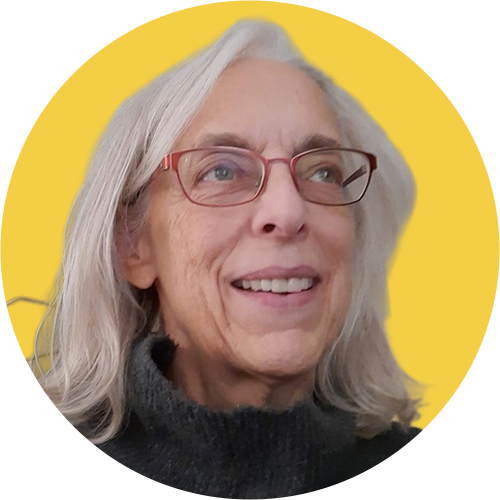
“Every appeal we make now describes ways in which unrestricted dollars have benefited students,” says Lishelle Blakemore, director of annual programs. “We send out cards that describe how the funds were used from the previous year.”
Student callers tell people over the phone how unrestricted funds have benefited them personally in the past, such as enabling the purchase of a new journal for the library or financial aid.
As a result of its steppedup efforts — and personalized approach — the university has increased its unrestricted giving by 55 per cent over the past three years.
Still, general operating funds are a hard sell. Getting people fired up about paying for heat and air conditioning is not easy. But, says Ms. Williams, the fund-raising consultant, looking at the request through the donor’s eyes may suggest better approaches.
“We think of the annual fund typically as being a gift to the general operating budget,” says Ms. Williams. “My challenge to my colleagues is to say, ‘That’s not very donor-focused, is it? What do you want me to give to? The bottom line? I’m having trouble feeling passionate about that. I’m having trouble wanting to write more than a $25 check for that.’ ”
Besides feeling a lack of motivation, donors asked to give to a general operating fund want to know just what that fund does. Answering that question in a compelling way is a key to successful fund raising.
“General operating is a very real set of numbers tied directly to services and programs that the community needs and for which the organization’s mission is being served,” says Ms. Williams.
Some organizations have found ways to have the best of both worlds: raising money for general operating costs and special programs.
“Unrestricted is not exactly an attractive word,” says Miriam Whitworth-Brown, director of annual giving at Carnegie Mellon University in Pittsburgh. What were once called general operating funds have now been broken down into a General Scholarship Fund, an Undergraduate Enhancement Fund, and a Graduate Enhancement Fund.
The Undergraduate Enhancement Fund is something donors gravitate to, she says, because they know they are helping improve the students’ experience at the university. Donations to the fund help support such programs as providing mentors to students, supporting undergraduate clubs, renovating classrooms, and providing financial aid. But the money can also be used to heat dormitories and pay phone bills relating to student programs.
California Polytechnic at San Luis Obispo has taken a more radical approach to annual giving. It has turned to other sources for its unrestricted funds and started asking annual donors only for contributions earmarked for specific programs.
The university had been bringing in $400,000 in restricted annual funds in addition to $160,000 in unrestricted gifts. But after studying donations made to the university over six years, fund raisers found that people who made restricted gifts donated twice as much as people who gave unrestricted ones. So officials decided to scrap requests for unrestricted dollars altogether.
In the first year of the effort, gifts to the annual fund jumped from $560,000 to nearly $800,000.
The university was able to make the change because it received additional state funds to pay for what used to be covered by unrestricted donations. But even if that option is not open to other universities, they should consider asking for at least some restricted donations, says William G. Boldt, vice-president for university advancement.
“Donors want to see the impact of their gift,” he says. “And they want to pay back the part of the university that gave them their start. So rather than giving unrestricted, they prefer giving to the college of business or the college of liberal arts.”
Bringing in more dollars was only part of the university’s motivation. “If you’re trying to use the annual fund as cultivation for larger gifts, isn’t it better to ask for restricted gifts rather than switching them from unrestricted to restricted?” says Mr. Boldt. “What you’re doing is developing a relationship between the donors and the educational program they relate to. If you want to move them up to the major-gift level, it’s better to develop that relationship early.”
The Ronald McDonald House of the Twin Cities has started cultivating annual gifts at an even earlier stage — by encouraging young children to give regularly. It started an annual giving club called the Ronald McDonald Clubhouse.
“We have a lot of children involved in the house and we thought it was time we recognized them,” says Meg Katzman, executive director of the Minneapolis charity, which offers temporary housing to families who travel long distances to get medical care for their children.
Young donors are eligible for the perks offered to club members by donating $25, by volunteering for 25 hours, or by collecting 10 pounds of tabs from soft-drink cans. The charity raised $60,000 last year by turning the tabs in for recycling.
As thanks for the efforts of clubhouse members, the organization sends them a Ronald McDonald pin and puts their names — or the name of the group if it is a Scout troop or a school class — in its newsletter.
“If you want children to grow up to be philanthropists,” says Ms. Katzman, “you should start them early.” Russ Curtis, for The Chronicle Lishelle Blakemore, director of annual programs at the University of California at Berkeley, says the university now explains what unrestricted gifts might be used for: “Every appeal we make now describes ways in which unrestricted dollars have benefited students.” Thomas Perry, for The Chronicle Meg Katzman, executive director of the Ronald McDonald House of the Twin Cities: “If you want children to grow up to be philanthropists, you should start them early.”