Robotic Devices Donated to VA Hospitals Help People With Spinal-Cord Injuries Walk

By NICOLE WALLACE
Features Editor
April 6, 2021 | Read Time: 2 minutes
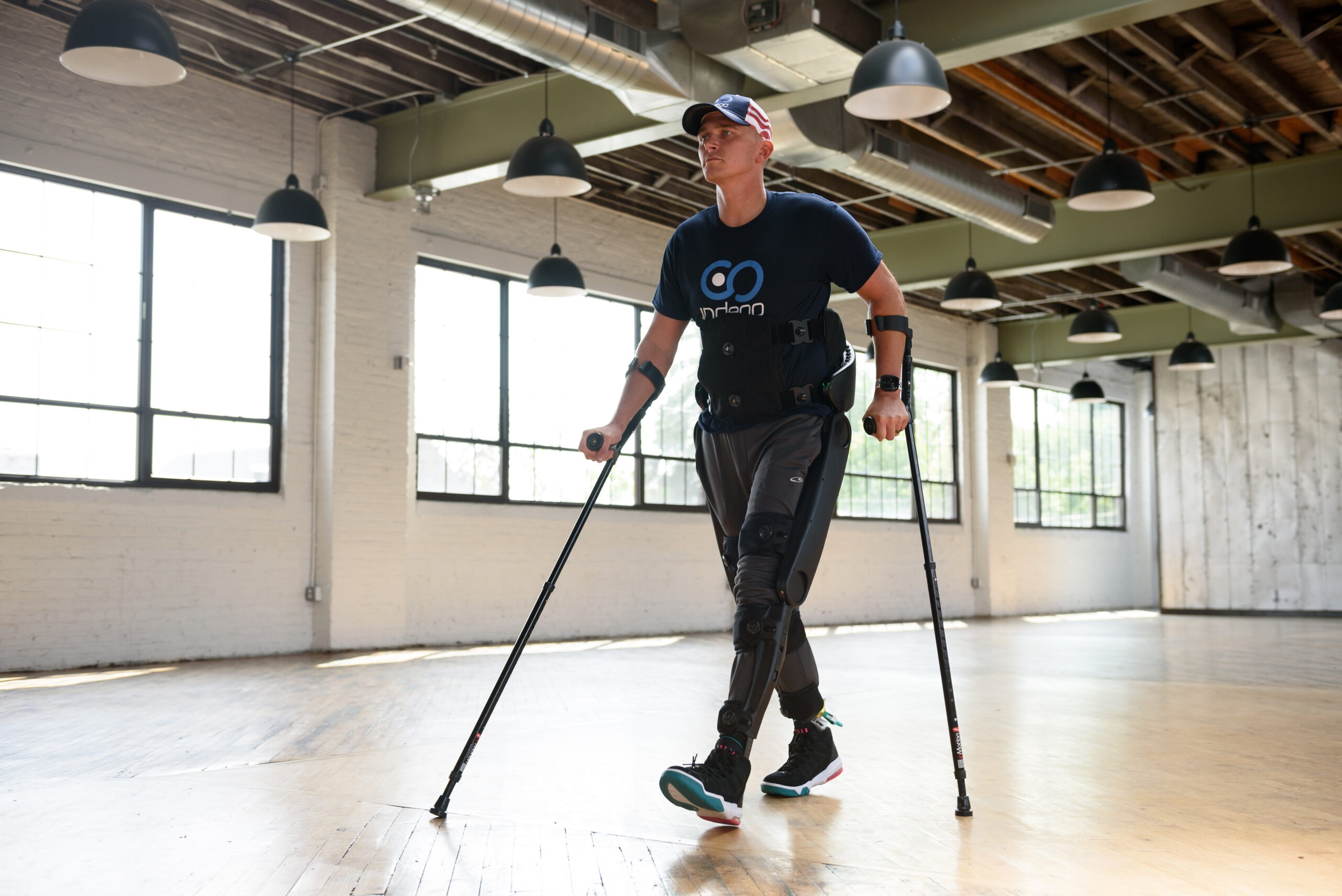
The robotic exoskeletons that the nonprofit SoldierStrong donates to Veterans Administration hospitals sound like something out of an Iron Man movie. The state-of-the-art devices allow people with spinal-cord injuries to stand up and walk.
While it might seem like science fiction, the real-world benefits of physical-therapy sessions with the exoskeletons include a significant decrease in urinary-tract infections and increases in bone and muscle density. For veterans whose injuries allow them the possibility to walk again, those sessions can speed their progress.
Researchers at the Denver VA found evidence that the sessions also provide an emotional boost, says Chris Meek, co-founder of SoldierStrong. He says veterans told the researchers things like, “Oh my God, I forgot what it was like to be eye-level with the world again” and “I’m five foot seven; I feel like the tallest giant in the world.”
The other advanced technology the Stamford, Conn., nonprofit donates to VA hospitals is a virtual-reality system created at the University of Southern California. The exposure therapy helps veterans who struggle with post-traumatic stress disorder recall troubling incidents and talk through them within a supportive environment with their therapists. It’s designed to be more appealing to younger veterans.
“There are 14 different scenarios they’ve created. It could be you in a Humvee. It could be you in a helicopter, you walking through Iraqi village,” Meek says. “It takes the veteran back to that trigger point where they’re struggling with what happened.”
The ultimate goal of SoldierStrong’s work is simple, Meek says: to improve veterans’ quality of life.
“They were willing to sacrifice it all for people that they’ve never met and never will meet,” he says. “So please give them a little bit of a better life.”