Rural Dreams, Urban Dollars — A Solution From Mississippi
How a big-city philanthropy came to embrace a swath of rural America. Will big money follow?

By Drew Lindsay
Senior Editor, Special Projects
December 9, 2025 | Read Time: 9 minutes
Keep up with everything happening in The Commons by signing up for our weekly newsletter.
The drawings depict a hoped-for refurbishment of the nearly 200-year-old town. A new open-air farmer’s market operates in what was an abandoned, roofless building near Courthouse Square. The town park’s amphitheater stands proudly before brightly colored sculptures, its formerly cracked stucco gleaming anew. A walking trail winds through a meadow planted on vacant land that was once a football field.
The sketches are part of a new master plan for Carthage, population 4,846, which commands the geographic center of Mississippi amid poultry farms, forests, and fields of corn, soybeans, and cotton. That plan refashions ideas shelved 15 years earlier — a reboot made possible, in part, by a big-city foundation’s unusual decision to embrace and fund a large swath of rural America.
The Greater Jackson Community Foundation committed to this expansion almost a decade ago. At the time, it worked in the three counties that make up metropolitan Jackson, the state’s capital and largest city. Rebranded as the Community Foundation for Mississippi, the grant maker now serves an additional 19 rural counties and their dozens of small towns, including Carthage.
It’s a bold and rare move to address a long-standing philanthropic inequity between urban and rural America, according to experts. The foundation isn’t wealthy; in good years, it awards a total of about $150,000 in competitive grants, at best. But it’s stretching its dollars to support areas with even fewer philanthropic assets and little investment from national grant makers.
This is no easy feat. It covers an area twice the size of New Jersey and includes counties with poverty rates among the highest in the country. Still, the foundation is targeting its limited dollars to efforts it believes can spark change, bring community leaders together, and build the infrastructure to secure bigger funding.
Meanwhile, nonprofits and local leaders in the rural counties say the foundation has become a valuable ally to realizing their dreams. “Our area of the state has been overlooked quite a bit,” says Calvin Phelps, executive director of the Pike School of Art in McComb, about 80 miles south of Jackson. “And for them to start advocating for our counties — it’s been very important.”
An Agreement Born of Disaster
The Jackson foundation’s expansion to 22 counties stems from a broader commitment by the state’s seven largest community foundations to provide, at minimum, disaster relief for all of Mississippi. After tornadoes ripped through the southeastern part of the state in 2017, and as violent weather became more common, state leaders called on philanthropy to help coordinate and fund the volunteer response and relief and recovery work.
The community grant makers divvied up responsibilities easily, according to Sammy Moon, who at the time led the state’s association of grant makers. Lines were drawn based on proximity and, on occasion, the interests of a foundation donor.
“It was a pretty natural conversation,” Moon says. The agreement “has been in effect ever since.”
Altogether, these foundations now cover 42 counties that previously didn’t have an anchoring philanthropic institution — about half the state. Across Mississippi, foundation funding amounts to only $241 per capita. That compares with almost $2,000 per person in New York City and $451 nationally, according to an analysis by Grantmakers for Southern Progress and the National Committee for Responsive Philanthropy.
Emergency relief and recovery remain core services. During the COVID pandemic, the grant makers processed requests for state grants from food pantries, health groups, and other nonprofits. When severe weather hits — tornadoes but also floods and ice storms — the foundations help coordinate volunteers and deliver material and financial support.
The Community Foundation of Northwest Mississippi — which covers the Mississippi Delta region, one of the country’s poorest — works directly with emergency management officials in each of its 14 counties to provide food, supplies, and shelter. “If they need diapers, we know the nonprofit that can provide diapers,” says President Keith Fulcher.
The foundations often establish relief and recovery funds to collect donations inside affected counties but also from donors statewide and across the country. When tornadoes swept the state in 2023, the Create foundation, which covers northeast counties, raised about $1.5 million for Monroe County, where more than 20 people had died. “Most of that money came from outside of Monroe,” says President Mike Clayborne.
Small Grants to Win Big Grants
The Community Foundation for Mississippi offers perhaps the broadest array of support to its adopted counties. At the lowest levels, it makes grants of $1,000 or less for training, conferences, and consultants.
Several years ago, the foundation began awarding up to $5,000 for community projects throughout its coverage area. Leake County, home to Carthage, won funding to create playful directional signs for visitors and tourists that emphasized the community’s identity, including its self-declared status as the “rodeo capital of Mississippi.” (The city held the high school rodeo state championships for decades.)
The foundation makes larger awards — what it calls “rural leveraging grants” — to help small communities scratch together matching funding on big federal and state grants.
A preservation group in the town of Lexington won a $72,000 grant from the state to help restore a landmark mid-1800s Queen Anne-style home just off its courthouse square. But the grant award required $48,000 in matching funds, more than the group could raise from its fundraising events with the 1,200 residents of Lexington, which sits in one of the poorest counties in the country.
The community foundation stepped up with $10,000, which helped persuade other institutional donors — including the National Park Service — to chip in.
Raising community and arts funding in small communities is tough, says Kathleen Waldrop, president of Friends of Lexington Preservation. The group previously has taken out bank loans to meet a grant match.
The foundation grant “gave us confidence with other partners,” Waldrop adds. “It was important to be able to say that the community foundation had confidence in the work and our ability to manage the grant money.”
When its restoration is complete, the house, a former stagecoach stop, will serve as a community cultural center for art exhibits, performances, lectures, and more. “Even though it’s a historic preservation project, it’s really about community building,” Waldrop says.
Impact Beyond Grant Dollars
Given its limited discretionary funding, the foundation looks for ways to help beyond grant making. “We have to get creative and think about how we can do the most good with the limited amount of money for the largest number of counties,” says Melody Moody Thortis, director of strategic impact and programs.
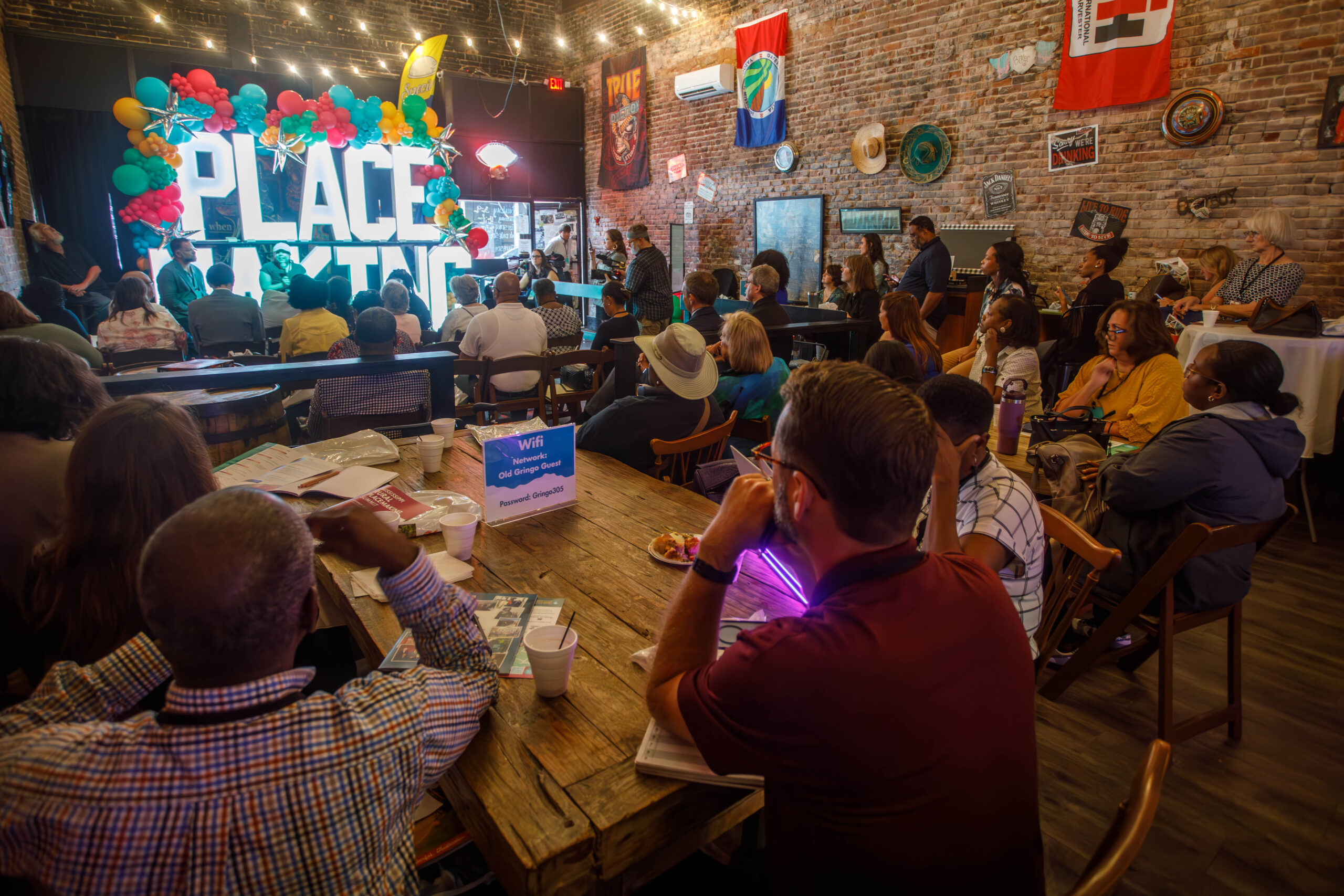
In 2024, the foundation launched an annual rural placemaking “summit” to inspire and support community-building efforts. Thortis wanted to bring together rural Mississippians with similar challenges and opportunities, offer practical tools, and point to low-cost ways to improve the lives of residents.
National placemaking conferences often feature exciting examples of work in big cities, she says. “But you don’t always see something that you can go home and do in a small town.”
McComb, an old railroad town halfway between Jackson and New Orleans, hosted the first summit. Yazoo City, part of the high-poverty Mississippi Delta, took the role last year. Hundreds showed up at both events, including mayors and other elected officials, nonprofit leaders, pastors, school administrators, and business owners.
“There has not been anything like that in Yazoo City or really that surrounding area in probably the last 10 years,” says Sam Martin, a Yazoo attorney.
The summits showcase experts and work in Mississippi and rural regions nationally to attack blight, revitalize downtown districts, engage young people in community life, and more. Workshops and programs aim to demonstrate what’s possible — and then provide details to make it happen.
“A lot of these communities feel like they’re stuck if they don’t have a large multimillion-dollar grant,” Thortis says. “So we wanted to shrink that and say, ‘What can you do? What is feasible?’”
In McComb last year, the foundation turned four parking spaces into a pop-up “parklet,” bringing in turf, trees, benches, and game tables. To demonstrate the affordability, it listed the cost of each item and pointed to a parklet toolkit produced by Mississippi State’s Fred Carl, Jr. Small Town Center.
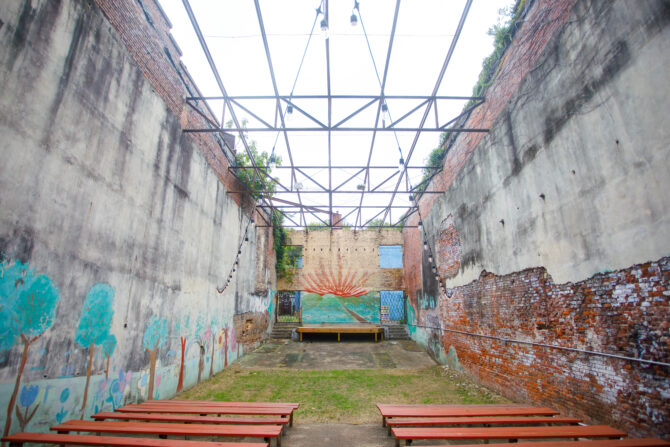
Several towns have since created pocket parks, Thortis says, and some have added murals and other public art to enliven streetscapes. After McComb hosted the first summit, it introduced “Fourth Friday” celebrations that close Main Street to traffic and feature food trucks and vendors, games, and musical performances.
Dakota Presley, executive director of the Main Street Chamber of Leake County, attended the first summit in McComb. The chamber was struggling at the time, but she came away inspired.
“It was huge for us,” she says. “I took everything they said to heart.”
After the summit, Presley applied to the foundation for a grant to help the county revive its 2008 master plan. The foundation awarded $35,000, which was used to hire consultants, conduct surveys, and organize meetings to identify the community’s needs and interests.
The result is that illustration-filled “road map” for improvements to Leake’s three biggest towns: Carthage, Lena, and Walnut Grove. Within the 69 pages are concepts for small upgrades and makeovers that can be funded piecemeal — historic preservation, new uses for vacant buildings, parks and parklets, beautification, and more.
Will Big Dollars Follow?
What’s happening in Mississippi is unusual in philanthropy. Rural-specific programs are common, but it’s rare for a grant maker or nonprofit to expand its coverage area so broadly and offer services and money to such a mix of regions, says Mike Soskis, a partner with the Bridgespan philanthropy consultancy who has studied philanthropy in the Black rural south.
Leveraging small grants to help rural groups and towns seek bigger funding is a smart strategy, Soskis adds, though the payoffs may be uncertain given cuts in federal funding. And large national philanthropies — many of which have withdrawn from funding the rural South — may be hard to lure back.
“It’s a little bit challenging because there’s a history of some of them investing in rural communities and then not seeing the results that they wanted or changing strategies and pulling out,” Soskis says.
Presley, however, is excited by the hunt for funding to turn plans for Carthage, Lena, and Walnut Grove into reality. A relative novice to fundraising before working with the community foundation, she can now envision pitching the Leake road map to a range of funders that might have an interest in one element or another.
“We can take those plans and say, ‘Hey, this is what we want to do. This is how much we need to do it.’ So it’s a big deal for us.”
The Commons is financed in part with philanthropic support from the Arthur M. Blank Family Foundation, Einhorn Collaborative, and the Walton Family Foundation. None of our supporters have any control over or input into story selection, reporting, or editing, and they do not review articles before publication. See more about the Chronicle, the grants, how our foundation-supported journalism works, and our gift-acceptance policy.