
Seeking to Keep State Funds, Charities Overcome a Fear of Lobbying

By Debra E. Blum
Contributor
February 21, 2010 | Read Time: 6 minutes
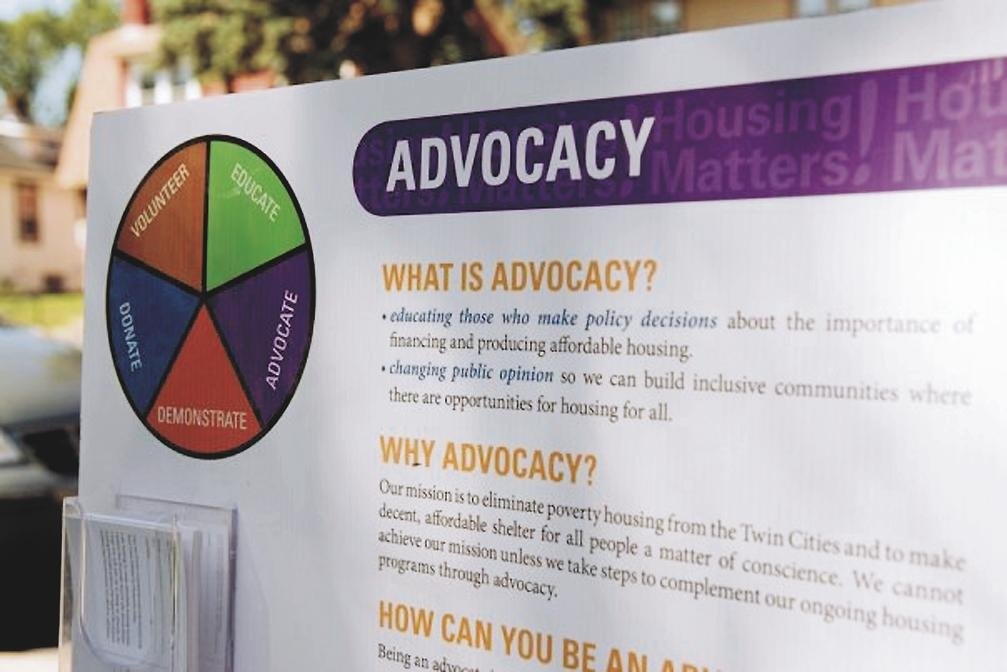
Roughly 200 staff members and volunteers from Minnesota’s Habitat for Humanity affiliates are expected to attend an advocacy event this month at the state capitol. They plan to meet with lawmakers to seek continued support, push policies that promote low-cost housing, and speak in favor of bills on foreclosures.
For most of the participants—described by an organizer as “willing but nervous”—it will be an introduction to Habitat’s new lobbying efforts, and it will be their first attempt to woo policy makers, too.
“We have to tell them not to be afraid, that we have standing to be there and to have a voice in the democratic process,” says Kristin Beckmann, director of government and community relations at the Twin Cities Habitat for Humanity, in Minneapolis. “I love opening people’s eyes to that—that nonprofits should see themselves as a partner in making legislation.”
Warming to the Idea
Although many nonprofit groups are organized for advocacy, plenty more charities, especially service providers or smaller groups, shy away from lobbying, saying they feel hampered by the rules that govern the activity or that they don’t have the resources or expertise to get involved.
But that may be changing, as advocacy experts like Ms. Beckmann, who have for years been trying to tell reluctant charities that they can and should lobby, say their message is finally finding a bit of traction.
Some credit the Obama administration for projecting the image that government is more open and inclusive. Others say that the national focus on job creation and helping people hurt by the recession has emboldened nonprofit groups that work in those arenas to speak out. Most, however, say worry about budget cuts at local, state, and federal agencies has pushed charities to reconsider their role in government decision making.
“Groups think, ‘We’re service providers. We don’t lobby—that’s for the advocacy groups,’” says Abby R. Levine, deputy director of advocacy at the Alliance for Justice, a Washington association of advocacy groups that advises nonprofit organizations about lobbying issues. “But now there’s a budget crisis, money is tight, and the light bulb goes off, and the groups are saying, ‘Wait, maybe this does pertain to us.’”
Plan a Strategy
Charities interested in lobbying should first take stock of their organization, pinpoint their message, and determine exactly what they would want legislation to accomplish, says Gita Gulati-Partee, a consultant in Durham, N.C., who works on advocacy with nonprofit clients. Then, she says, they can figure out the most effective way to convey their position to lawmakers.
“It’s best,” she says, “to build a lobbying strategy within a broader plan for advocacy and education, so you get your message out not only to legislators, but to many different constituencies.”
Following are more tips for getting started:
Learn the law. Surveys show that charities sometimes stay on the political sidelines because they misunderstand the rules governing their lobbying. Laws do strictly prohibit charities from endorsing or opposing candidates for elected office, but lobbying—communicating with elected officials about a particular piece of legislation—is allowed within broad limits.
Advocacy experts say the easiest way for most groups to feel comfortable within those limits is to follow the Internal Revenue Service’s 501(h) expenditure test—which, depending on the organization’s size, allows for spending up to $1-million a year on lobbying. Groups that do not choose to be covered by the expenditure test are allowed to lobby, too, as long as the activity does not become what the IRS would consider a “substantial part” of the group’s work. State laws generally do not limit how much lobbying a charity can do, though some may require registration or disclosure of expenditures.
Learn the basics. National organizations, such as the Alliance for Justice, and another Washington group, the Center for Lobbying in the Public Interest, offer information and training about charity lobbying, as do many state associations of nonprofit groups. Charities can learn about local and federal lobby laws, the legislative process, and how best to communicate with lawmakers. Training is often geared toward the totally uninitiated, like the Minnesota Council of Nonprofits’ Capitol Lab, a half-day tour of the state capitol, intended to familiarize would-be lobbyists with everything from where to park to how to track a bill going through the legislature.
Bring everyone along. When the Mile High United Way, in Denver, decided to delve into lobbying a few years ago, it created a public-policy committee on its board to explore the group’s needs and interests. Trustees and staff members also reached out to volunteers and donors to make sure United Way’s constituents understood and would support its lobbying efforts on behalf of state legislation that would benefit foster children.
Kevin Hougen, who chairs Mile High’s public-policy committee says that charities also have to be inclusive when setting their legislative agendas. Last year, Mile High lobbied in favor of a state law that would require more disclosures and documentation for so-called payday loans, short-term loans that cover a borrower’s expenses until his or her next paycheck.
“We had a couple big donors in the business. They were payday lenders, and we didn’t want to anger or alienate them,” Mr. Hougen says. “We had to go to them and present our case about why these new rules would help our self-sufficiency program, how it served our mission.”
Build relationships. Charities should know their elected officials and their elected officials should know them. Invite lawmakers and their staff members for site visits; hold a reception for them; meet them at their offices to talk about policies and the work the charity is doing even when there’s no specific legislation on the table.
In December, Twin Cities Habitat started a program, called Rehab With Your Rep, which invites lawmakers to help build houses alongside the charity’s volunteers. “If you’re standing next to your state rep priming windows for seven hours, you have the chance to get to know each other better and to talk about policy and funding issues,” says Twin Cities’ Ms. Beckmann.
Become a resource for lawmakers. Charities have an invaluable asset to offer: the stories of the work they do. Two or three times a year, Neighborhood Housing Services of Chicago, sends e-mail messages to the legislative staffs of all the members of Congress in its region, detailing what the organization is doing in each Congressional district.
“If there’s a hearing on foreclosure intervention coming up, we’ll say, ‘Here’s the perspective from the field, this is how this issue is affecting people in your community, and this is what we are doing,’” says Christen Wiggins, director of innovation, evaluation, and public policy for the group.
Don’t give up. Lawmaking is complicated and lobbying can be a delicate process. Experience helps, as does time spent developing relationships.
“Last legislative session we tried to get a law changed, and we were not successful,” says Ellen Bush, executive director of CASA of Montana, a network of groups in the state that advocate for abused and neglected children in the court system. “But we moved up on the list in terms of visibility, and we’re getting more politically wise. We’re ready to go back out this session.”
Tim Delaney, chief executive of the National Council of Nonprofits, in Washington, an umbrella group of state nonprofit associations, appreciates that kind of eagerness. Too many charities would rather avoid the sometimes messy legislative process.
“What people don’t seem to recognize, or they forget, is how much fun it is to go in and roll up your sleeves and make a difference,” he says. “It’s invigorating.”




