
Sharing Innovations Is Key to Social Entrepreneurship, Says Author

By Caroline Bermudez
Contributor
April 15, 2012 | Read Time: 3 minutes
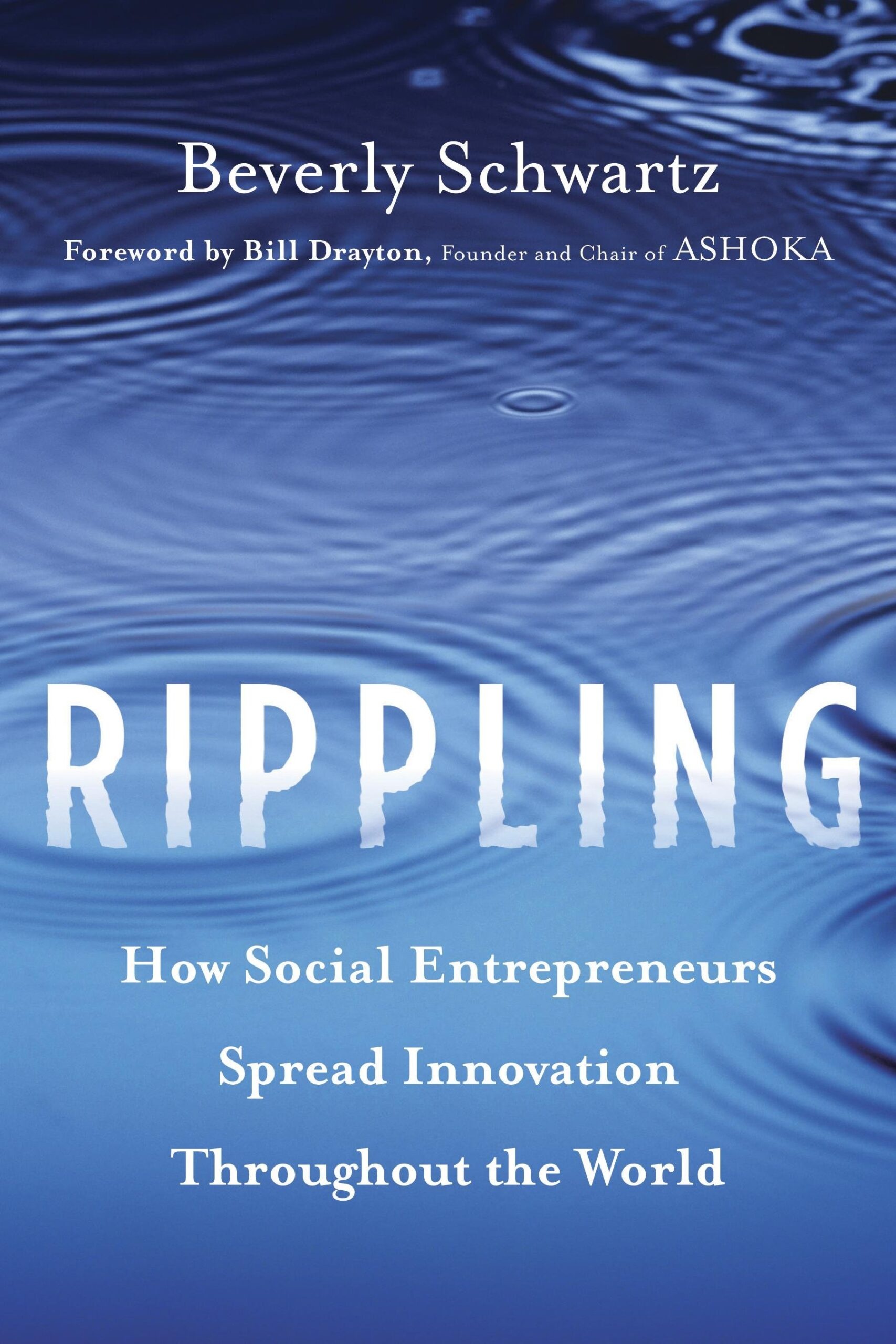
Several fellows selected by Ashoka, an organization that mentors people who wish to become social entrepreneurs, share stories of how they began their projects in Rippling: How Social Entrepreneurs Spread Innovation Throughout the World, by Beverly Schwartz, Ashoka’s vice president of global marketing. Ms. Schwartz discusses the qualities of successful social entrepreneurs with The Chronicle.
Where does the theme of rippling come from?
I asked the fellows about the people they involved in their innovations and how that has changed their lives and the lives of the communities around them. I got fascinated by taking a deep dive into the on-the-ground work that goes on and how that creates a virtuous cycle.
It seems that all the fellows you included in the book became social entrepreneurs by accident. Why is that?
I think it’s generational. Almost everybody in the book is above 35, maybe 40. When they started, social entrepreneurship didn’t have the cachet that it has now. They didn’t start out in college. It was an accident. All of them had something in their early lives that upset them. Albina Ruiz [founder of Ciudad Saludable, a community-based solid-waste-management system], when she first moved to Lima from the jungle, she was blown away by the mounds of garbage and the smell. There’s something that sticks with them from their earlier lives.
Has social entrepreneurship professionalized?
We get tons of interns at Ashoka from universities. I think there are so many students that want to go into the social field and are willing to take less pay for the experience. They don’t want to join Wall Street given what’s happened. They’re not too keen on joining law firms any more. The health-care system has a lot of questions marks around it. The way to go now is to get involved righting the things that are bothering them in the world now. They’re thinking of this as a career now, whereas they never did before.
What is misunderstood about social entrepreneurship?
You have to figure out how not to be particularly donor driven, which will drive you crazy on a year-to-year basis. Somebody once said to me, “You don’t sell an idea. You create an idea that sells.” In some ways, you have to sell what you’re doing to the community, so you have to have some marketing skills. You have to know how to message things. You have to inspire people to join your idea and your vision and share it. A social entrepreneur is not a hero. You need to have a limited ego because at one point you have to give up your idea and share it; you give it away to people who can carry it out. They underestimate the persistence and goal-orientation that a social entrepreneur has to have in their DNA.
Is there a project that excites you right now?
There’s a Web site called Sparked that links volunteers from around the world over Skype with people doing innovation. It offers online volunteerism for busy professionals. Those are the types of things that help everyone be a change maker, empowering them to do more.
What’s ahead for Ashoka?
We’re looking at empathy. The root of so many social issues is the lack of empathy, of community to community, religion to religion, people to neighbors. It wove into the stories of the book when I looked at it with some of the chapters—[fellows] were trying to figure out why people treat other people as others and not as like themselves.




