Sierra Club Hopes New Fund-Raising Steps Counter Economy’s Slump

By nicole lewis
Contributor
February 6, 2003 | Read Time: 6 minutes
While many charities shrink at the idea of adding new employees in bad economic times, the Sierra
Club has nearly tripled the size of its fund-raising staff since 2000, to 29 people.
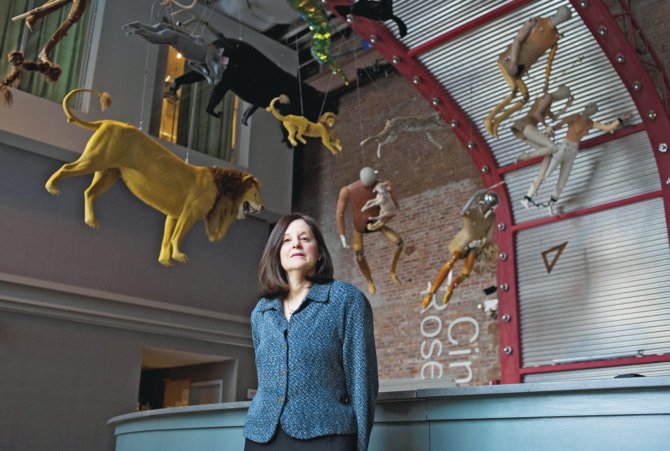
The expansion is just one of several aggressive steps taken by the organization to bring in donations since hiring Rochelle S. McReynolds as its chief advancement officer two years ago. Ms. McReynolds has also identified foundations and affluent people who have the ability to make big gifts, but haven’t in the past. She has also taught Sierra Club’s program officials and volunteers how to raise money.
The full effects of those changes may take several years to be felt, but the environmental group has already seen some success: Last year, Ms. McReynolds surpassed her division’s fund-raising goal by $1.5-million at a time when many other charities saw declines in giving.
Ms. McReynolds’s office oversees contributions of more than $10,000 from foundations, corporations, and individuals. Such donors gave approximately $13.4-million last year toward the $75-million budget of the Sierra Club’s national office, in San Francisco, which excludes money raised by its local chapters.
Junior Employees
Ms. McReynolds says she made the decision to increase the ranks of her fund-raising office — but not her budget — by filling vacant senior positions with several junior staff members at less pay. She plans to groom the employees for senior positions.
“If you don’t have the staff out there to do the job, the job won’t get done,” she says. New hires include five major-gifts officers, a researcher, and a national director of corporate and foundation relations.
Many of the new fund raisers have a background in sales instead of fund raising. More than 20 years ago, Ms. McReynolds was the vice president of sales for a company that franchised beauty salons. She says she sought people who would not have preconceptions that it would take a long time to secure a major gift. Her strategy has started to pay off: One of the fund raisers secured a $25,000 donation from a venture capitalist in his first year working for the charity.
Ms. McReynolds says she hopes to hire five to seven more people in 2003.
As part of the training for her new hires, Ms. McReynolds passes on some required reading material. She has the staff members with sales backgrounds read The Artful Journey, by William T. Sturtevant, for tips on soliciting major gifts. To fund raisers with no experience in sales she hands out Swim With the Sharks Without Being Eaten Alive, by Harvey Mackay and Kenneth H. Blanchard, a book about how to sell.
Ms. McReynolds also changed how fund raisers spent their time in the office. When she started, she says, fund raisers were in “maintenance mode,” spending 85 percent of their time working with donors to give the same amount they did the year before, and only 5 percent seeking new gifts. She switched that balance to 30 percent of their time renewing gifts and 60 percent of their time seeking new ones. The rest of fund raisers’ time is spent on administrative duties.
In addition to the new fund raisers, Ms. McReynolds has enlisted the help of volunteers, lobbyists, board members, and conservation-program employees in the search for contributions. In all, she and other members of her staff have trained about 200 Sierra Club officials in techniques for winning big gifts.
Sales Techniques
Ms. McReynolds says she does not approach major donors the way the charity often did in the past, by asking people with the means to make a substantial gift at the first meeting. Instead, Ms. McReynolds encourages Sierra Club officials to follow the sales technique of “discovery, relating, advocacy, and supporting,” which first allows time to build trust and get to know the donor’s interests. After learning a donor’s preferences, a fund raiser can then connect those interests to one of the charity’s programs, Ms. McReynolds says. After fund raisers do that, then they ask for a gift, and if they succeed, they are told to keep donors informed about what their money helps to accomplish. That approach, she says, often results in a bigger gift than might have been received had the donation request been made at the start.
“Instead of running in and pitching the mission, get to know the donor,” she says. “Talk to them about who they are, what they care about.”
Because it takes time for fund raisers to build relationships with donors, Ms. McReynolds has had the most immediate success so far in pursuing foundation grants. Despite stock-market losses that have drained some foundation endowments, the number of foundation awards to the Sierra Club in the past two years increased from 116 to 135. The size of the average grant climbed from below $33,000 to $45,000. New grants include contributions from family foundations, such as $15,000 from the Curtis and Edith Munson Foundation, in Washington, and $25,000 from the Glaser Progress Foundation, in Seattle.
In addition, the group now collaborates with other environmental charities on projects that receive foundation money, a strategy the Sierra Club had not pursued in the past. For example, in an effort to protect grasslands in North and South Dakota, the Sierra Club formed an alliance with several groups including the Wilderness Society and the Badlands Conservation Alliance — and received $466,000 from the Pew Charitable Trusts, in Philadelphia.
Compensating for Losses
Ms. McReynolds’s efforts so far have helped the charity meet its fund-raising goals, despite the bad news it has received tied to the weak economy. Among the challenges it has faced: One of its previous supporters, the Turner Foundation, in Atlanta, has suspended its grant making this year because the stock donated by its founder, Ted Turner, former chairman of AOL Time Warner, has dropped sharply in value.
Some people who typically make big gifts have also curtailed their giving. Of the dozen or so major donors who had been supporting the charity each year with six-figure anonymous gifts, says Ms. McReynolds, three last year suspended their gifts for a year. Five people who usually donate $250,000 a year or more cut their donations to $150,000 or less.
With the economy still showing signs of sluggishness, Ms. McReynolds’s division of the Sierra Club plans to raise $12.9-million this year, more than the 2002 goal but less than the $13.4-million the group ultimately raised last year.
However, Ms. McReynolds has a plan for finding donors who might be able to give in the future, even if the stock market continues to be shaky. The group recently identified 40,000 of its 700,000 members — people who have given at least $24 to the group — who have the capacity to give gifts of $10,000 or more. Seven thousand of those members will soon receive a survey to determine how strongly they feel about the Sierra Club, and what aspects of the environment interest them the most. Fund raisers from the charity will then follow up with the best prospects.
Says Ms. McReynolds: “I’m not letting people draw the conclusion that based on how the economy looks, we are not going to achieve our goals.”