Small Charities Get An Education in Fund Raising — and Filmmaking

By Caroline Preston
Contributor
December 1, 2008 | Read Time: 5 minutes
Each time Thomas Keown has asked people in recent weeks to donate to his charity, he’s had a camera rolling. The nonprofit group Mr. Keown established last year, One Home Many Hopes, is one of two charities participating in a documentary film project to show how small nonprofit groups can successfully raise money.
The filmmaking effort was started by Kristy Hall, a nonprofit consultant in Charlottesville, Va., who wanted to demonstrate how some of the fund-raising ideas she had developed could help small organizations. After recruiting a film company to help, Ms. Hall selected two charities, Mr. Keown’s Boston group, a volunteer-run effort that benefits orphaned girls in Kenya, and Student Movement for Real Change, a Washington organization with three employees.
Ms. Hall challenged the charities to raise $20,000 in 30 days—a small sum by many fund raisers’ standards, but one that initially seemed overwhelming to Mr. Keown. His group had received just over $40,000 since it was established last year.
“One of the first things she asked us was, Could we ask 10 people to contribute a significant gift of $1,000,” he says. “Everyone’s initial reaction was, We don’t mingle in those circles.”
But a week ago, when the competition ended, Mr. Keown’s organization had not only met its goal, the group exceeded it, raising more than $40,000. Student Movement for Real Change, which enlists students to advocate on behalf of poor people in developing countries, fell short of the goal, bringing in about $7,500, according to Ms. Hall.
The charities worked with Ms. Hall to develop specific fund-raising approaches. WeYo, the filmmaking company that Ms. Hall recruited, filmed some of their initial discussions, and then trained the charities’ leaders to record themselves speaking with potential donors, holding meetings, and assessing their progress.
One Home Many Hopes devised what Mr. Keown calls an “Obama-esque campaign” to persuade 1,000 people to contribute $10 each, and to find major donors to match that total. The group created a Web site, and reached out to friends, acquaintances, and anyone they could think of through e-mail messages, Twitter messages, and blogs.
“The motto that’s driven our organization is, If we all give a little, no one has to give a lot,” says Mr. Keown.
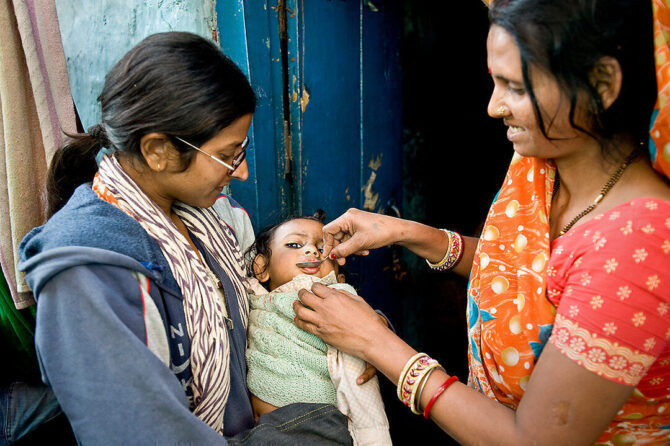
Ms. Hall attributes the group’s success, in part, to its use of a photograph of a 4-year old Riziki, one of the girls benefiting from One Home Many Hopes’ support, on its Web site and Twitter page. Riziki’s photo also appeared in several Boston-area publications that picked up the story.
In addition, the charity drew an endorsement from Noel “Paul” Stookey, of the band Peter, Paul, and Mary, who recorded a brief video for the organization that the group posted on its Web site. Three students at a school in New York also pitched in, raising $6,000, a third of which came in donations of pennies.
Ms. Hall says that the charity’s leaders kicked off the fund-raising drive quickly and stayed focused on raising money each day.
“Thirty days is a short period of time, but it can also feel like a long period of time, to keep your all-volunteer organization focused when they have their whole lives going on around them,” she says. “But they stayed focused for 30 days, and that compleletely made the difference for them.”
Mr. Keown says that, perhaps even more important than the dollars raised, are the fund-raising skills he and fellow volunteers acquired. Shortly after he started the organization, he says he realized that volunteers’ enthusiasm might wane after the group’s “novelty” wore off.
The month-long fund-raising drive, he says, has convinced volunteers that they can raise money and enjoy doing it. During the fund-raising campaign, the group increased its database of donors from 180 to more than 1,000.
“It’s remarkable the confidence its injected into our volunteers,” he says. “Many of them had never done fund raising in their lives, and they’re seeing people respond.”
Ms. Hall says that Student Movement for Real Change, the second group participating in the film, will also see permanent benefits, even though it fell short of the $20,000 goal.
The charity recruited its first corporate sponsor, and created a campaign to reach out to students.
In addition to gaining an education in fund raising, Mr. Keown received a crash course in filmmaking.
“I’ve been filming myself talking to people and getting excited, and getting disappointed,” he says. “Thankfully, it’s been mostly good news.”
The filmmakers plan to conduct final interviews with the participants, and then weave their professional footage with footage recorded by the charities’ leaders. Ms. Hall aims to pitch the film to news-media outlets, including online channels that cater to nonprofit groups, such as DoGooderTv.
During a call with supporters shortly after the competition ended, Mr. Keown said the charity’s next step will be to find ways to keep one-time donors connected to the organization.
“Raising this amount of money has set us on our feet and made us solvent, but the expansion of our donors will outlive that money for years,” he said. “The more important thing for us to do, and it’s less glamorous, is to make every one of those people feel appreciated and make them feel part of the organization and the girls’ lives.”