

April 7, 2013 | Read Time: 3 minutes
When Adam Braun prepared to start his charity, Pencils of Promise, while on leave from his financial-consulting job back in 2008, he didn’t like the advice he got from some experienced business leaders.
They told him that the way to reach his goal to build schools in developing countries was to find a handful of major backers.
“They would say things like, ‘You need five people to give you $50,000 each,’” Mr. Braun says. “I didn’t believe them.”
A good thing, too, he adds, because finding those deep pockets would have been especially hard at a time when many people in his profession and hometown, New York, were sent reeling by the global financial crisis.
Mr. Braun, then only two years out of college, decided instead to cast a wide net for support among his peers.
He held a few social events that required a donation to attend, attracting young New Yorkers who might spend at least $50 on a night out anyway. The charity founder also decided to quickly expand Pencils of Promise’s social-media presence, attracting interest and small donations from across the country. In its first two years, nearly all of the group’s donations were small ones, of $100 or less.
By the end of 2010, Mr. Braun started getting help in spreading the word from one of the world’s biggest entertainers and social-media stars, Justin Bieber, whose manager is Mr. Braun’s brother, Scooter. Mr. Bieber has become the face of the charity’s Schools4All campaign, which encourages schools to raise money for Pencils for Promise in a bid to win a visit from the singer.
Pro Bono Services
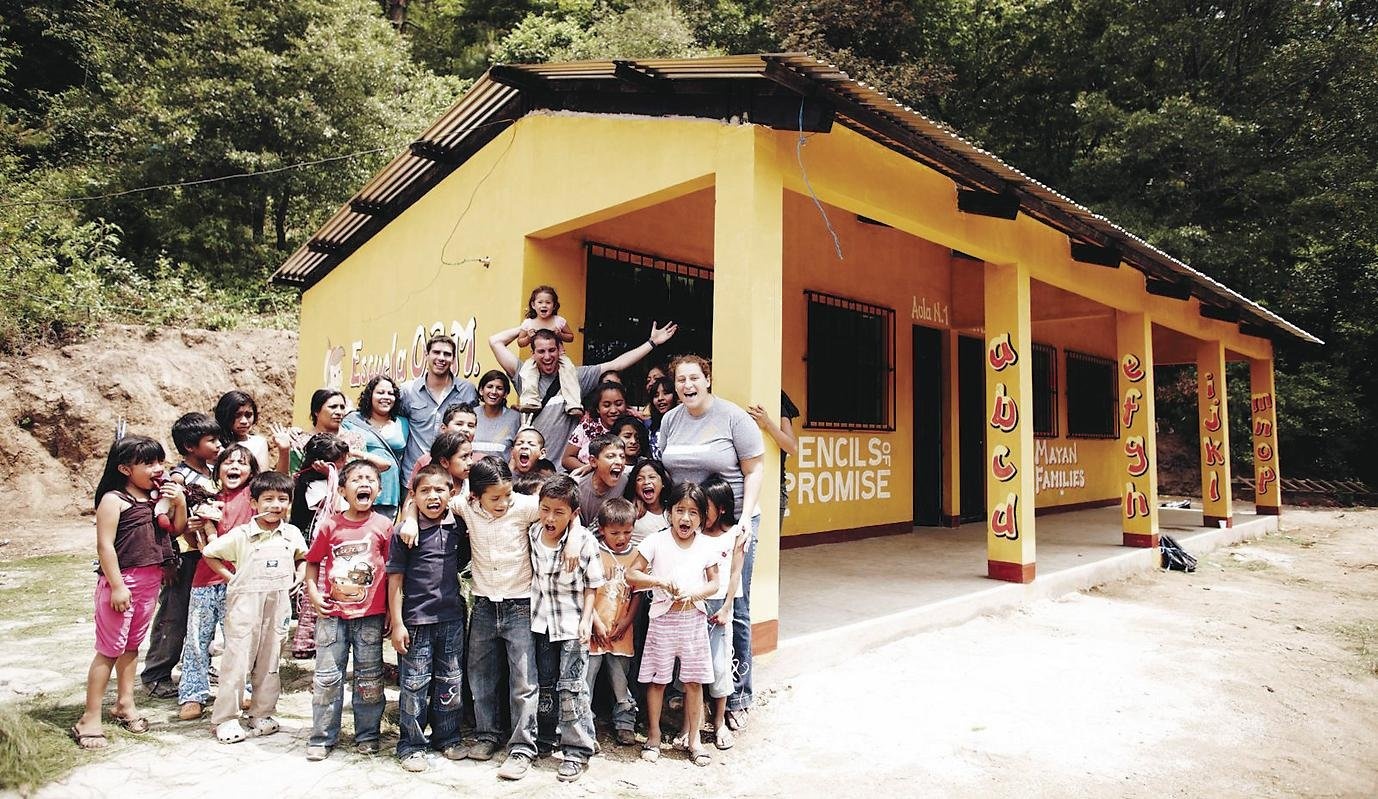
But for all the visibility a celebrity supporter lends to the cause, Mr. Braun says that it’s the organization’s ability to spend its money wisely and deliver results that keeps supporters in the fold. He had set out in the fall of 2008 to raise $25,000 for one school. Last month, Pencils of Promise built its 101st school.
“You start with something that feels audacious but is doable,” Mr. Braun says. “Then you have a model for success and you go from there.”
Starting out in a tough economy, he says, just meant being more creative.
Along with tapping his network of young people in finance and other professions to become donors, he was able to build a volunteer force that provided Pencils of Promise with free marketing, legal, financial, and Web-site services. Even the organization’s pencil-shaped logo was created for free by college students who took on design work for Pencils of Promise as a school project.
Says Mr. Braun, “If you I.D. things that you need, you’ll find that it’s not always a check. And that you can get a lot of productive support even when people aren’t in the position to give you those big checks.”
Pencils of Promise
Year founded: 2008
Mission: To build schools and educational programs in the developing world
A key to success: Attracting lots of small donations and social-media attention
So far: Has built more than 100 schools in Ghana, Guatemala, Laos, and Nicaragua and grown a huge social-media presence, including hundreds of Twitter mentions daily
Next: Goal this year is to open one new school every three to four days, doubling the total number built since the group was founded




