Smithsonian’s $1.9 Billion Capital Campaign Unleashes Lasting Change

By Maria Di Mento
Senior Editor
April 18, 2018 | Read Time: 7 minutes
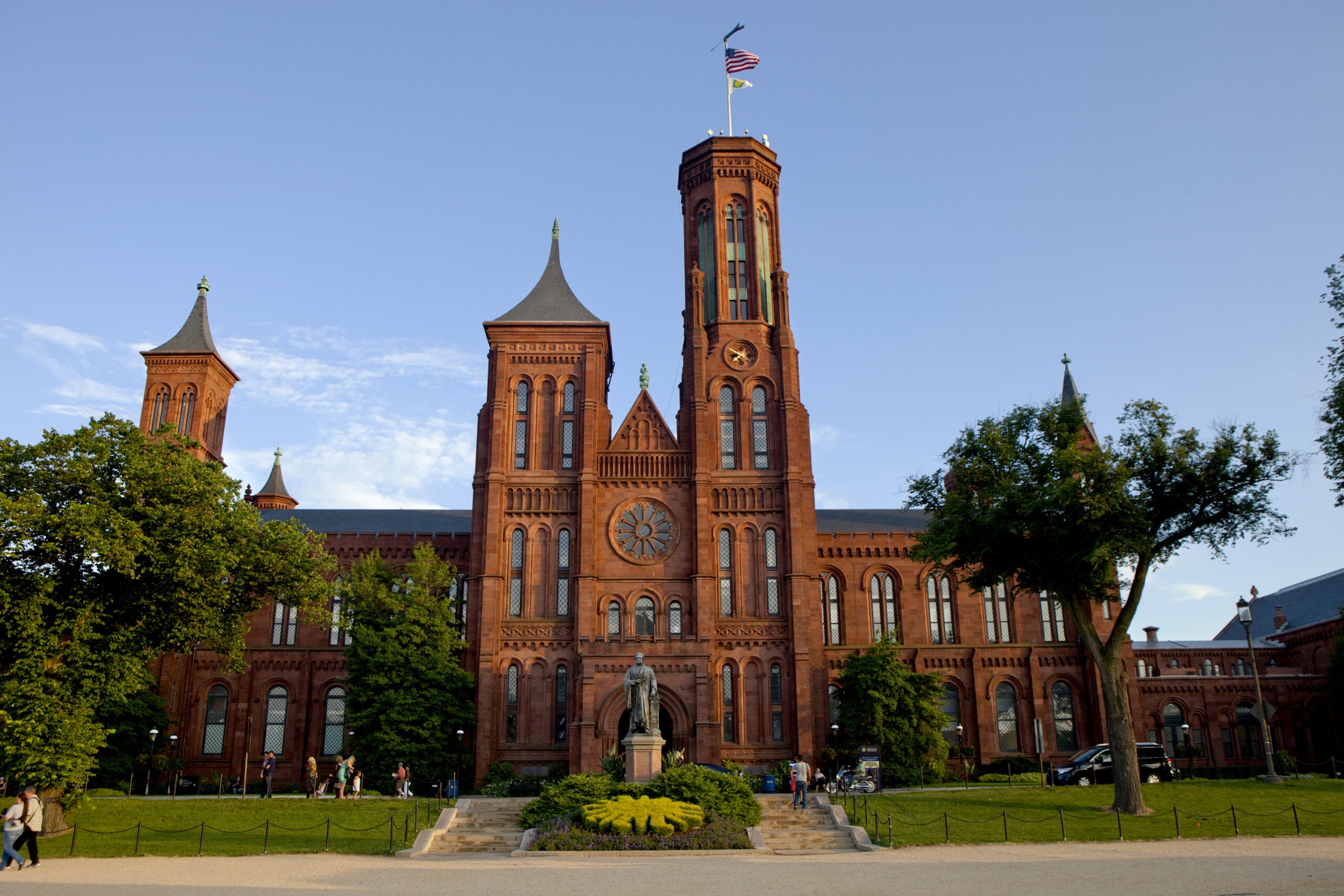
It took 165 years for the Smithsonian Institution to get around to running its first comprehensive capital campaign.
But it was a doozy.
The organization raised nearly $1.9 billion in a seven-year effort that exceeded its goal of raising $1.5 billion. The Smithsonian is the world’s largest museum and research complex, making the campaign a Herculean undertaking that brought together fundraisers, curators, scientists, and others from across the organization’s 19 museums, the National Zoo, and nine research and educational units.
There was nothing stodgy about the august institution’s strategy. The campaign used a variety of techniques, including online fundraising, direct mail, email, crowdfunding, live events, and membership efforts. The results:
- The campaign attracted donations from more than 535,000 individuals, foundations, and corporations, nearly half of which were first-time donors to the institution.
- Its biggest gifts included a total of $54 million from the Gates Foundation and $30 million from Boeing.
- The National Museum of African American History and Culture, which opened in 2016, raised over $400 million during the campaign.
- About 93 percent of donors made gifts of $100 or less. Those contributions added up to about $78 million over all.
- More than 350 donors gave $1 million or more.
- Nineteen donors gave gifts of more than $10 million each, and 35 gave gifts of more than $5 million.
Ambitious Plan
The campaign grew out of an ambitious strategic plan created by Wayne Clough, who led the Smithsonian from 2008 to 2014, to modernize the organization, shore up its finances, digitize its offerings, renovate its campus, expand programming and research, and endow director positions, all of which was going to cost a hefty sum.
The Smithsonian’s endowment stands at more than $1.5 billion, a relatively small sum for such a large and diffuse institution. It receives approximately 60 percent of its annual operating budget from federal appropriations. That money pays for things like utilities, security guards, and essential staff. It does not support research programs, curatorial work, exhibitions, expansion, or the like, so officials must raise that money from other sources.
At Clough’s behest, the institution conducted a systemwide feasibility study to learn how much money was needed and what a comprehensive campaign might look like.
After about 18 months, the decision was made to green-light the project, and the organization quietly launched the campaign in 2010. Each unit — consisting of the museums, the zoo, and research and other centers — created its own fundraising goal. All were given guidance and help from the Smithsonian’s central development team on things like case statements and how to communicate about the campaign, but it was up to each to secure gifts.
Big Challenges
Many officials were concerned that donors wouldn’t understand why they were being asked to support the federally funded institution, said Alan Spoon, one of four campaign co-chairs. Wouldn’t they argue that their tax dollars were already helping the institution?
Spoon said it turned out that wealthy donors weren’t inclined to think that way.
Many of moderate means, however, did assume the Smithsonian was fully funded by the government, said campaign director Cynthia Brandt-Stover. Preparing for that assumption helped Smithsonian leaders better explain the government’s limited support and show donors that giving to the campaign was a wise investment.
“The presence of steady, stable federal funding as a vote of confidence in the Smithsonian helped me and others talk to potential contributors and say, ‘If Congress has confidence in this organization and our governing board and Board of Regents, then this is worth putting your money into,’” said David Skorton, who currently leads the Smithsonian.
The campaign’s online-fundraising efforts, such as its crowdfunding projects, turned out to be a big success: “Because tens of millions of people saw the Kickstarter press, it engendered this dialogue of ‘I didn’t know the Smithsonian required gifts from people like me.’ And so that’s one of the big successes of that effort, getting that message out,” said Brandt-Stover.
Over the Moon
Throughout the campaign, the Smithsonian ran several Kickstarter efforts, including “Reboot the Suit,” a program to conserve, digitize, and display the spacesuits of astronauts Alan Shepard, the first American in space, and Neil Armstrong, the first person to walk on the moon. More than 9,400 donors pledged a total of $719,779 toward the project.
Together, all crowdfunding projects brought in $2.4 million from more than 23,000 donors. While those programs were successful, such efforts require a lot of time and effort and might not be a good fit for all nonprofits, said Laura Gleason, director of advancement at Smithsonian’s National Air & Space Museum.
“Crowdfunding was definitely a learning exercise. We’d never done anything like that before, and it was a very big effort and wildly successful. But at the end of the day, I think advancement offices have to evaluate what the return on investment is,” said Gleason. “The exposure was fabulous, but is it time better spent to be really focusing on the major gifts as opposed to doing a mass effort like that?”
One of the biggest fundraising programs the institution implemented during the campaign was a series of regional outreach and stewardship events billed as “People Passion Purpose,” in which the institution took small groups of its curators, scientists, and other experts on the road to speak to audiences in 30 cities nationwide about how their work at the Smithsonian has a broader impact on the outside world.
The presentations, which Brandt-Stover compares to a “tasting menu” of what the Smithsonian has to offer, amounted to something akin to an eight-minute TED Talk and gave the institution’s experts and potential donors an opportunity to connect.
Brandt-Stover said the institution developed the talks by pulling together a corps of about 35 speakers from across the Smithsonian’s many units, giving them speaker training and organizing them into small groups to try out their lectures on one another. Since some of the experts didn’t start out as natural public speakers, her team took pains to make sure they were well prepared and supported and that staff was on hand to help them succeed.
Cultural Shift
While some of the speakers were reluctant to participate in the beginning, said Brandt-Stover, “now people call our office and say they want to be part of reaching new audiences or talking to the public about our work, so it has been part of a cultural shift at the Smithsonian over the course of our campaign,” she said.
These events helped the different units present the Smithsonian more broadly to donors who may have been familiar with only one of the museums or research centers. The regional events introduced donors to other units that might turn out to be of interest and helped to immerse them in the entire institution and its work, an overall goal of the campaign, said Spoon.
Gleason said before the campaign launched it often felt like many of the units were living in their own bubble, hesitant to get involved in the massive effort for fear each museum and research center would be competing with the others for funding.
“What I learned very quickly is it’s very powerful when you can present a case like this for the entire institution and really create an awareness that we’re one piece of a much bigger organization,” said Gleason. “A lot of this campaign was building our base, the middle tier, which will position us well for the next major campaign.”
Lessons Learned
Gleason’s museum raised $186 million against its $120 million goal in the systemwide campaign and is now embarking on a capital campaign of its own to raise $250 million more to renovate its Washington D.C. museum, using much of what it leaned through the institutionwide campaign.
The financial success of the Smithsonian’s first campaign wasn’t its only bright spot, said Brandt-Stover. By making more of an effort to put its people — curators, scientists, historians — in front of the public, the institution showed a wider audience the work it’s doing across all units, something Brandt-Stover hopes will change people’s perception that the Smithsonian and museums are only interested in preserving their collections.
Said Brandt-Stover: “We really wanted to make the Smithsonian come alive and be relevant and feel just the opposite of some dusty attic.”