
Some Groups Look Beyond Founders’ Loss on September 11 to Take a Global View

By JACOB BERKMAN
Contributor
August 21, 2011 | Read Time: 3 minutes
Read more news and opinion about the 10th anniversary of the 2001 terrorist attacks.
Although most charities founded by the families of victims of the terrorist attacks of September 11, 2011, are designed to serve people like themselves, some groups do more than that. Some organizations still active 10 years after the event look beyond their founders’ personal tragedy to take a global view of their missions.
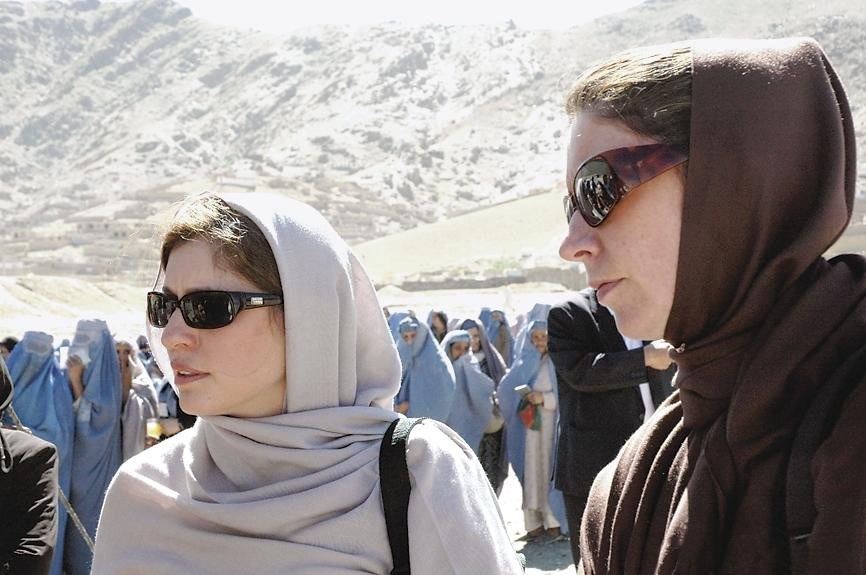
For instance, Susan Retik and Patti Quigley, the co-founders of Beyond the 11th: Empowering Widows in Afghanistan, a group in Needham, Mass., were widowed when their husbands were passengers on flights hijacked by Al Qaeda.
Ms. Retik—who, like Ms. Quigley, was pregnant at the time of her husband’s death—says she was inundated with help from friends, relatives, and even strangers yet still found life difficult. But when she saw that the United States was going to invade Afghanistan, she started to fear for all of the Afghan women who would become widows during the war.
“I was just so struck and dismayed to learn what life there was like for women in particular,” she recalls. “Women are not allowed to work or go to school. They couldn’t leave their homes without a male escort. I thought, ‘If it is so bad there for women, how much worse would it would be for a widow? And these are all victims of terror.’ ”
So she and Ms. Quigley gave some of their own money to one Afghan widow to help her and her family. But soon others started contributing, and they ended up building a small fund to support nonprofits that help women and widows in Afghanistan. Since its creation in 2003, Beyond the 11th has awarded about $650,000 to such organizations, but Ms. Retik hopes to capitalize on the 10th anniversary of the terrorist attacks to raise about $250,000 through a fund-raising bikeathon in which she and 49 others will ride from the World Trade Center to her home in Boston.
“Beyond the 11th is about me and my moving forward—and my need to connect to women and support them,” Ms. Retik said.
Protecting Civil Liberties
Similarly, Peaceful Tomorrows was started in 2002 by a group of family members of victims who were deeply concerned that the war on terror would erode civil liberties both here and abroad.
The New York group has in the past been supported by grant makers including the Ford Foundation and the Open Society Institute and is currently a project of the Tides Center, with a budget of about $220,000. Peaceful Tomorrows is now comprised of about 200 family members of September 11 victims who work on campaigns to protect civil rights that may have been eroded by war; they decry the use of torture and military tribunals and push instead to restore civil law.
“We felt it was important to put our own message out here that a large number of active 9/11 family members do not see this as a time to encourage more clamping down on civil liberties,” says Terry Greene, a board member who has been associated with Peaceful Tomorrows since 2004.
Even Tuesday’s Children, a group focused mainly on helping survivors and victims’ families, is now using the experience of the 2011 tragedy to help others around the world. In 2008 it started Project Common Bond, which matches children of September 11 victims with children of victims of other terrorist attacks from around the world, to help guide them through the healing process.
Since it was started, Common Bond has brought together some 220 teenagers from 11 countries, according to Terry Grace Sears, the executive director of Tuesday’s Children.
Ms. Sears, though, acknowledges that self-interest plays a role in Project Common Bond and another Tuesday’s Children program, Helping Heals, which sent children of September 11 victims to volunteer in New Orleans and Latin America. The programs, she says, are rooted in the idea that learning how to help others through their own tragedies is a crucial step in recovery for many of the children her charity serves.
“Empowering them to help others,” she says, “is extraordinarily powerful.”






