Some Nonprofits Had a Strong End to 2021, But the Outlook for 2022 Is Uncertain

By Emily Haynes and Eden Stiffman
January 12, 2022 | Read Time: 7 minutes
Many groups fared well as 2021 came to a close, despite concerns that giving could decline because of donor weariness in the second year of the pandemic.
While some charities are still tallying how much donors contributed in the crucial last weeks of the year, brand-name charities on the front lines of hunger and health crises reported record-breaking fundraising hauls, while smaller groups with diverse missions said fundraising was largely on par with expectations.
Bolstered by a strong economy throughout the year and at year-end, charities that clearly articulated why their mission matters saw support pour in from new and loyal donors alike.
Doctors Without Borders USA had another record-breaking fundraising year in 2021, raising an estimated 13 to 15 percent more than it did in 2020. Kim Goldsmith-N’Diaye, director of development at the emergency medical-relief charity, attributes that increase to some unanticipated major gifts and payoff from the investments the nonprofit made in its fundraising program last year.
“We have the ability to build a better mousetrap now that we did well in 2020,” Goldsmith-N’Diaye said. “In the years that you do well, that’s when you build the undergirdings of the foundation so that you can continue to move forward.”
The charity zeroed in on audience research last year, looking at what motivated gifts from donors at different giving levels, from a few dollars to a few thousand dollars. It used focus groups and online panels to find a message with a broad appeal.
In its digital ads, email marketing, and other online channels, the charity appealed for support for health emergencies including Covid-19, the Haitian earthquake, and ongoing challenges like maternal-health inequities and climate change. Digital ads alone raised an estimated $12.8 million.
Ahead of the winter holidays, the charity placed ads aimed at high-net-worth individual donors, corporate donors, and foundations in media outlets including the BBC, the Atlantic, and Condé Nast publications. It also worked with airports across the country to sponsor free Wi-Fi for travelers who viewed a 30-second video ad. In addition to introducing the charity to more people, the ad attracted $5,000 in donations.
On the heels of another successful fundraising year, Goldsmith-N’Diaye is eyeing new innovations for 2022. She wants to invest in more donor research to learn about supporters’ perceptions of the charity’s brand. She’s also weighing cryptocurrency fundraising and expanding appeals for gifts from donor-advised funds.
“You want to remain relevant to your donors, especially coming out of Covid — or as we learn to live with Covid,” she said. That will likely mean identifying new ways to move donors to support Covid-19 relief, even as the virus comes to feel less like an emergency and more like a fixture of everyday life.
Videos Demonstrate Impact
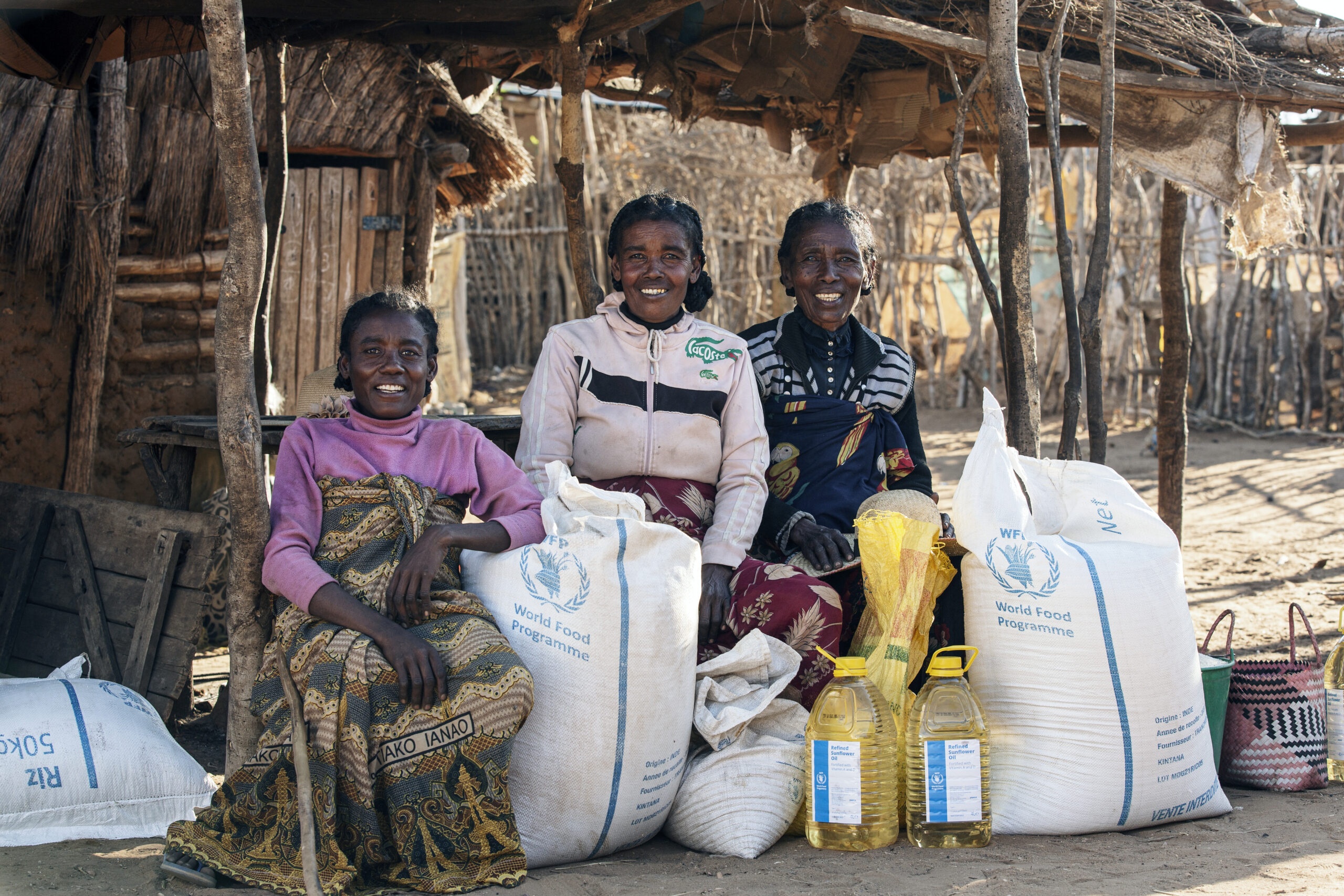
At a time when global hunger is as high as it’s been since World War II, donors have continued to respond to the World Food Program‘s case for support.
The charity’s USA arm closed out the calendar year with a record-breaking quarter, coming on the heels of a record-breaking fiscal year. Revenue during the 2021 fiscal year, which ended September 30, increased 102 percent over 2020. That growth was across the board, as foundations, corporations, core individual donors, major givers, and faith-based partners stepped up their support.
Donations in the last quarter of the calendar year were the highest the World Food Program has seen in 27 years. Between October and December, donors gave close to $36 million. That’s 500 percent more than in the fourth quarter of 2019, and 82 percent more than the fourth quarter in 2020.
“Americans believe that food is a human right and that anyone who doesn’t have a meal or anybody that is marching toward starvation needs help,” said Barron Segar, who heads the U.S. fundraising arm of the global antihunger organization. While the bulk of support has been unrestricted, the largest end-of-year gifts were earmarked for emergency food support in Afghanistan, Madagascar, and Ethiopia.
Media coverage has been critical in helping raise awareness of hunger and famine across the globe. In November, ABC’s World News Tonight broadcast a special report on hunger brought on by climate change in Madagascar, highlighting the charity’s work on the ground.
Within 30 minutes of the broadcast, donors had given $1.2 million online, Segar said. Donations continued to pour in when an abbreviated version of the program was rebroadcast on Nightline. The charity estimates the programs helped attract 27,000 new donors and around $4 million in donations since being aired.
During the pandemic, the charity has stepped up its use of videos that highlight what donations accomplish in the field. Those dispatches, along with other impact reports, are critical in helping the charity build and maintain trust with donors, Segar said. “Our responsibility is to make sure that we communicate often and effectively on how their gifts have been used or how they are going to be used,” he said.
Donors have continued to give generously in the first two weeks of January, and Segar hopes that trend will continue throughout 2022 and beyond.
“While our results are extraordinary,” he said, “the need outstrips by far what we’ve been able to raise.”
‘Limited Bench’
Fundraising consultant April Walker said 2021 giving was on par with previous years for most of her clients, which tend to have annual budgets of around $5 million and include an environmental-justice organization and a group that advocates for bolstering the safety net for low-income individuals. One client was about $10,000 short of its year-end goal while others exceeded their expectations.
“It’s not the increased generosity that we saw in the early days of the pandemic, but they were able to set goals that they felt were ambitious and realistic and reach them,” Walker said.
Covid-19 is less of a focus in organizations’ appeal letters, she said, but it was front of mind for groups that had staff members out sick in the final weeks of the year or at the start of 2022.
“A lot of teams are missing some key players — people that were sick over the holiday or sick right now,” Walker said. “You typically don’t start your year with such a limited bench.”
Although emergency food support and other front-line causes are still resonating with donors, Walker said she sees fewer donors laser focused on the causes that saw a surge of support when the Covid-19 crisis began.
But some nonprofit leaders say there are still donors who are reluctant to support other causes.
Erin Loos Cutraro, founder and CEO of She Should Run, a nonprofit that works to bring more women into political leadership to close the gender gap in public office, said she’s had many conversations with donors to that effect.
She and her colleagues saw more donors pull back to support issues such as hunger and homelessness in their communities.
“We definitely saw an uptick in donors who were there for us in 2020 say ‘We love you to pieces, but we have to take a pause this year. There are some really critical local causes that we’re going to support,’” Loos Cutraro said.
Loos Cutraro and her colleagues continue to make the case that both immediate and long-term solutions are needed — that holding back on support now may slow momentum in changing who holds decision-making power in communities and on the broader political stage. The organization works to connect with women who are leaders, but who are not yet thinking about elected office, raising awareness and providing them with educational and other resources.
She Should Run tends to have an easier time raising money in midterm and presidential election years, when there’s more public interest in its cause. Still, 2021 was a banner year.
The group brought in $1.3 million, up from $1.2 million raised in 2020. Revenue is typically split evenly among individual, corporate, and foundation support, and like many nonprofits, much of that support flows in in the final quarter of the year.
Just a small fraction of overall philanthropic dollars goes to groups supporting women and girls, and nonprofits focused on political participation receive an even lower share, Loos Cutraro said.
“We have to keep our foot on the gas,” she said. “Our growth is not even coming close to matching the need.”
Walker, the consultant, described the current fundraising climate as “cloudy” and filled with unknowns. Fundraisers want to resume plans to meet donors in person, for example, but it’s a challenge to plan far ahead as the pandemic continues.
But there’s also a sense of optimism among her nonprofits clients. “Your nearest and dearest donors will still show up for your virtual event, will make a gift, will be responsive, and will want to understand how everything is going,” she said. “I do see hope.”