
Some Volunteers Push Their Commitment to Extremes, Say Charities

By Michelle Gienow
Contributor
April 1, 2012 | Read Time: 6 minutes
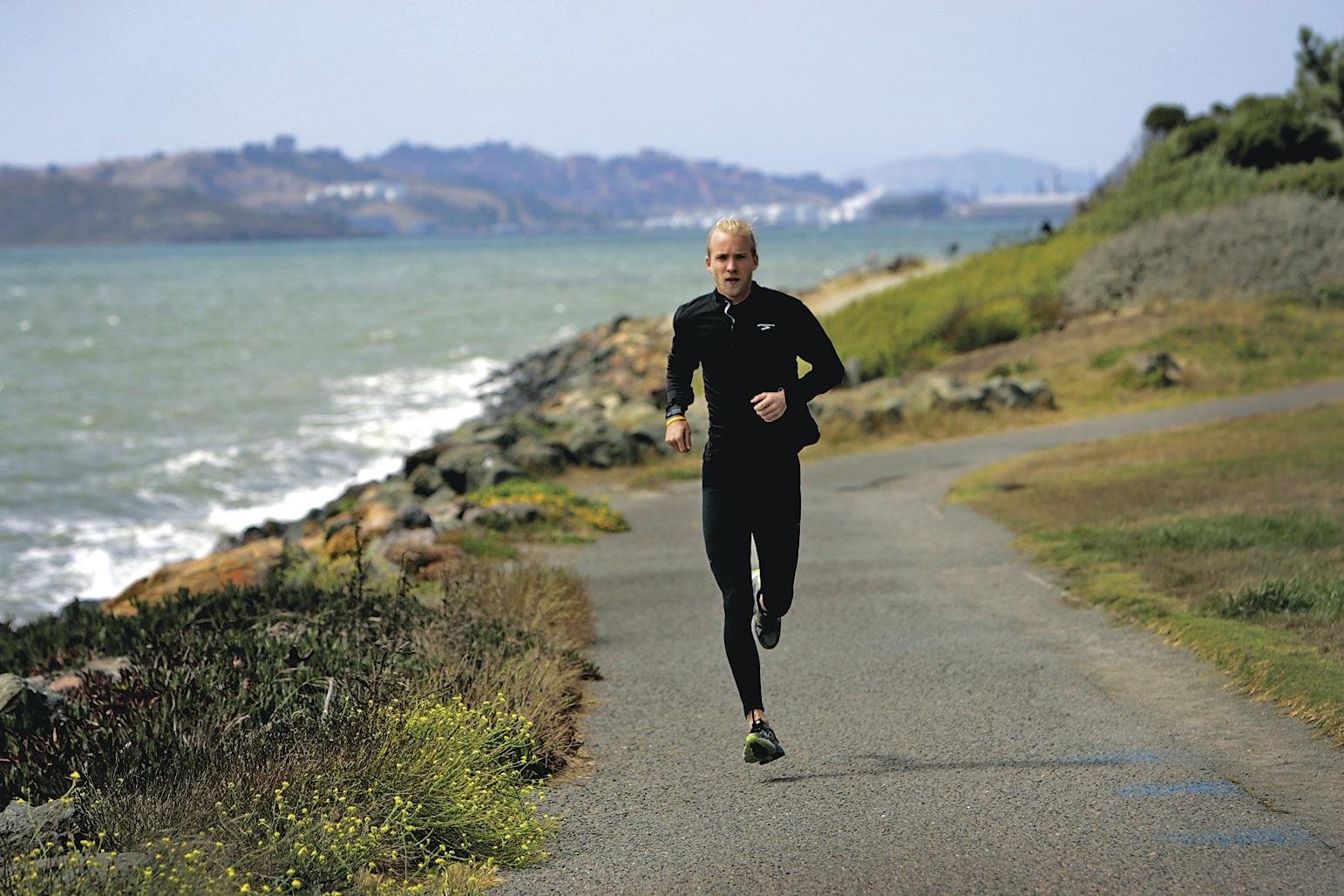
Sam Fox, a 24-year-old Rhode Island native, ran the Pacific Crest Trail—more than 2,400 miles, from Canada to Mexico— in two months to raise $170,000 for the Michael J. Fox Foundation for Parkinson’s Research. So many people have sought to help the organization by engaging in similarly punishing activities that the charity created Team Fox, a grass-roots fundraising arm.
Then the nonprofit went a step further and hired Sam Fox (no relation to the charity’s founder) to reach out to other extreme athletes, giving volunteers the guidance they need to be successful.
“Every year now we are seeing more people committing to these demanding initiatives,” says Sheila Kelly, top fundraiser at the Parkinson’s group. “The cycle feeds itself. People see others challenging themselves, succeeding, and raising a good deal of money and decide to take on the effort themselves.”
Other charities are also seeing a rise in the number of people who want to help in such an unusual way, raising new questions for nonprofits about how much they should help the extreme volunteers and how they can best ensure that the benefits outweigh any risks.
A Growing Trend
The first widely known extreme volunteer was David McGillivray, who in 1978 ran across the United States, from Medford, Ore., to his hometown of Medford, Mass., to raise money for the Dana-Farber Cancer Institute. But not many people copied the idea until recently. A sign of the change came four years ago when the Run Walk Ride Fundraising Council, an organization for fundraisers who manage athletic events, founded the Cash, Sweat and Tears Award to recognize above-and-beyond volunteers.
“Millions of people each year step out for charity, doing a fun run or even a marathon,” says David Hessekiel, founder of the group in Rye, N.Y. “But there are increasing numbers of singular people who are just committed, extreme in either what they push their body to do or the way they push themselves to raise money or awareness for the organization they volunteer for. So we decided to create an award to specifically recognize these individuals, and now we get 60 to 70 nominations each year.”
At the TREE Fund, a conservation and education group in Naperville, Ill., officials have nominated Warren Hoselton, a volunteer who in each of the past eight years has ridden a bicycle 500 miles in one week, rain or shine, to raise money and attention for the charity.
“People like this are a dream to work with,” says Mary DiCarlo, the organization’s chief fundraiser. “They show up where they’re supposed to be, when they’re supposed to be there. They’re highly committed, and they have a deep affinity for your message that makes them highly effective and enthusiastic communicators.”
Cultural changes are driving the trend that’s bringing more of these committed volunteers to charities’ doorsteps, suggests Susan Ellis, president of Energize, a consulting firm in Philadelphia that specializes in volunteerism.
“Our society is increasingly do-it-yourself oriented, and it’s becoming more and more common for a charity to be approached by someone entrepreneurial who wants to do something independent and self-driven but still in support of your mission,” she says. “However, a lot of organizations have no idea how to respond to, much less work with, this person who just pops up.”
‘They Will Come to You’
Charities don’t usually take pains to seek out extreme volunteers to join their cause, though they may be able to find current donors who do extreme sports and are willing to do an event to raise money.
The key is to “recognize potential and take time to cultivate it,” says Sandy Henshue, special-events coordinator at Gilda’s Club Madison, a Wisconsin charity that offers emotional support to cancer patients.
“A group of ultra-athletes here now swims across Lake Mendota every year to raise money for us,” says Ms. Henshue. “They were already doing this crazy swimming anyway, and were happy to turn it into a ‘Gills for Gilda’ fundraising event.”
But it would be hard to recruit people unfamiliar with your organization, say experts. “These people are by definition mavericks and almost always strongly motivated by a personal reason,” says Ms. Ellis. “If your organization fits their vision, they will come to you.”
Jess Lee, a senior at Converse College, for example, went to Tanzania to ride a mountain bike more than 150 miles around the base of Mount Kilimanjaro on behalf of Globalbike, a charity in Spartanburg, S.C., that donates bicycles to impoverished people in developing countries.
“My mom raised me by herself, in government housing, and I know firsthand how tough it can be to break free from poverty,” she says.
Working on behalf of Globalbike ‘s efforts in Tanzania appealed to her because “I could help give women the gift of bicycles, which can be a tool for lifting themselves and their families economically.”
Beyond an affinity for a charity’s mission, extreme volunteers also pick beneficiaries because of a group’s reputation.
“I knew that Michael J. Fox Foundation would do good things with whatever funds I could raise,” says Sam Fox, whose mother has struggled with Parkinson’s for more than 10 years.
“But I also knew they are marketable and recognizable and would help people take me seriously, this kid running through the forest and telling people they should care. Partnering with them instantly legitimized my project.”
More similarly motivated volunteers appear poised to follow in Mr. Fox’s athletic shoes.
“So, the important thing is, don’t act like they’re crazy,” says Ms. Ellis. “Your job is to say, ‘This is a really big thing to pull off. Let’s sit down and talk.’ That is where you begin to negotiate the role you can play.”
Overexposure Fears
The power of extreme volunteerism to call attention to a cause could wane as it becomes less out of the ordinary.
Christopher Olivola, a psychologist and postdoctoral fellow at Britain’s University of Warwick whose research demonstrates that charity supporters give more generously to arduous or painful efforts, says overexposure could become a problem.
“Novelty can only go so far,” he says, mentioning Phillip English, a 23-year-old New Zealander who announced plans to bicycle from London to Cape Town over the course of a year (with logistics still being sketched out) starting in April. Mr. English will raise money for the Acumen Fund, which supports social entrepreneurs.
“What’s the next person going to do, bike from Cape Town to the moon?” says Mr. Olivola. “If too many people are doing these stunts for charity, people have limited pocketbooks—and even capacity for compassion. The public could end up tuning out.”
A more pressing question for charities, however, could be whether these extreme efforts deserve more investment than more mainstream fundraising tactics.
Is one person running across the country more valuable, in terms of both money and publicity for the affiliated charity, than several hundred people doing a fun run across town? As a point of comparison, the $170,000 Sam Fox raised from his two-month marathon for the Michael J. Fox Foundation was dwarfed by the $1.5-million the charity garnered from its one-day Parkinson’s Unity Walk in New York’s Central Park last spring.
There is plenty of room for both types of volunteer events, answers Mr. Hessekiel.
“People aren’t jaded. There isn’t one public,” he says. “People like to support these extreme physical challenges, which are attention-getting, but many others also like to be involved themselves.
“So they will give money to someone like Sam Fox and then go participate personally in events that are more suited to the average person. There are all kinds of heroes.”




