

January 3, 2014 | Read Time: 4 minutes
This article is part of our Outlook 2014 package. See more advice and ideas for the year ahead in our special section.
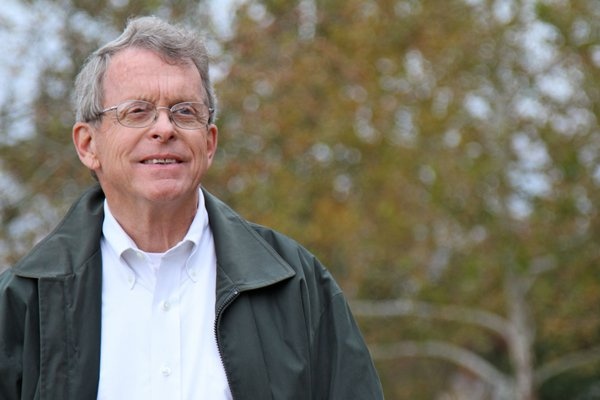
Mike DeWine 
Attorney General, Ohio
Won conviction of the notorious charity-fraud fugitive ‘Bobby Thompson’
Charity regulators nationwide will be eyeing Ohio to see if “Bobby Thompson,” who was sent to prison in December for operating a sham veterans charity, has been put away for good. Mr. “Thompson,” whose real name is John Donald Cody, disappeared in 2010 after the St. Petersburg Times published a series of articles alleging that he was using a stolen identity to raise money through telemarketers for the U.S. Navy Veterans Association, a group he fabricated. Although Mr. Cody operated in multiple states, the Ohio attorney general’s office—first under Richard Cordray, then under Mike DeWine—took the lead in tracking him down and bringing him to trial.
In November, prosecutor Brad Tammaro won a conviction on 23 criminal charges, including engaging in corrupt activity, identity fraud, money laundering, and theft. In December, a judge sentenced Mr. Cody to 28 years in prison, fined him more than $6-million, and ordered him to spend every Veterans Day in solitary confinement. Mr. Cody has filed a motion for a new trial.
Karen Gano 
Assistant Attorney General, Connecticut
Leading an effort to streamline charity state registrations

Charities that raise money in more than one state face a jumble of time-consuming registration requirements. Karen Gano is leading an effort to help ease the pain. She and other members of the National Association of State Charity Officials are working to create a website that would allow charities and their professional fundraisers to register electronically in multiple states, with the information posted online. One benefit: Regulators and the public could find detailed financial information about those groups in one place, making it easier to spot shady practices.
With 12 states lined up for a pilot project, regulators are seeking grant money with hopes of starting to build the website by the end of 2014. Other charity regulators working on the effort: Robert Carlson, of Missouri; Chris Cash, of Colorado; Brent Culberson, of Tennessee; Belinda Johns, of California; and Hugh Jones, of Hawaii.
Photo: Susan E. Kinsman, Esq.
Elizabeth Grant 
Head of the Charitable Activities Section, Oregon Department of Justice
Preparing to defend a novel law to penalize charities with high fundraising costs

Starting in 2014, charities that operate in Oregon have to show they devote at least 30 percent of their spending to their programs. Otherwise, Oregonians who donate to them may not take state income-tax deductions on those gifts. That requirement, introduced by a law the governor signed in June, marks a victory for Elizabeth Grant, whose office has been pushing for a measure like that since 2007. The goal: to penalize what it calls “rogue” charities that spend the vast majority of their donations on commercial fundraisers.
Critics say Oregon’s new law, the first of its kind in the country, is unconstitutional, since the U.S. Supreme Court has ruled that fundraising activities enjoy free-speech protection. But Ms. Grant says the measure was crafted to withstand a legal challenge. Her office is now drawing up the list of charities that will be affected by the new provisions.
Eric Schneiderman 
Attorney General, New York
Driving a major charities-law overhaul

A comprehensive overhaul of New York’s charities law, the first in 40 years, takes effect in July. Eric Schneiderman, who drove the effort with input from state nonprofits, says the measure will make New York “a model for nonprofit governance and oversight.” The Nonprofit Revitalization Act eases some red tape—for example, by making it easier for organizations to incorporate, dissolve, and merge. But it also strengthens requirements in such areas as financial controls, conflict-of-interest policies, and whistle-blower policies.
Mr. Schneiderman has also served notice that this year he will be watching charities that raised money for Superstorm Sandy. After he met with the American Red Cross in October, the charity agreed to provide $6-million in new money for housing in Sandy-battered communities, omit references to specific disasters when seeking online donations, and do more to let the public know when the group’s fundraising needs for a major disaster have been met. A couple of smaller charities agreed to disburse donations that had not been spent.




