

May 18, 2014 | Read Time: 3 minutes
Penn State had some formidable resources at its disposal when the child- sex-abuse scandal involving Jerry Sandusky erupted, especially the fierce loyalty of students and unusually close ties between the campus and the surrounding town.
John Glier, a fundraising consultant who has advised the university on three campaigns and dozens of fundraising projects since 1984, explains some of those advantages:
• Penn State’s location in an isolated part of the state strengthens ties among students, about 30 percent of whom are the first in their family to go to college. Many students become loyal supporters after graduating, and the university boasts one of the largest alumni associations in the world, with nearly 180,000 dues-paying members.
• The university has a solid relationship with local residents. Several people who live in and around State College but didn’t attend Penn State recognize the university’s importance to the local economy and served as volunteer leaders for the entire drive. That’s in stark contrast to many other small communities that host large universities, where there is often a love-hate relationship between town and campus.
• Penn State’s student body has a strong work ethic, making the students not just good employees but powerful fundraising allies as well.
Because of that work ethic, Mr. Glier says, he’s now trying to hire some of the university’s graduates to work in his consulting firm. He’s not alone. A Wall Street Journal survey of corporate recruiters ranked its graduates as the most sought-after in the nation.
Student Giving
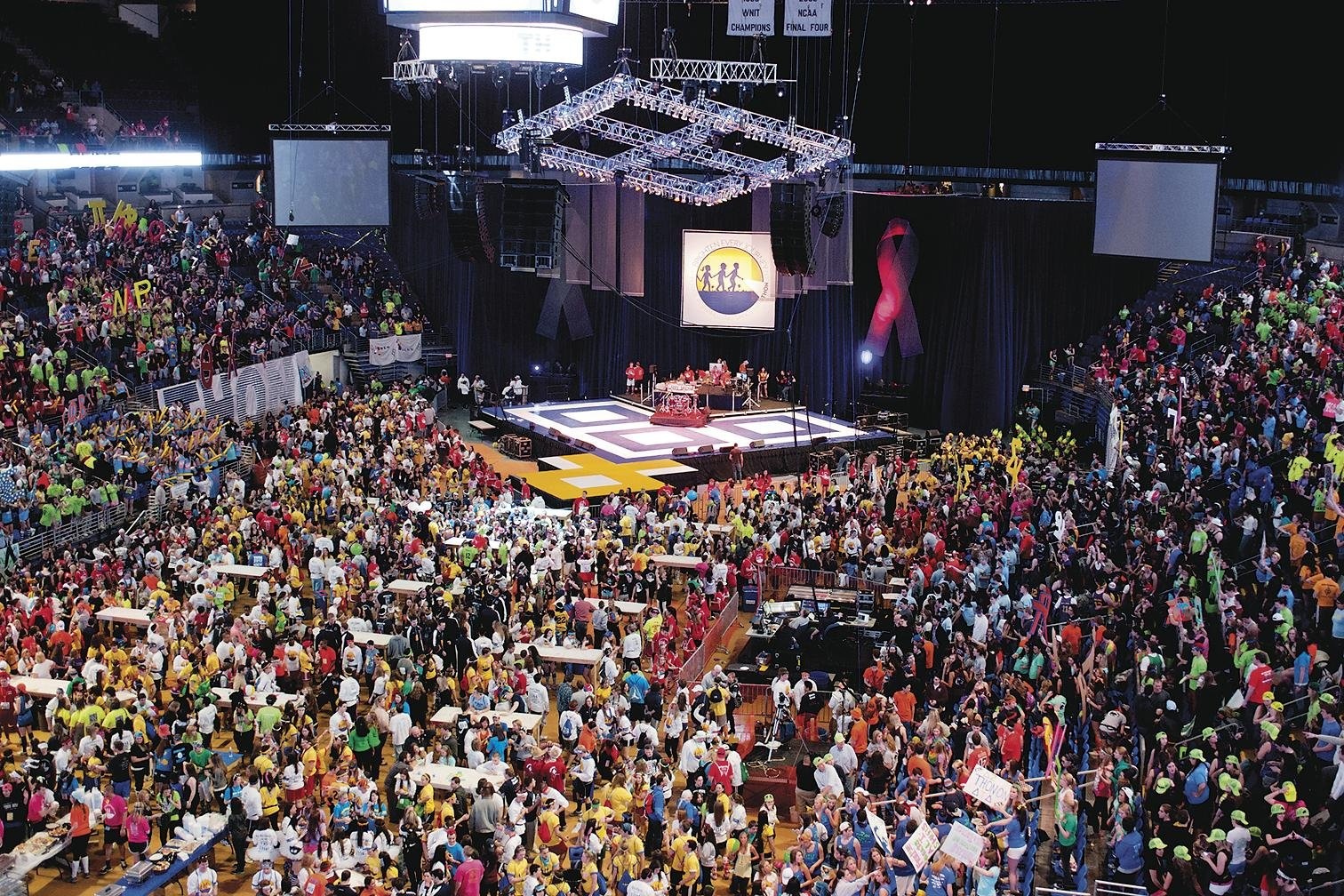
The graduates Mr. Glier wants to hire are recent volunteer leaders of an annual yearlong student fundraising effort called Thon.
The project, now in its 42nd year, involves door-to-door canvassing, bake sales, and other revenue-generating events, culminating in a 46-hour dance marathon held every February in the university’s indoor arena.
Thon’s annual proceeds during the seven-year campaign were counted toward Penn State’s goal. By raising more than $73-million, students contributed the second-largest gift to the fundraising drive.
After the scandal hit, students raised money in other ways. For example, they held a “Blue Out” at the university’s first football game four days after Mr. Sandusky’s arrest, during which they encouraged everyone to wear the school’s colors—navy blue and white—while they sold T-shirts and solicited donations to help the coach’s victims.
The $22,000 raised was divided between the Pennsylvania Coalition Against Rape and Prevent Child Abuse Pennsylvania. Students repeated the sales and solicitations at a second game in 2012, raising another $79,000.
The students’ response, which included a candlelight vigil for the abuse victims that drew at least 8,000 people, helped motivate some donors who were holding back from making a campaign gift because of the scandal, says Bobbi Korner, the dean of Penn State’s College of Arts and Architecture.
“The students led us out of this,” she says.
Because the students had nothing to do with the scandal, she adds, donors “realized they did want to give. These people bleed blue and white.”




