
Sue Desmond-Hellmann to Step Down at Gates Foundation, Citing Health Needs

By Alex Daniels
Contributor
December 5, 2019 | Read Time: 4 minutes
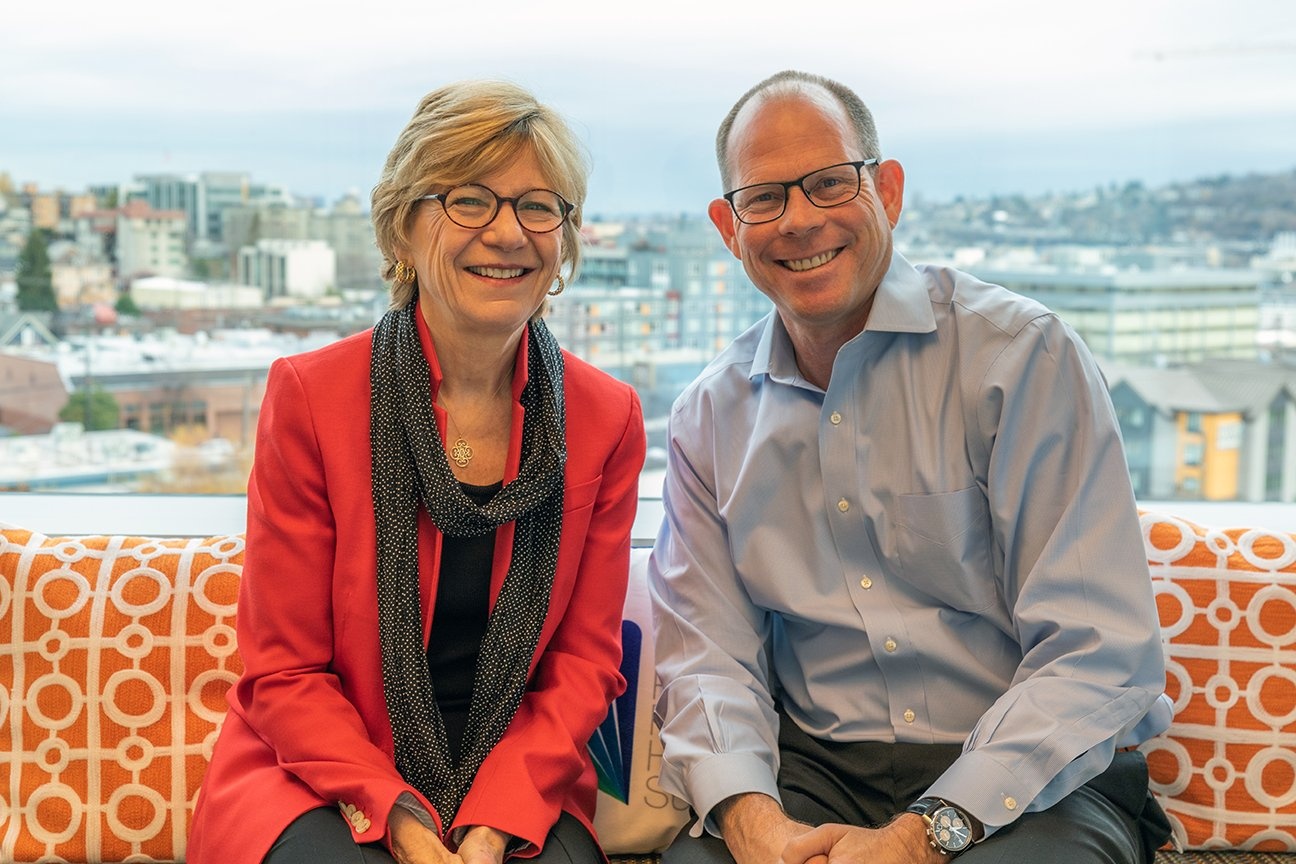
Sue Desmond-Hellmann, who has led the Gates Foundation for more than five years, will step down at the end of January as chief executive of the largest private grant maker.
Desmond-Hellman, who is 62, cited a need to care for her health and her family in a statement released by the foundation.
“This was without doubt the toughest decision of my career,” she said. “But I felt I could no longer be the CEO the foundation needs and deserves at this time.”
In October Desmond-Hellmann stepped down from the Facebook board, citing, among other things, health concerns. In an interview published today in the Wall Street Journal, she said her health problems were not life threatening.
Desmond-Hellman, an oncologist, previously served as chancellor of the University of California at San Francisco and in leadership positions at biotech giant Genentech.
Mark Suzman, the Gates Foundation’s chief strategy officer and president of global policy and advocacy, will take over as chief executive on February 1.
Before joining the foundation in 2007, Suzman served in a number of roles at the United Nations. Earlier in his career, he was a correspondent for the Financial Times in Johannesburg, London, and Washington, D.C.
$47 Billion in Assets
The Gates Foundation is by far the largest grant maker in the United States. In 2018, the grant maker’s endowment was nearly $47 billion, and it made about $5 billion in grants. Under Desmond-Hellman’s leadership, the foundation opened several new streams of grant making. After supporting a two-year study, Gates committed $158 million to reducing poverty in the United States. The foundation plowed tens of millions into achieving gender equity, including a $170 million commitment to support research, community organizing, and policy development in India, Kenya, Tanzania, and Uganda.
Desmond-Hellman also oversaw the opening, in 2018, of the Gates Medical Research Institute, a Boston nonprofit that works to move drugs and vaccines through clinical trials to market.
Desmond-Hellman is the Gates Foundation’s third chief executive since Bill and Melinda Gates started the foundation in 2000. She immediately followed Jeff Raikes, a former Microsoft executive who, with his wife, Tricia, runs Seattle’s Raikes Foundation.
When she became chief executive of Gates in 2014, the fast-growing grant maker had absorbed criticism for not listening to grantees’ needs and for aggressively pushing the common-core curriculum in U.S. public schools.
In a 2016 letter, Desmond-Hellmann acknowledged the foundation needed to do a better job of admitting mistakes and communicating with other organizations. She positioned Gates as a “learning organization.”
To encourage others to criticize the foundation, even though it wields a lot of power, Desmond-Hellmann said she aimed to “compliment, champion and role model, and I can encourage that kind of behavior. You have to try extra hard as a funder to bring out complaints.”
In an email to her co-workers sent today, Desmond-Hellmann said she and Bill and Melinda Gates had had conversations over the past several months about who would succeed her. She said Suzman was well qualified to lead the grant making giant because of his experience in many programmatic areas at the foundation over the course of a dozen years and “his level-headed diplomacy, integrity, grace, and good humor under pressure – all qualities needed to steer this great enterprise in a world of increasing complexity and volatility.”
The foundation is a “very large, complex organization with multiple priorities and very big ambitions,” said Jeff Raikes, in an interview. Desmond-Hellmann, he said, served “with distinction.”
Raikes said he was confident that Suzman, whom he promoted to run the global policy office when he was led the foundation, would make a good leader because of the depth of his knowledge in international development. While at the United Nations, Suzman was a senior adviser to then Secretary General Kofi Annan. That experience, and his background as a journalist in his native South Africa, gives Suzman a strong basis for success running the grant maker, Raikes said.
“He sees the world from many different angles,” Raikes said.
Alex Daniels covers foundations, donor-advised funds, fundraising research, and tax issues for the Chronicle. He recently wrote about grant making that gives grantees more power in decision-making and about the distribution of $1 billion to four research institutions. Email Alex or follow him on Twitter.







