

February 21, 2010 | Read Time: 2 minutes
In Guyana, where mining for gold and bauxite is threatening the country’s forests, Janice Monica Bollers is training the South American country’s residents in environmentally sound logging practices and helping them develop plans to plant new forests on former mining sites.
Ms. Bollers honed her conservation knowledge by getting a master’s degree in environmental forestry with the help of a scholarship from the World Wildlife Fund.
For the past 15 years, aspiring environmental leaders worldwide like Ms. Bollers have benefited from the fund’s Russell E. Train Education for Nature Program.
The fund was started with money and an idea from Mr. Train, who served as director of the Environmental Protection Agency under Presidents Nixon and Ford. After devoting his career to environmentalism, he says he realized the most important thing the United States could do to spur conservation was to train people around the world to manage natural resources in their native countries.
Since it was created in 1994, the endowment named after Mr. Train has raised more than $15-million and has provided more than 1,200 people in Africa, Asia, Latin America, and elsewhere with education and training to meet conservation challenges in their own countries.
In West Africa, for example, the Mount Cameroon Ecotourism Organization received $5,000 to train more than a dozen ex-poachers to become ecotourism guides. They are helping to conserve wildlife and earning more money than they did when they trapped and killed game animals.
Several recipients of grants from the endowment have discovered new wildlife species. Ngo Van Tri of Vietnam, a scientist at the Institute of Tropical Biology at Ho Chi Minh City, for example, has discovered at least 10 new species of gecko lizards in the remote forests of his country. In gratitude for his support from the endowment, he named one of the new species after Mr. Train: Gekko russelltrainii.
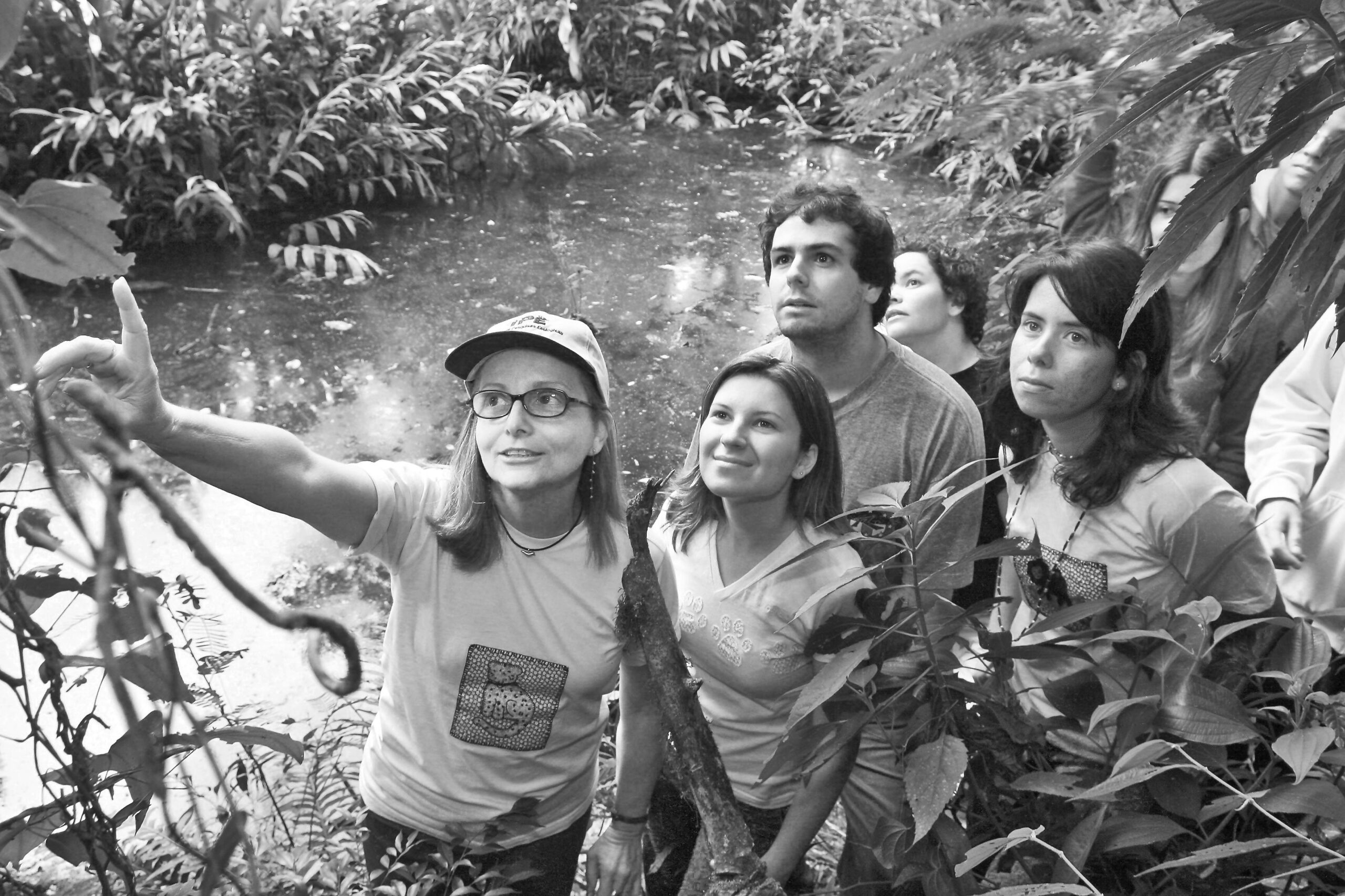
Others recipients, such as Suzana Padua of Brazil, who received a fellowship to obtain her doctorate in environmental education, have established new conservation organizations. In 2008 Ms. Padua, a co-founder of Brazil’s Instituto de Pesquisas Ecologicas, also helped create a master’s degree program in ecology and sustainability there.
Here, Ms. Padua leads a group of her students on a guided tour of the Atlantic Forest of southeastern Brazil.




